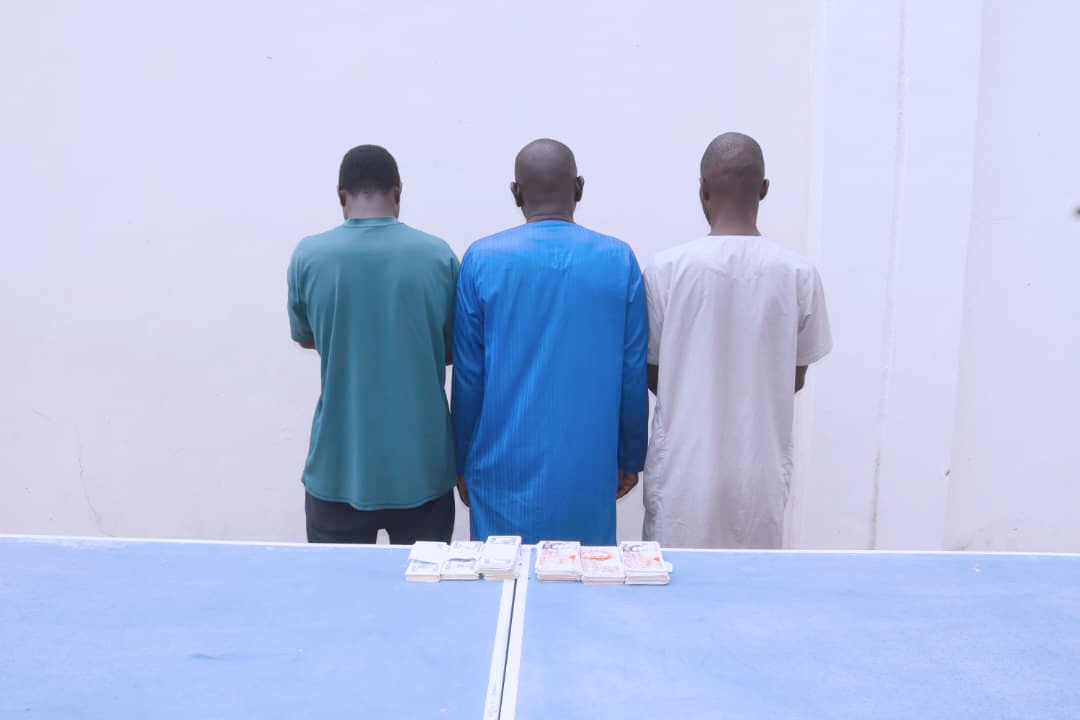
The Economic and Financial Crimes Commission (EFCC) has arrested three men for their alleged involvement in the circulation of counterfeit foreign currencies. The suspects include 51-year-old Akilu Salisu, a father of ten from Malumfashi Local Government Area of Katsina State; Umar Mikailu Shuaibu, a self-proclaimed cleric from Kano State; and Salisu Nura from Jigawa State.
According to a statement released Thursday by EFCC spokesperson Dele Oyewale, the arrests were made by the Ilorin Zonal Directorate following a handover from the National Drug Law Enforcement Agency (NDLEA). Nura and Shuaibu were initially apprehended during a stop-and-search operation in Kwara State on January 27, 2026. NDLEA operatives found Nura in possession of 435 pieces of counterfeit $100 notes and 378 pieces of counterfeit £50 notes.
Investigations revealed that the fake currencies were intended for Shuaibu, while Salisu was identified as the final recipient in the distribution chain. Further scrutiny of Shuaibu’s digital payment account uncovered suspicious transactions exceeding ₦5 million, for which he could not provide credible explanations.
The EFCC confirmed that the suspects would face prosecution once ongoing investigations are concluded. Currency counterfeiting is classified as a serious financial crime under Nigerian law, given its potential to destabilize the economy and facilitate other criminal activities such as fraud and money laundering.
Nigeria’s legal framework prescribes severe penalties for counterfeiting. The Counterfeit Currency (Special Provisions) Act allows for life imprisonment for individuals found guilty of producing or distributing fake notes. Similarly, the Central Bank of Nigeria Act criminalizes possession of counterfeit legal tender, with offenders facing a minimum of five years in prison upon conviction.
Authorities have repeatedly warned that counterfeit currency undermines public confidence in financial systems, disrupts legitimate transactions, and exposes individuals and businesses to significant losses. Past prosecutions have seen suspects charged under Section 5 of the Counterfeit Currency Act for knowingly possessing fake banknotes.
The EFCC emphasized that it continues to work closely with other agencies, including the NDLEA and the Central Bank of Nigeria, to combat financial crimes. Specialized enforcement actions are being intensified to curb the circulation of counterfeit currency and protect the integrity of Nigeria’s financial system.
The arrests highlight the growing collaboration between security and anti-graft agencies in tackling organized financial crime. With counterfeit currency posing risks to both national stability and international credibility, the EFCC reiterated its commitment to ensuring offenders face justice.