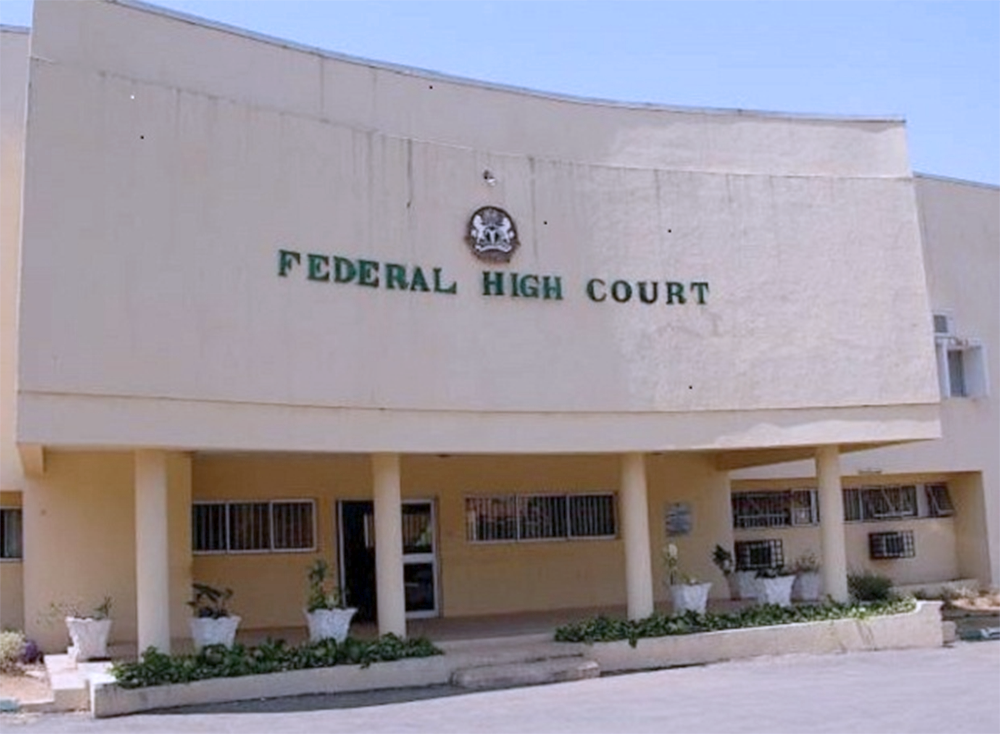
The Economic and Financial Crimes Commission (EFCC) has asked the Federal High Court in Abuja to order the permanent forfeiture of 57 properties allegedly tied to former Attorney General of the Federation and Minister of Justice, Abubakar Malami. The anti-graft agency made the request on Thursday through a motion filed by its legal team led by Jibrin Okutepa (SAN) and Ekele Iheanacho (SAN).
The case, marked FHC/ABJ/CS/20/2026, lists Malami, Hajia Bashir Asabe, Abiru’ Rahman Abubakar Malami, and several companies as respondents. The EFCC argued that the respondents failed to provide sufficient evidence to overturn the interim forfeiture order earlier granted by the court.
Okutepa told Justice Joyce Abdulmalik that the proceeding was a non-conviction-based forfeiture, stressing that the court had statutory powers to grant the relief sought. He noted that the interim order had already been published in THISDAY newspaper on January 9, 2026, as directed by the court, and no valid reason had been presented to prevent final forfeiture.
An affidavit sworn by EFCC investigator Daniel Adebayo detailed the commission’s findings. He explained that multiple petitions alleging corruption, abuse of office, and fraud against Malami prompted the investigation. Financial records were obtained from banks and the Central Bank of Nigeria, while inquiries were made to agencies including the Corporate Affairs Commission, Federal Inland Revenue Service, Code of Conduct Bureau, and Abuja Geographical Information System. Land registries in Kebbi, Sokoto, and Kano states were also examined, and assets were physically verified and valued.
Adebayo stated that Malami’s declared earnings between 2015 and 2023 did not match the value of the properties under scrutiny. He revealed that Malami earned a total salary of ₦89.6 million during his tenure, averaging about ₦962,000 monthly, and received a severance allowance of ₦12.1 million at the end of his service. He also declared ₦253.6 million in estacode allowances for official trips abroad. Copies of his asset declaration forms and related correspondence with the Code of Conduct Bureau were attached as evidence.
The investigator alleged that many of the properties were acquired through proxies and corporate entities linked to Malami. He further claimed that several structures in Kano and Kebbi were built without permits, suggesting attempts to conceal the unlawful origin of funds.
The EFCC listed 57 properties across Abuja, Kebbi, Kano, and Kaduna, including assets connected to Rayhaan University in Kebbi. The properties are valued at approximately ₦213.2 billion.
The matter originated from an interim forfeiture order granted on January 8, 2026, by Justice Emeka Nwite. That order temporarily transferred the properties to the Federal Government and directed the EFCC to publish the decision in a national newspaper, giving interested parties 14 days to contest the forfeiture. Malami and other respondents subsequently challenged the order, urging the court to set it aside.
The EFCC now seeks a final ruling to permanently transfer ownership of the properties to the Federal Government, arguing that the assets are disproportionate to Malami’s lawful income and reasonably suspected to be proceeds of unlawful activities.
The case underscores Nigeria’s ongoing efforts to strengthen accountability and tackle corruption at the highest levels of government. If the court grants the EFCC’s request, it will mark one of the most significant forfeiture rulings involving a former top government official.