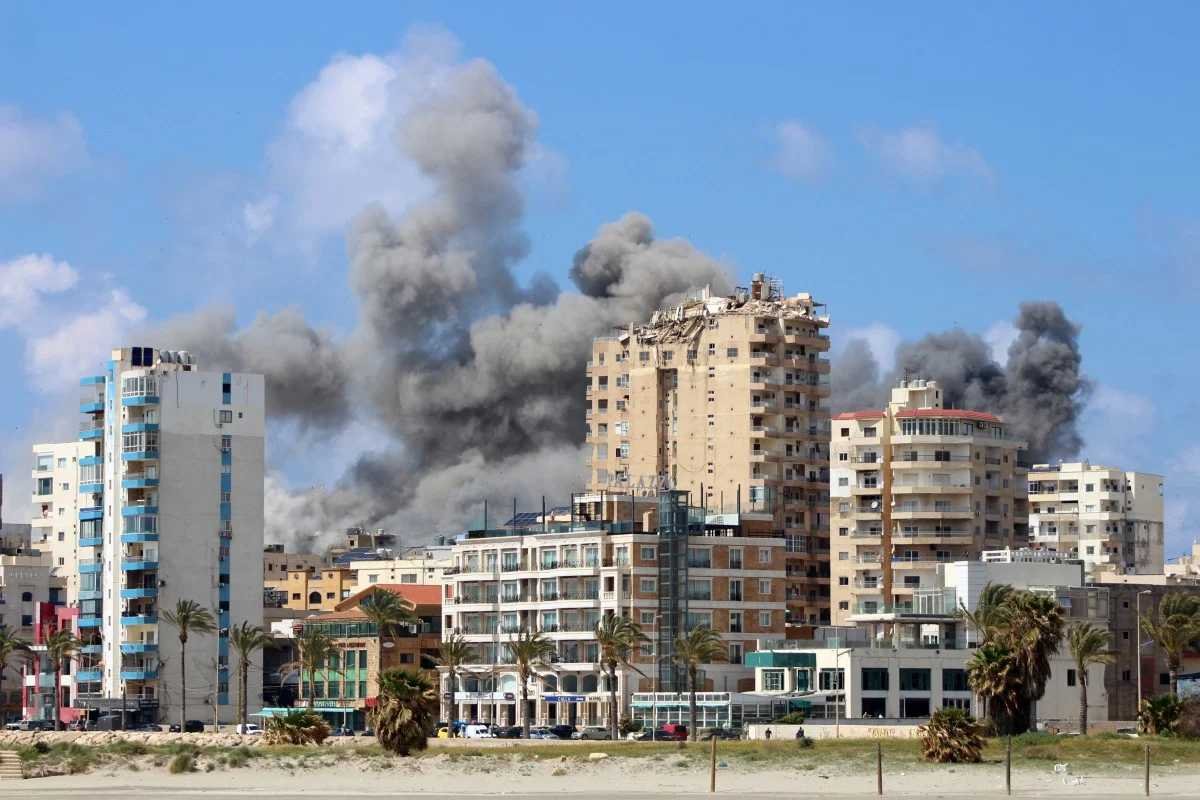
Israel carried out a wave of airstrikes on Beirut on Wednesday, marking the most violent assault on the Lebanese capital since the start of its war with Hezbollah. The Israeli military described the operation as its “largest coordinated strike across Lebanon,” underscoring the escalation of hostilities.
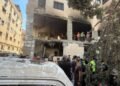
The strikes came without warning, sending panic through the city. Witnesses reported scenes of chaos as explosions rocked central Beirut. Motorists honked frantically to clear the streets, while pedestrians fled in fear. One of the attacks hit Corniche al-Mazraa, a major road in the capital. “A plane struck, and people started running left and right, and smoke was billowing,” said Ali Younes, a witness at the scene.
Another resident, Yasser Abdallah, who works in an appliance store, described the devastation. “I saw the blast, it was very strong, and there were children killed, some with their hands cut off,” he told AFP. Ambulances rushed to the targeted areas as emergency services struggled to respond.
Israel also struck Beirut’s southern suburbs, long considered Hezbollah strongholds, as well as parts of southern and eastern Lebanon. The military had earlier issued evacuation warnings for these areas, but many residents were caught off guard by the intensity and scale of the attacks.
The strikes come as Israel maintains that its two-week truce with Iran does not extend to Lebanon. By excluding Lebanon from the ceasefire, Israel has signaled its determination to continue operations against Hezbollah, which it views as a direct threat.
The attacks highlight the growing regional dimension of the conflict. Beirut, a city already strained by political instability and economic hardship, now faces renewed violence that risks deepening the humanitarian crisis. The sudden escalation has raised fears of further civilian casualties and displacement, with residents expressing shock at the scale of destruction.