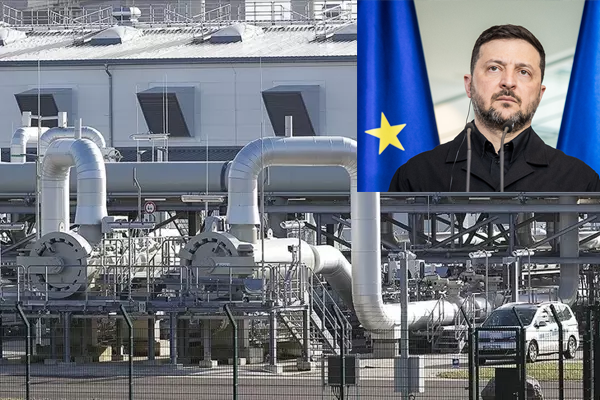
Ukraine has resumed pumping Russian oil to Hungary and Slovakia following repairs to the Druzhba pipeline, which was damaged in a Russian strike in January. Officials from all three countries confirmed the restart on Wednesday.
The Druzhba pipeline, one of Europe’s largest oil conduits, has been at the center of political tension between Kyiv, the European Union, and member states that continue to import Russian crude. Hungary and Slovakia rely on the pipeline for supplies, despite Ukraine’s opposition to ongoing purchases of Russian energy.
Ukrainian energy officials announced that transit operations had restarted after repairs were completed. “Oil transit was launched, and pumping began,” a Ukrainian industry source told AFP.
Hungary’s energy company MOL confirmed that crude shipments were expected to arrive in Hungary and Slovakia by Thursday. Slovakia’s Economy Minister Denisa Sakova echoed the statement, noting in a Facebook post that deliveries were anticipated in the early hours of Thursday.
The restart of oil supplies came just hours before the European Union gave preliminary approval for a long‑delayed loan package worth €90 billion ($106 billion) for Ukraine. The financial support had been blocked for months, largely due to opposition from Hungary’s outgoing Prime Minister Viktor Orban.
Orban had used the suspension of oil deliveries as leverage, accusing Kyiv of deliberately stalling repairs to the pipeline. His defeat in recent elections removed a major obstacle to the EU loan, which Kyiv views as critical for sustaining its economy during the ongoing war.
Slovak Prime Minister Robert Fico, who has frequently clashed with both Kyiv and Brussels, expressed skepticism about the timing of the developments. He suggested that the loan approval could be followed by another disruption in oil supplies, reflecting persistent mistrust between Slovakia and Ukraine.
Meanwhile, Ukrainian President Volodymyr Zelensky has consistently criticized EU member states that continue to buy Russian oil and gas. He argues that such imports provide Moscow with vital revenue to finance its war, now in its fifth year.
The resumption of oil transit underscores the complex interplay between energy supply, European politics, and the war in Ukraine. While Kyiv opposes the continued purchase of Russian energy, it remains responsible for maintaining transit infrastructure that supplies EU members.
The EU loan approval signals renewed financial backing for Ukraine, but divisions within the bloc remain evident. Hungary and Slovakia’s reliance on Russian oil highlights the difficulty of achieving a unified energy policy, especially as the war drags on.
For Ukraine, the restart of oil pumping is both a technical achievement and a political concession. It removes a key obstacle to securing urgently needed financial aid, while also exposing the contradictions in Europe’s approach to Russian energy.
Ukraine’s decision to resume oil transit through the Druzhba pipeline has immediate economic and political consequences. It ensures supplies for Hungary and Slovakia, unlocks a major EU loan, and demonstrates Kyiv’s ability to repair critical infrastructure under wartime conditions.
Yet the development also highlights ongoing tensions. Some EU states remain dependent on Russian energy, even as Ukraine insists that such imports undermine collective efforts to weaken Moscow’s war machine. The restart of oil flow may ease short‑term disputes, but the broader debate over Europe’s energy dependence and solidarity with Ukraine is far from resolved.