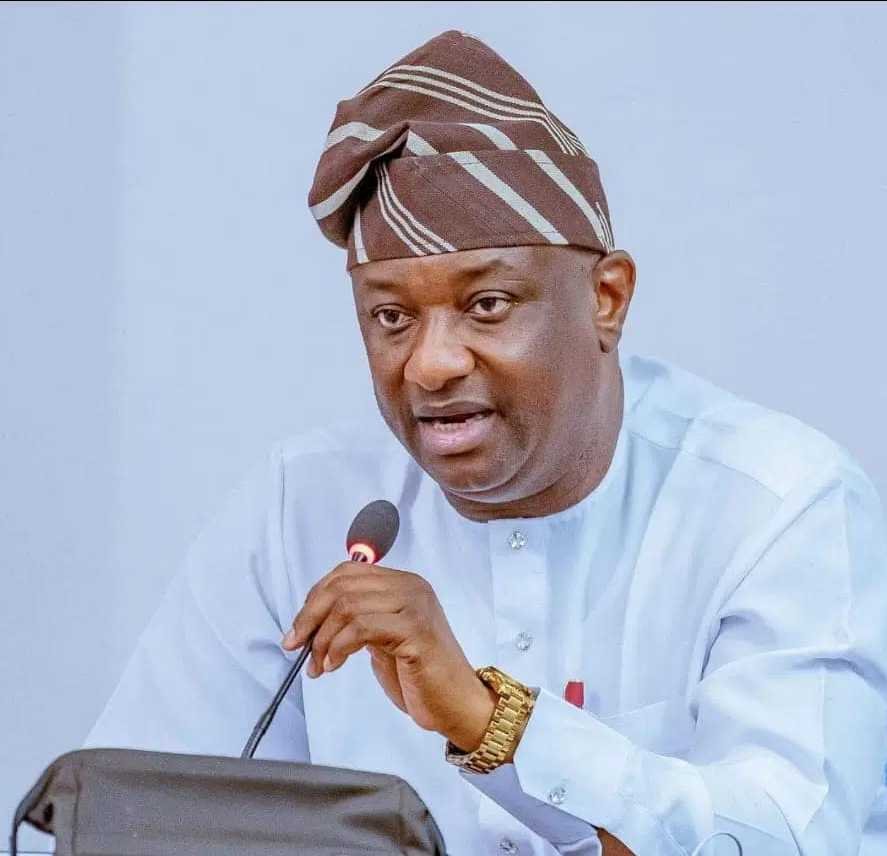
The Federal Government has resolved one of Nigeria’s longest-running aviation disputes while also approving a major initiative to strengthen the airline industry. Minister of Aviation and Aerospace Development, Festus Keyamo, announced on Thursday that the Federal Executive Council (FEC) had approved the settlement of the 20-year concession dispute over Lagos’ Murtala Muhammed Airport Terminal Two (MM2) and endorsed the creation of a Nigerian aircraft leasing company.
Keyamo, speaking after the FEC meeting presided over by President Bola Tinubu, described both decisions as “significant milestones” for the aviation sector. He explained that the MM2 dispute, which had dragged across successive administrations, involved Bi-Courtney Aviation Services Limited, owned by businessman Wale Babalakin. The conflict centered on control of domestic terminals, exclusivity rights, and financial claims against the government.
One of the most contentious issues was a Supreme Court judgment awarding Bi-Courtney N132 billion in damages, with interest accruing since 2009. Keyamo revealed that as part of the settlement, Bi-Courtney agreed to waive the claim entirely. “The first thing we told him was to write off the N132 billion plus interest. Nobody is going to pay that, and he agreed,” the minister said.
The government also insisted that Bi-Courtney relinquish its claim to Murtala Muhammed Airport Terminal One (MM1), which the company had argued was part of the original concession. “We cannot leave the entire domestic aviation operations in Lagos in private hands. He agreed,” Keyamo explained.
Another sticking point was the exclusivity clause granting Bi-Courtney sole rights to operate a private airport in Lagos. Keyamo said the clause was removed for both security and operational reasons. “That clause was not right, even for security reasons. He agreed, and we removed it,” he added.
In exchange, the government restored ownership of the long-abandoned Hotel and Conference Centre opposite MM2 to Bi-Courtney. The concessionaire must now complete the facility within 24 months. “We gave it back to him to complete and run on a shared basis with the federal government. He has 24 months to deliver it. We will not tolerate further delays,” Keyamo warned.
The settlement also allows regional flight operations from MM2 and expands the terminal’s apron to accommodate more aircraft. Importantly, the new agreement ensures the federal government will begin earning revenue from MM2 operations, which had not been the case during the dispute. Keyamo described the resolution as a balanced compromise: “At the end of the day, it was give and take. He made concessions, and we also made concessions. Both sides benefited.”
A formal signing ceremony involving all stakeholders will be held in Lagos, where full details of the agreement will be made public.
Alongside the MM2 settlement, the FEC approved the establishment of a Nigerian aircraft leasing company. Keyamo described the initiative as a “game changer” for the industry, designed to address the persistent challenge of access to aircraft by local airlines.
He explained that Nigerian airlines, which operate almost entirely in the private sector, struggle with leasing arrangements from foreign lessors. This often leads to disruptions, delays, and cancellations. “Some aircraft come into the country and within three months, they are gone because operators cannot meet lease obligations. That is why you see disruptions,” he said.
The new leasing company will operate as a Special Purpose Vehicle (SPV) driven by private sector investment. It will aggregate aircraft for local airlines, offering both short-term and long-term leasing options. This will reduce dependence on foreign lessors and improve operational stability.
Keyamo clarified that the government will not directly fund the company but will provide guarantees to support lease financing and aircraft repossession. “The role of government is to guarantee the leases. We are not putting in funds, but we will have equity in the company and earn returns,” he explained.
He disclosed that several major African and international investors have already expressed interest, citing Nigeria’s large aviation market and strategic location. “Investors are already chasing us. We have the market, the traffic, the population and the routes. This is the Nigerian aviation franchise we are selling to the world,” he said.
President Tinubu has directed the aviation ministry to work with the ministries of Finance, Justice, and Trade and Investment to finalize the SPV’s structure. Keyamo expressed confidence that the initiative would empower Nigerian airlines to compete more effectively with foreign carriers, which currently dominate about 95 percent of international traffic to and from Nigeria.
“This is a major step towards empowering our local airlines to take back their market share. In the next few months, Nigerians will begin to see the impact,” he said.
The twin decisions—settling the MM2 dispute and approving the leasing company—signal a new phase for Nigeria’s aviation industry. Resolving the long-standing conflict removes a major obstacle to growth, while the leasing initiative addresses a structural weakness that has hindered local airlines for years. Together, they reflect the government’s strategy to stabilize the sector, attract investment, and strengthen Nigeria’s position in regional and global aviation.