In the weeks prior to the Jan. 3 U.S. Operation that captured former Venezuelan President Nicolas Maduro, Washington and Caracas engaged in discussions over the future of Venezuela through a mediator in Qatar. Neither President Trump nor Maduro discussed Maria Corina Machado, an opposition leader and Nobel Peace Prize laureate, in any transition plans during those talks.
Machado Left Out of Transition Vision
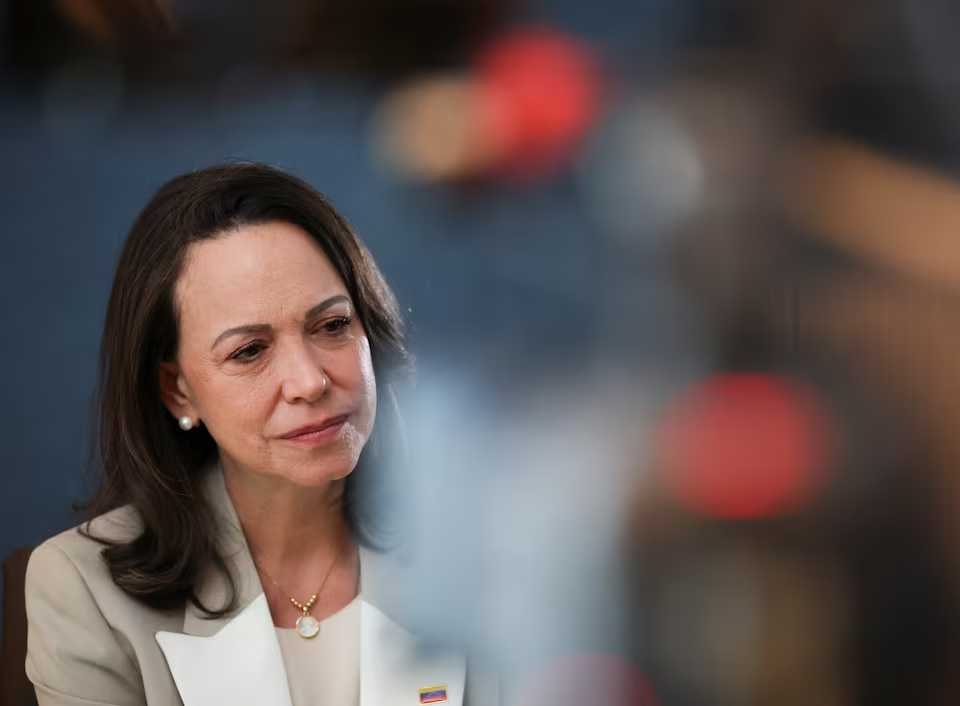
“No one discussed Maria Corina Machado at any level by the U.S. And Venezuelan negotiators,” the Qatari source told CNN. Machado, who has loudly supported U.S. Intervention, was vocal in her criticism of Maduro.
President Trump stated weeks after the Jan. 3 operation that Machado “doesn’t have the support.” Machado met with Trump at the White House days after the operation and gifted him with her Nobel Prize, while also meeting with White House press secretary Karoline Leavitt, who maintained President Trump’s viewpoint regarding her lack of support in Venezuela.
“The support she has is from throughout the entirety of Venezuela; there’s overwhelming support,” insisted David Smolansky, a Machadista adviser. “She has over-the-top support and leadership that’s out of this world.”
Rodrguez Steps Up as President
Instead of Machado, it was Vice President Delcy Rodrguez whom President Trump’s administration officially backed as the interim leader in Venezuela. Rodrguez had communications with U.S. Officials through Doha in 2024, per the source in Qatar.
Rodrguez had traveled to Qatar several times in 2024, meeting with Prime Minister and Foreign Minister Sheikh Mohammed bin Abdulrahman Al Thani each time to help solidify Qatar’s role in the talks. Both Washington and Caracas, requesting that Qatar mediate the conversations, supported Doha’s role in the transition talks.
Qatar’s Mediator Role
The small Arab nation of Qatar has served as an intermediary between Washington and Caracas on numerous occasions. Discussions during the Biden administration focused on prisoner exchanges and negotiating the release of Americans held in Venezuela. Venezuela publicly thanked Qatar after Maduro’s capture for serving as a communication channel and helping to ensure proof of life for those captured and the Americans involved in the U.S. Operation.
A temporary bank account was set up in Doha with Washington’s approval; profits from Venezuelan oil were deposited into the account. However, the account has since been closed.
U.S. Raid and Subsequent Events
Qatar did not receive a warning prior to the January 3 operation in which U.S. Troops captured Maduro and his wife, Cilia Flores. The two are currently being held and face drug trafficking and weapons charges.
Recently, the U.S. Government permitted Venezuela to pay for the duo’s defense. It has been weeks of delayed approval in a judicial process that has seemed slow.
Wider Implications
Machado’s absence from the transition discussions indicates the complicated situation of Venezuela’s politics, and the U.S.’s unwillingness to back her as a leader of post-Maduro Venezuela despite her prominent position internationally and outspokenness against the president. President Trump has disputed Machadista adviser David Smolansky’s assessment that his wife has “over-the-top” support and is “out of this world” backed.
However, Washington and Caracas prioritized Vice President Delcy Rodrguez as Maduro’s successor, backing the vice president whom a Qatari source said had had communication with U.S. Officials.
Qatar’s engagement in helping Washington negotiate with Venezuela signifies the small nation’s growth in global diplomacy. By housing negotiations and helping to secure transactions like the Venezuelan oil payments through a Qatari bank account, Doha successfully established itself as a neutral partner between the two feuding governments.
As Maduro and Flores await trial, the future of Venezuela continues to be a volatile issue. The U.S.’s successful capture of Maduro could not answer many questions about the transition into a post-Maduro era, but Washington’s hesitancy to support Machado as president reveals many details about who the U.S. Truly sees in power.