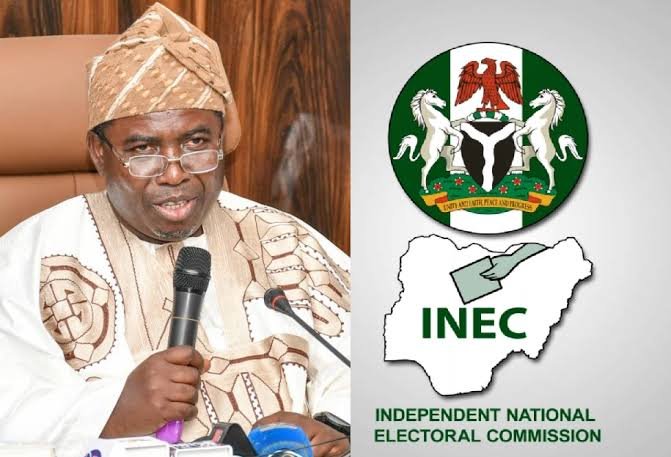
The Independent National Electoral Commission (INEC) has started reviewing the 2022 guidelines for political parties as part of preparations for future elections and to strengthen transparency in Nigeria’s electoral system.
INEC Chairman, Joash Amupitan, announced the development during a technical workshop on the revision of the commission’s regulations and guidelines for political parties. The event took place in Ikot Ekpene on Wednesday.
Amupitan said the review became necessary after the passage of the Electoral Act 2026. According to him, the new law requires adjustments to existing regulations so they align with the updated legal framework.
He urged participants at the workshop to ensure the revised guidelines address the expectations of Nigerians and support the growth of democracy in the country.
The INEC chairman explained that the commission intends to move beyond the provisions contained in the 2022 guidelines in order to improve the conduct and management of political parties.
“The integrity and transparency of our electoral processes are paramount to fostering public trust and ensuring that every Nigerian, regardless of political affiliation, has a voice in shaping our nation’s future.
“The recent enactment of the Electoral Act 2026, which was assented to in February, has fundamentally recalibrated our statutory windows. The reduction in timelines creates a compressed operational environment that demands we work at unprecedented speed and with surgical precision.
“This workshop is not merely an administrative exercise; it is a legislative and operational realignment. We are here to harmonise our regulations and guidelines for political parties with the 2026 Act,” Mr Amupitan said.
Amupitan also raised concerns about the level of internal democracy within political parties. He said many parties struggle with credible primary elections, which are meant to produce acceptable candidates.
According to him, the quality of internal party democracy directly affects the conduct of general elections organised by INEC.
“If unpopular candidates are forced upon the electorate through non-transparent processes, we face the twin monsters of voter apathy and an explosion of pre-election litigation.
“Our collective commitment is being challenged by leadership squabbles and involving the judiciary in politics.
“We must use this workshop to embed regulatory mechanisms that encourage constructive dialogue and internal dispute resolution, reminding party leaders that cohesive leadership is not an option; it is a democratic imperative,” he said.
He added that the commission will continue to serve as a neutral referee. He said INEC remains committed to providing equal opportunities for all political parties in the country.
In his goodwill message, the Country Director of the Westminster Foundation for Democracy (WFD), Adebowale Olorunmola, noted that the Electoral Act 2026 introduced several changes meant to address the expectations of Nigerian voters.
Olorunmola said the updated law makes it necessary to improve the commission’s guidelines so they can effectively support the provisions of the Act.
“The 2022 edition of the INEC Regulations and Guidelines served us well in the conduct of the 2023 general elections and other subsequent elections.
“However, ‘current realities’ are no longer what they were four years ago,” he said.
He added that the ongoing review should mark the beginning of a new phase in which political parties will be judged by their internal democratic practices and their commitment to the Nigerian people.
Olorunmola also reaffirmed that the Westminster Foundation for Democracy will continue to support efforts aimed at strengthening Nigeria’s electoral process.
Meanwhile, the Resident Electoral Commissioner in Akwa Ibom State, Obo Effanga, said the new Electoral Act makes it important for INEC to update the regulations guiding political parties. He noted that the review will help the commission implement the provisions of the law effectively.
The workshop brought together stakeholders who are expected to contribute ideas toward improving Nigeria’s electoral guidelines ahead of future elections.