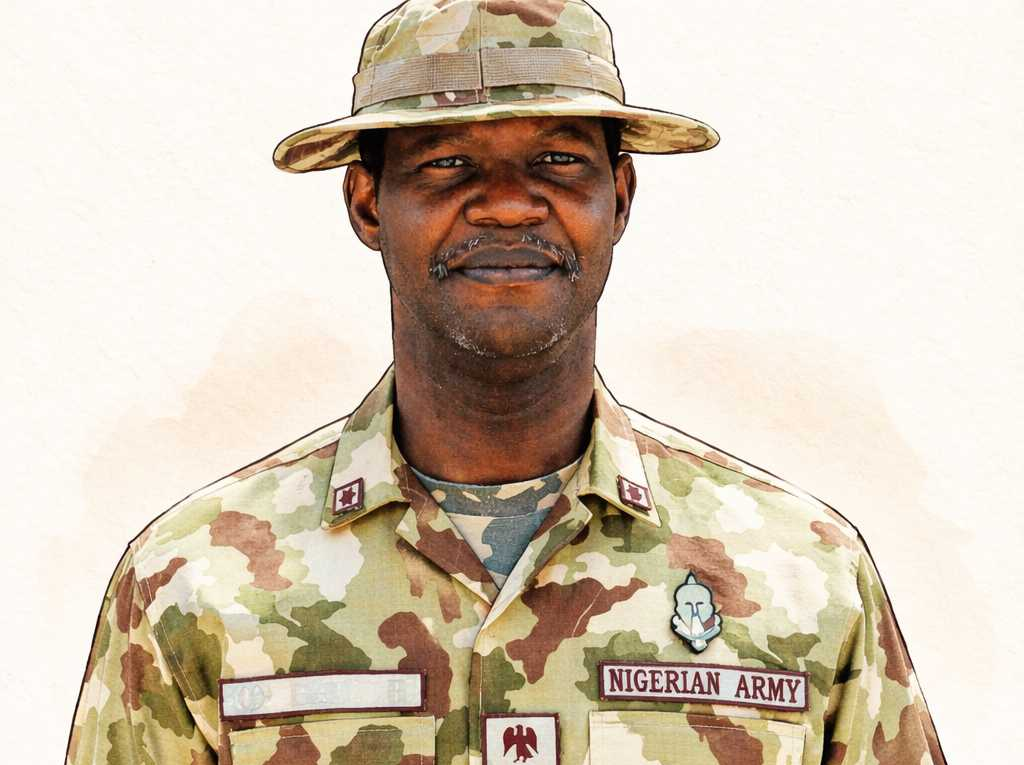
A brigadier general and at least 18 soldiers were killed when terrorists attacked a military base in Benisheikh, Borno State, northeast Nigeria. The assault, which occurred overnight, marks one of the deadliest incidents against the armed forces in recent months and underscores the persistent threat of insurgent violence in the region.
Local officials confirmed the death of Brigadier General O.O. Braimah, commander of the brigade stationed at the base. Zannah Lawan Ajimi, chairman of Kaga Local Government Area, told AFP that the attackers overran the facility, killing troops and setting vehicles ablaze. Intelligence sources corroborated the account, describing the attack as swift and devastating.
The incident is the second killing of a senior military officer in five months. In November, Brigadier General Musa Uba was killed by fighters from the Islamic State West Africa Province (ISWAP), a Boko Haram offshoot. His death was previously the highest-ranking casualty in Nigeria’s 17-year fight against terrorism since Boko Haram’s uprising in 2009.
Security sources said the Benisheikh attackers withdrew after destroying vehicles and buildings. The Nigerian Army and Defence Headquarters have yet to issue an official statement. Analysts note that the assault reflects the growing sophistication and coordination of terrorist groups operating across the northeast.
Researchers have warned of escalating violence since early 2025. Maiduguri, the Borno State capital, has suffered two suicide bombings since December, reviving memories of the insurgency’s peak a decade ago. The renewed attacks suggest that extremist groups are regaining momentum despite ongoing military operations.
The United States recently raised concerns about Nigeria’s deteriorating security environment. On Wednesday, the U.S. State Department authorised non-emergency government employees to leave Abuja, citing heightened risks nationwide.
While the insurgency remains concentrated in the northeast, extremist violence has spread westward. Armed groups linked to both Islamic State and Al-Qaeda have expanded operations into northwestern and central Nigeria, where criminal gangs—often referred to as bandits—have long terrorised rural communities.
This week alone, gunmen killed at least 90 people across several villages in the northwest, according to figures compiled by AFP from local and humanitarian sources. One of the attacks occurred in Kebbi State, where police blamed a group known as Mahmuda, reportedly affiliated with Al-Qaeda. Kebbi, which borders Benin and Niger, has faced a surge in terrorist activity since 2025.
Conflict monitor ACLED reports a sharp increase in violence across the region, driven by militants aligned with Al-Qaeda and Islamic State. In nearby Kwara State, fighters from the Al-Qaeda-linked Jama’at Nusrat al-Islam wal-Muslimin (JNIM) claimed responsibility for an October attack—evidence that the Sahel’s instability is spreading south toward coastal West Africa.
In December, the United States, with Nigerian support, conducted airstrikes in Sokoto State targeting Islamic State Sahel Province fighters. These militants typically operate across Niger, Mali, and Burkina Faso, but their presence in Nigeria highlights the expanding reach of transnational terrorist networks.
The killing of Brigadier General Braimah underscores the continuing toll of Nigeria’s counterinsurgency campaign. Despite years of military operations, extremist groups remain entrenched, exploiting porous borders and local grievances. The attack in Benisheikh not only exposes vulnerabilities in military outposts but also signals the enduring challenge of restoring stability in the northeast.
As Nigeria confronts overlapping threats—from insurgents in the northeast to bandits and jihadist cells in the northwest—the government faces mounting pressure to strengthen intelligence coordination and regional cooperation. The death of another senior officer serves as a grim reminder that the fight against terrorism remains far from over.