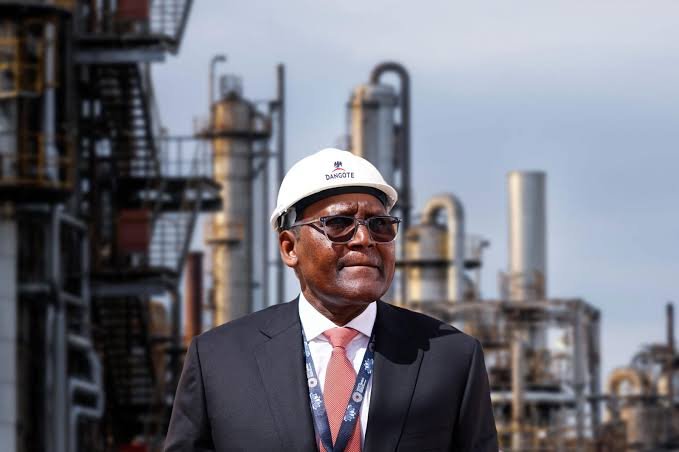
The Dangote Petroleum Refinery has entered into an agreement with 12 major petroleum marketing firms to distribute between 60 million and 65 million litres of Premium Motor Spirit across Nigeria each day.
President of the Dangote Group, Aliko Dangote, made this known in Lagos. He explained that the arrangement is designed to ensure steady fuel supply nationwide while allowing excess production to be exported.
According to a statement, Dangote said, “We have agreed an offtake framework to supply up to 65 million litres daily for the domestic market. Any surplus, estimated at between 15 and 20 million litres, will be exported.”
The development signals a major change in the downstream petroleum sector. Nigeria’s daily petrol consumption is estimated at between 50 million and 60 million litres. This means the refinery has the capacity to meet local demand and still produce surplus.
Based on projected output, the facility could deliver between 1.8 billion and over 2 billion litres of petrol monthly.
The new distribution structure follows an earlier understanding reached in October 2025 between the refinery and downstream operators. That move aimed to improve supply and reduce instability in pump prices.
Under the latest deal, selected marketers will oversee nationwide distribution. The arrangement has the backing of the Nigerian Midstream and Downstream Petroleum Regulatory Authority. It is expected to curb supply shortages and discourage hoarding.
The participating companies include MRS Oil Nigeria Plc, Nigerian National Petroleum Company Limited Retail, 11 Plc, TotalEnergies Marketing Nigeria, Rainoil Limited, Northwest Petroleum & Gas Company Limited, Ardova Plc, Bovas & Company Limited, AA Rano Nigeria Limited, AYM Shafa Limited, Conoil Plc, and Masters Energy.
The statement noted that the structured supply model would enhance logistics and support price stability. It also stated that export volumes would range between 15 million and 20 million litres daily after local demand is met.
“This would conserve foreign exchange, improve the country’s trade balance and strengthen external reserves, as Nigeria will no longer rely heavily on imported fuel,” the statement explained.
For many years, Nigeria depended on imported refined petroleum products. This situation exposed the country to foreign exchange pressure and supply disruptions.
The Group Chief Executive Officer of the Nigerian National Petroleum Company Limited, Bayo Bashir Ojulari, described the refinery as a major national asset that could transform energy security.
He said, “This plant was designed for 650,000 barrels per day. None of us thought it would even touch 550,000. What we saw live today was 661,000. These are live parameters, not reports or photographs.”
Ojulari stated that the refinery reflects a new phase of industrial growth and technological progress in the country.
Recent reforms in the oil and gas sector followed the removal of fuel subsidy under President Bola Tinubu. The refinery is expected to play a key role in reducing fuel imports, stabilising prices, and positioning Nigeria as an exporter of refined petroleum products within West and Central Africa.
Analysts believe the success of the new distribution model could lead to a more reliable fuel supply system and reduce recurring shortages across the country.