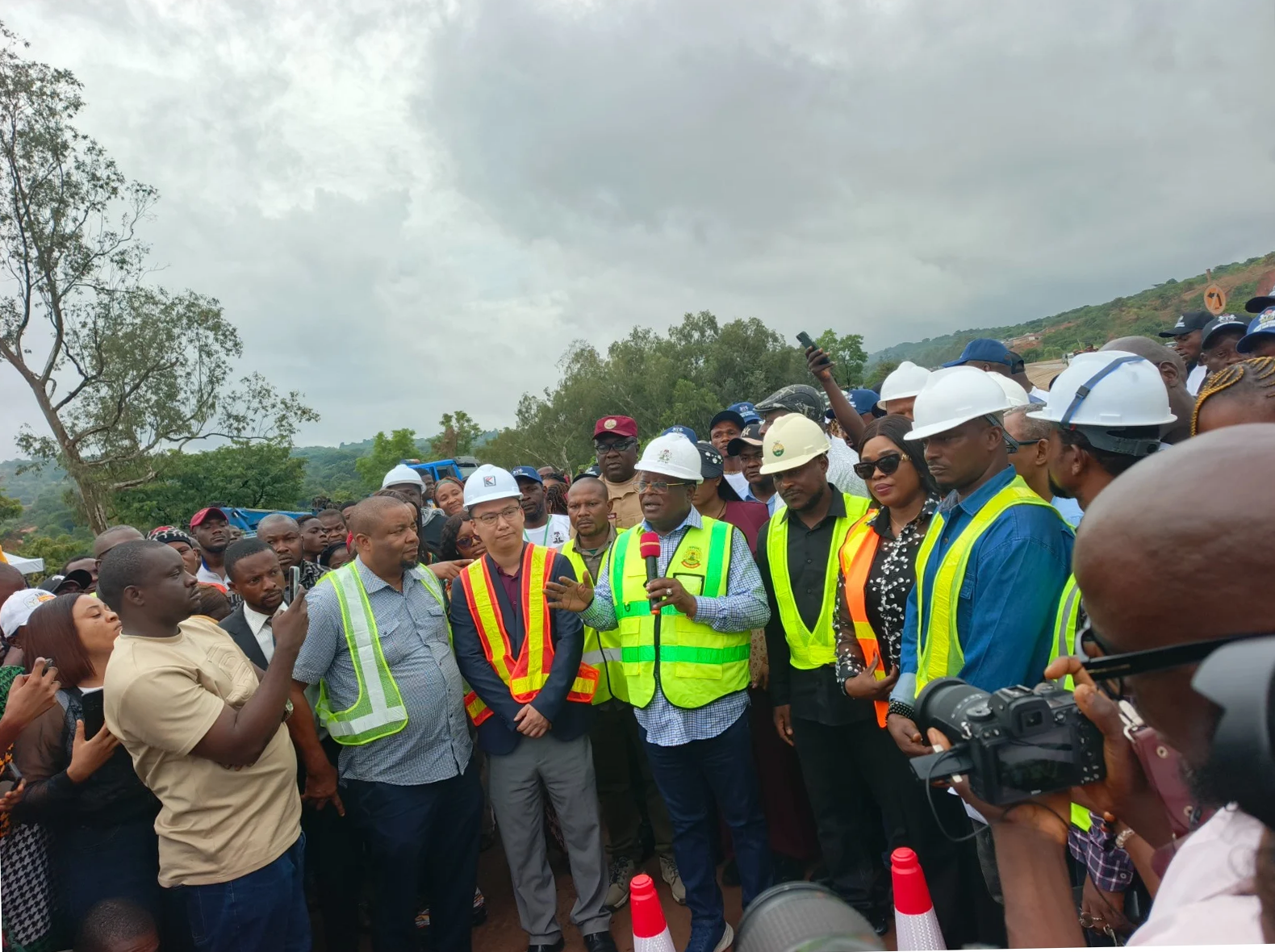
The Federal Government has opened a 15-kilometre stretch of the 9th Mile–Abakpa section of the Enugu–Onitsha highway to ease traffic during the Easter celebrations. Minister of Works, David Umahi, announced the intervention on Thursday while inspecting the project, describing it as a special measure to provide immediate relief for South-East residents.
Umahi expressed satisfaction with the quality of work and reaffirmed the government’s commitment to delivering durable infrastructure. He explained that solar-powered lights would be installed along the stretch to improve safety. He noted that the Enugu–Onitsha and Enugu–Port Harcourt corridors are strategic routes in the region, historically plagued by congestion, accidents, and poor road conditions.
Recalling the state of the road before the current administration, Umahi said commuters often spent over seven hours travelling between Enugu and Onitsha due to stalled construction. He emphasized that the newly opened section, built with reinforced concrete pavement, is about 97 percent complete and designed to last decades with minimal maintenance.
The project was originally awarded years ago under a tax credit arrangement involving MTN and RCC but suffered delays until President Bola Tinubu ordered its acceleration and redesign. The Federal Government reviewed the ₦202 billion contract, carving out a 72-kilometre stretch for reconstruction using reinforced concrete. The new section, valued at ₦150 billion, is part of a broader reconstruction effort now estimated at over ₦350 billion.
Umahi highlighted ongoing works, including an 18-kilometre stretch towards Anambra State and a 39-kilometre segment from the Niger Bridge axis. Contractors handling asphalt portions have been directed to adopt concrete standards for the remaining 23 kilometres, citing concrete’s longer lifespan compared to asphalt.
He also outlined other federal projects in the South-East, including upgrades to the Enugu–Port Harcourt Expressway, dualisation of the Enugu–Abakaliki road, reconstruction of the Afikpo–Abia–Okigwe corridor, and improvements to the Aba–Port Harcourt road. Access roads and bypasses connected to the Second Niger Bridge, as well as several flyovers, are also underway. Previously collapsed bridges along the Enugu–Onitsha route have been rebuilt within nine months and equipped with solar lighting.
Umahi linked the project to larger national initiatives such as the Lagos–Calabar Coastal Highway and a proposed corridor connecting Calabar through Ebonyi and Benue to Abuja, which he said would drastically reduce travel time between the South-East and the Federal Capital Territory.
Addressing concerns about abandoned projects, Umahi insisted that many works are progressing steadily. He clarified that the eastern rail corridor linking Port Harcourt to Maiduguri falls under the Ministry of Transport, with procurement processes ongoing.
He urged political leaders and stakeholders in the South-East to support the Tinubu administration, stressing that governance should be judged by development outcomes. Umahi expressed confidence that the Enugu–Onitsha highway will be fully completed by 2026, transforming mobility, enhancing safety, and boosting economic growth in the region.
“This project will change the story of transportation in the Southeast. What you see today is just the beginning,” he said.