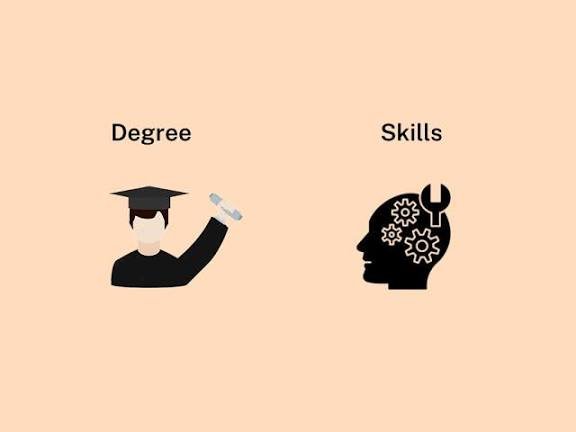
A new outlook on education and career growth suggests that formal degrees may soon lose their dominance as the primary measure of success. Experts argue that by the year 2030, practical human abilities and adaptable competencies will carry greater value than certificates alone.
The argument draws inspiration from Robert Frost’s famous poem. As stated, “The world today stands at its crossroads, much like the traveller In Robert Frost’s –“ The Road not taken.”.” One direction reflects the traditional path shaped by grades, academic qualifications, memorisation, and routine instruction. This route often emphasises theory with limited real-world relevance and discourages questioning.
The alternative path points to a future built on flexibility and continuous learning. It promotes independent judgement, collaboration, emotional awareness, and technological confidence. Echoing this shift, Frost’s words resonate strongly: “I took the one less travelled by, and that has made all the difference.’” Observers believe that the less conventional route will define success in the coming decade.
Analysts stress that national progress will depend more on citizens’ abilities than on the certificates they possess. With automation advancing rapidly, machines and algorithms are expected to handle many routine duties within the next few years. This development raises concerns about whether academic degrees alone can guarantee relevance in the labour market.
While qualifications may create opportunities, specialists maintain that survival and growth will depend on broader competencies such as reasoning, communication, and digital understanding. These attributes are now viewed as essential rather than optional.
Emotional Quotient
High emotional intelligence ranks among the most valued capabilities. Employers and institutions increasingly assess how individuals respond to pressure, manage conflict, and maintain composure during crises. The capacity to build trust and sustain cooperation is considered vital for leadership and workplace harmony.
Learning Agility And Adaptability
Rapid transformation across industries has made flexibility indispensable. Roles continue to evolve, and those who resist change risk becoming outdated. The ability to learn, discard obsolete knowledge, and acquire new skills is projected to surpass static academic achievement in importance.
Digital Fluency
Technology now shapes daily life and professional systems. Interaction has moved beyond keyboards to advanced automated platforms. Artificial intelligence has spread across sectors and households. This trend demands confidence in navigating digital tools and smart systems rather than fear of technological change.
Critical Thinking And Problem Solving
The modern information space is saturated with data from multiple sources. The real challenge lies in analysis and judgement. Individuals who question assumptions and evaluate situations from several angles are better positioned to make sound decisions and develop workable solutions.
Communication And Storytelling
Experts also highlight the power of effective expression. Attention spans continue to shrink amid constant distractions. The ability to communicate ideas clearly and present messages that connect with real experiences has become a strategic advantage. Storytelling, in this context, refers to structuring ideas in ways that engage and influence audiences.
In summary, projections indicate that success by 2030 will depend less on academic titles and more on developed human skills. Those who strengthen these five areas are expected to shape both personal futures and broader societal progress. The message mirrors Frost’s enduring reflection that choosing a different path can indeed “make all the difference.”