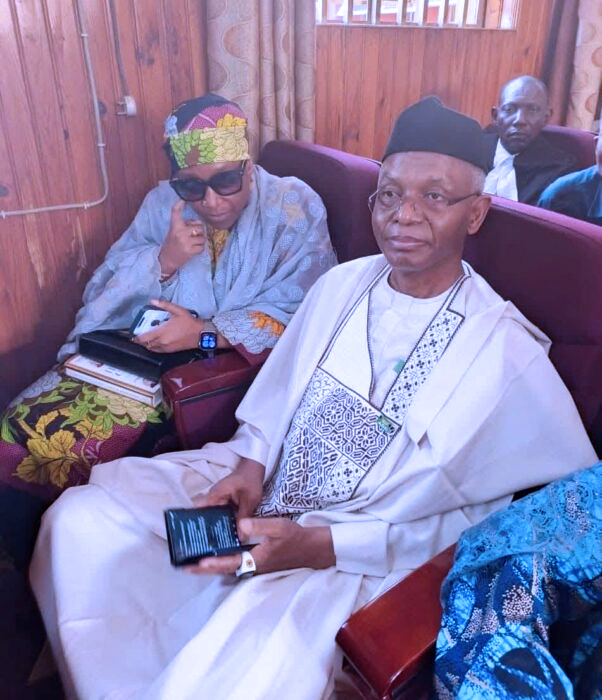
Former Kaduna State governor Nasir El-Rufai was taken into custody by operatives of the Independent Corrupt Practices and Other Related Offences Commission (ICPC) shortly after a bail hearing at the Federal High Court in Kaduna on Wednesday. The move followed heightened speculation earlier in the day, as heavy security presence around the court signaled the likelihood of detention.
El-Rufai, who faces corruption charges, arrived at the court around 9:05 a.m. in a Hilux van. His appearance drew attention from security personnel and observers. After the hearing, he was escorted into a waiting vehicle and driven away, reportedly to Abuja.
Lead defence counsel, Oluwole Iyamu (SAN), confirmed to journalists that the court had reserved ruling on El-Rufai’s bail application until April 14. He explained that arguments had been presented and responded to, and the defence now awaited the court’s decision. Iyamu expressed confidence in the judicial process, noting that the defence had laid out its case fully.
Iyamu also highlighted that the legal team was preparing for another matter scheduled for April 10 at the Federal High Court in Abuja. He described that case as distinct, involving the Department of State Services (DSS). According to him, all necessary filings had been made, and the defence was ready to proceed.
The Kaduna proceedings came a day after a brief complication in court, when a motion seeking the recusal of presiding judge Rilwan M. Aikawa was introduced and later withdrawn. That adjournment set the stage for Wednesday’s bail hearing.
El-Rufai’s legal troubles extend beyond the Federal High Court case. He was earlier arraigned at the Kaduna State High Court, Kawo, alongside Amadu Sule. In that matter, the charges include abuse of office, fraud, and conferring undue advantage. These allegations are separate from the current proceedings in the Federal High Court.
The ICPC’s decision to detain El-Rufai immediately after the bail hearing underscores the seriousness of the charges and the determination of authorities to ensure his availability for trial. The prosecution has not opposed the bail application, but the court’s ruling will determine whether El-Rufai remains in custody or secures temporary freedom pending trial.
Observers note that the multiple cases against the former governor reflect broader efforts by anti-corruption agencies to pursue allegations of misconduct by public officials. The Kaduna and Abuja matters, though distinct, highlight the complexity of the legal challenges he faces.
For now, attention shifts to April 10, when the Abuja case comes up, and April 14, when the Kaduna court will deliver its ruling on bail. The outcome of these hearings will shape the trajectory of El-Rufai’s defence strategy and determine whether he continues to face proceedings from detention or under bail conditions.