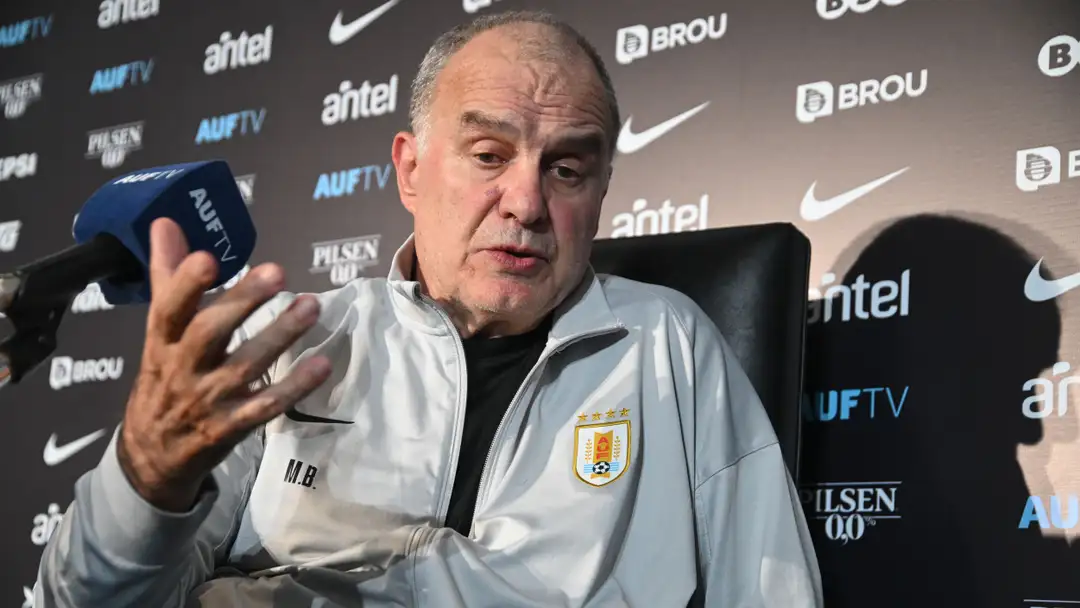
Marcelo Bielsa has spoken publicly for the first time about his absence from Leeds United since leaving the club in 2022. The Argentine coach, now in charge of Uruguay, explained that nostalgia has kept him from returning to Elland Road. Bielsa, 70, is back in England this week as his team prepares to face Gareth Southgate’s England at Wembley in a friendly match.
Bielsa’s departure from Leeds was abrupt. After four years in charge, he was dismissed in February 2022 following a run of poor defensive performances. His side conceded 14 goals in three games, leaving the club in danger of relegation. Bielsa admitted the decision was justified, acknowledging that survival under those circumstances was unlikely. Despite the manner of his exit, he remains a revered figure in West Yorkshire. His tenure transformed Leeds, ending their 16-year absence from the Premier League and delivering a ninth-place finish in their first season back.
Appointed in 2018, Bielsa quickly became a symbol of ambition and progress for Leeds. His attacking philosophy, often described as “Bielsa-ball,” demanded relentless energy and tactical discipline. The approach brought success in the Championship, where Leeds secured promotion with 93 points in 2020. The following season, his team impressed in the Premier League, earning admiration for their fearless style of play. Yet the same intensity that defined his methods also contributed to defensive frailties, which ultimately cost him his job.
Reflecting on his time at Leeds, Bielsa described it as one of the most rewarding experiences of his career. He praised the passion of English supporters, crediting their devotion as the foundation of the league’s strength. “Being at Leeds gave me the most beautiful memories and one of the best gifts football has given me,” he said. He emphasized that the emotional bond with the club and its fans makes returning difficult, as nostalgia can be overwhelming. Bielsa also expressed hope that Leeds will remain in the Premier League, insisting the club has the resources and talent to compete at that level.
Turning to his current role, Bielsa views the upcoming match against England as a crucial test for Uruguay. He stressed the importance of facing elite opposition, noting that such challenges demand the highest standards from his players. “Every match is an opportunity,” he explained. “I always prefer that the games we play demand the very best from us.” He highlighted the strength of English football, pointing out that most of England’s players compete in one of the toughest leagues in the world. For Bielsa, this makes the fixture an invaluable measure of Uruguay’s progress.
Uruguay’s schedule continues after Wembley. The team will travel to Turin to face Algeria at the Allianz Stadium, their final warm-up before the 2026 World Cup. Drawn into Group H, Uruguay will begin their campaign against Saudi Arabia, followed by matches against Cape Verde and Spain. Bielsa sees these preparations as essential to refining his tactical approach and ensuring his squad is ready for the challenges ahead.
In sum, Bielsa’s return to England is both professional and personal. Professionally, it offers Uruguay a chance to test themselves against one of the strongest national teams in the world. Personally, it revives memories of a transformative chapter in his career, one defined by triumph, struggle, and enduring affection from Leeds supporters. Though he has not set foot in Elland Road since his departure, his legacy there remains intact, and his reflections reveal a manager deeply aware of the emotional weight of his journey.