The Nigeria Sovereign Investment Authority (NSIA) has announced a significant increase in its net asset value, which rose to ₦4.88 trillion for the 2025 financial year. The growth was attributed to improved earnings, disciplined investment strategies, and sustained expansion across its portfolio.
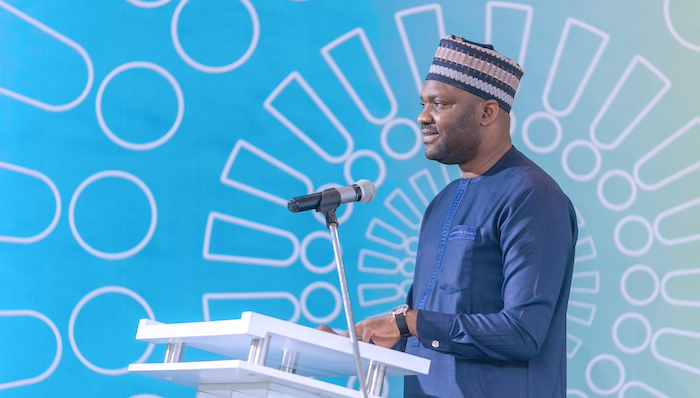
Managing Director Aminu Umar-Sadiq disclosed the figures in Abuja during the presentation of the Authority’s financial statements. He noted that total assets grew by 10.9 percent year-on-year to ₦4.91 trillion. In dollar terms, net assets climbed by 19.8 percent to $3.4 billion, reflecting the strength of NSIA’s diversified global portfolio and consistent capital growth since inception.
The financial report showed a Core Total Comprehensive Income of ₦478.8 billion and Core Operating Income of ₦525.3 billion. Despite a volatile global and domestic environment, NSIA maintained resilience. Profitability improved, with Return on Equity rising to 10.5 percent from 7.2 percent in 2024, while Return on Assets increased to 9.9 percent from 7.1 percent.
Although the Authority recorded a net unrealised foreign exchange loss of ₦322.4 billion due to the naira’s appreciation, core income excluding FX volatility grew by 17.4 percent, marking its highest level since inception. Umar-Sadiq highlighted that NSIA has consistently turned a profit every year since its establishment, growing its net asset value from an initial $1 billion seed capital to $3.4 billion over 13 years, representing a compound annual growth rate of 10.7 percent.
The Authority operates three core funds: the Stabilisation Fund, the Future Generations Fund, and the Nigeria Infrastructure Fund. These are designed to support economic stability, intergenerational savings, and domestic infrastructure development.
Beyond financial performance, NSIA expanded investments across healthcare, energy, agriculture, housing, and technology. In healthcare, it strengthened its oncology platform, MedServe, with plans to commission eight new centres nationwide by the third quarter of 2026. It also secured $24.3 million in concessional financing to enhance cancer and cardiac care services.
In energy, NSIA advanced projects through its renewable energy platform, RIPLE. These include a 400MW solar module assembly plant in Ogun State and a 30MW embedded power project in Victoria Island, Lagos, aimed at reducing reliance on diesel.
To foster innovation, NSIA partnered with the Japan International Cooperation Agency to launch a $50 million impact fund targeting Nigerian startups in healthcare, agriculture, education, and energy. Umar-Sadiq noted that each dollar deployed by NSIA attracts two to three dollars in additional investment for Nigeria’s infrastructure sector.
In agriculture, the Authority progressed with a temperature-controlled logistics network to reduce post-harvest losses. It also supported affordable housing projects in Abuja and Kano, addressing critical social needs.
Chief Financial Officer Victor Sesere reported that NSIA exceeded performance targets for 2025, with total revenue rising by six percent and total comprehensive income increasing by 68 percent compared to 2024. He emphasized that returns on equity remained above 10 percent, reflecting efficient capital utilization.
Chief Investment Officer Kolawole Owodunni attributed the strong performance to strategic positioning amid global and domestic macroeconomic developments. He cited currency stabilization, tight monetary policy, and robust returns from technology-linked investments as key drivers. Despite increased investments, NSIA maintained cost discipline, with a cost-to-income ratio of 4.2 percent, one of the lowest in the industry.
The management team stressed that the 2025 results reflect a deliberate strategy to balance financial returns with measurable economic impact. NSIA reaffirmed its focus on portfolio diversification, risk-adjusted returns, and catalytic investments to drive long-term growth while preserving capital for future generations.
The Authority’s performance underscores its role as a stabilizing force in Nigeria’s economy, combining profitability with strategic investments in critical sectors. By maintaining discipline and expanding impact-driven projects, NSIA continues to position itself as a model of sustainable sovereign wealth management.