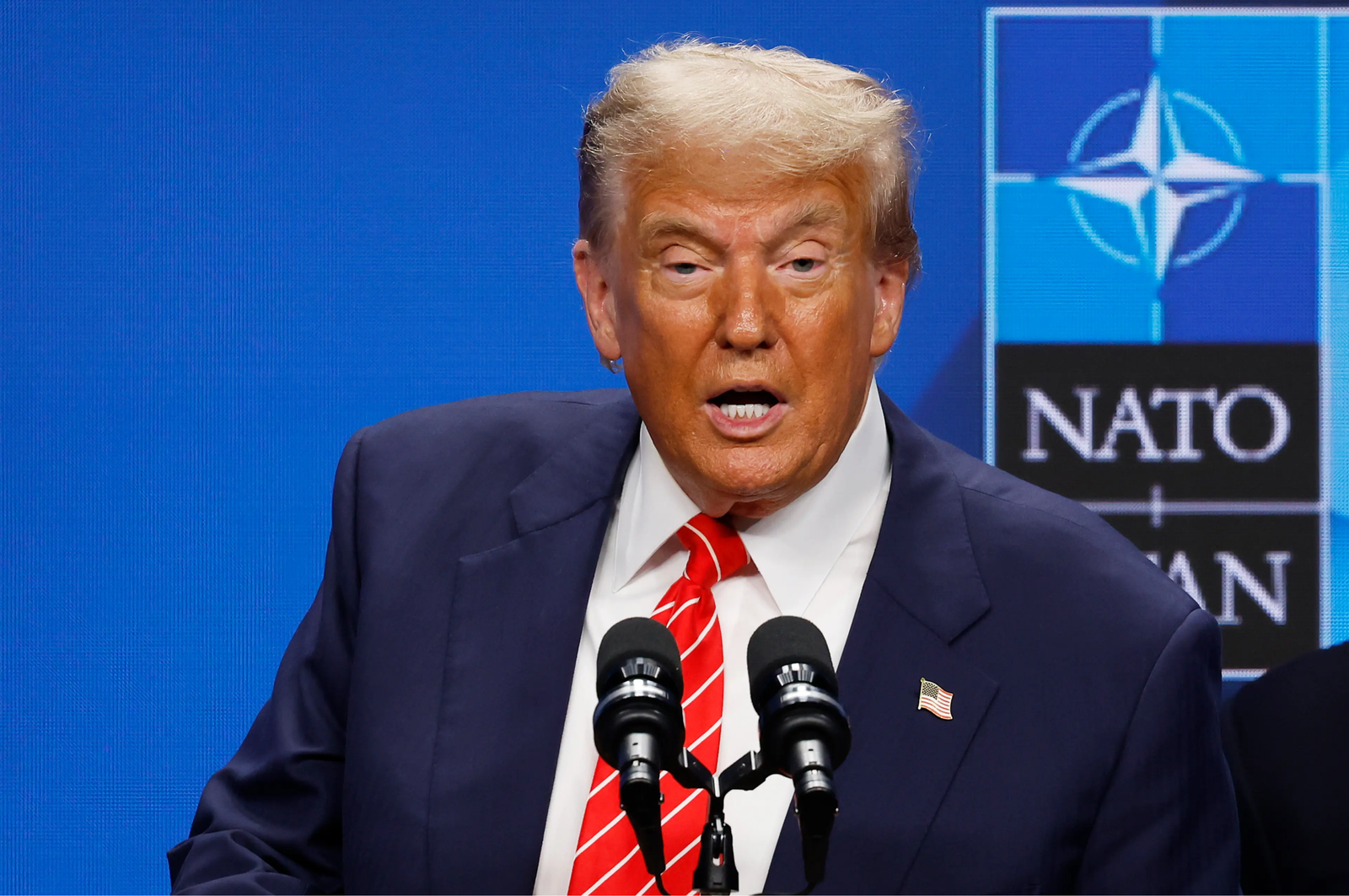
President Donald Trump has intensified his criticism of NATO, declaring he is “absolutely” considering pulling the United States out of the alliance. His remarks, delivered in interviews with Reuters and the Telegraph, mark his strongest threat yet against the 77‑year‑old military pact. Trump’s frustration stems from NATO allies refusing to join the U.S. and Israel in their month‑long war against Iran.
Trump insisted the issue was “beyond reconsideration,” claiming he had never been persuaded by NATO’s value. He signaled plans to express his disapproval in a national address. The president’s comments have triggered alarm among diplomats and analysts, who warn that the alliance faces its most serious crisis since its founding in 1949.
Ivo Daalder, former U.S. ambassador to NATO, described the situation as unprecedented. “Military alliances are built on trust. If European countries cannot rely on U.S. support, the foundation of NATO is broken,” he wrote.
The war against Iran began on February 28, launched jointly by Trump and Israeli Prime Minister Benjamin Netanyahu without consulting NATO members. Article 5 of the NATO treaty, which requires collective defense only in the event of an attack on a member state, was not invoked. The offensive has failed to achieve its stated goal of regime change. Instead, Iran closed the Strait of Hormuz, disrupting global trade, driving up oil prices, and sparking shortages of fertilizer and other goods. Economists warn of a looming global recession.
Trump has alternated between suggesting a negotiated settlement and threatening a ground invasion. He has repeatedly urged allies to join the fight, but European governments have refused, with some labeling the campaign illegal. Several countries denied U.S. forces overflight rights and access to bases.
Angered by the refusals, Trump lashed out at European capitals, calling them “cowards.” He singled out the United Kingdom, mocking its military capabilities. “You don’t even have a navy,” he told the Telegraph. “You’re too old and had aircraft carriers that didn’t work.”
His rhetoric has been echoed by Defense Secretary Pete Hegseth and Secretary of State Marco Rubio, once a strong NATO supporter. Rubio argued the alliance had become “a one‑way street,” where America defends Europe but receives no support in return.
British Prime Minister Keir Starmer dismissed Trump’s attacks as “noise.” He reaffirmed NATO’s importance, calling it “the single most effective military alliance the world has ever seen.” Starmer reiterated that the UK would not join the Iran war, saying, “This is not our war, and we’re not going to get dragged into it.”
European allies have tried to appease Trump by raising defense spending and backing U.S. efforts in Ukraine, but with limited success. NATO Secretary General Mark Rutte even expressed support for the Iran war, despite opposition from most members, in an attempt to maintain unity.
Congress has already moved to limit Trump’s ability to withdraw. The 2024 National Defense Authorization Act requires Senate approval or an act of Congress before any president can formally exit NATO. It also bars federal funds from being used to facilitate withdrawal. Senator Mark Warner stressed, “Our commitment to NATO is ironclad, and we will use every tool available to defend it.”
Legal experts note that while formal withdrawal would spark a constitutional battle likely to reach the Supreme Court, Trump could still weaken NATO by pulling troops, reducing U.S. participation in command structures, or refusing to act in the event of an attack.
Ruth Deyermond, a senior lecturer at King’s College London, warned that the crisis will not vanish even if Trump leaves office. She argued that skepticism about NATO’s relevance is not unique to his administration. “The old NATO is gone,” she said, urging Europe and Canada to develop a new security framework.
Starmer, meanwhile, is seeking to strengthen ties with EU partners. He announced plans for a summit to build deeper economic and security cooperation, describing it as “a partnership for the dangerous world that we must navigate together.”
Trump’s threats have left NATO facing a defining moment. Whether the alliance can withstand the pressure and maintain unity will shape the future of transatlantic security.