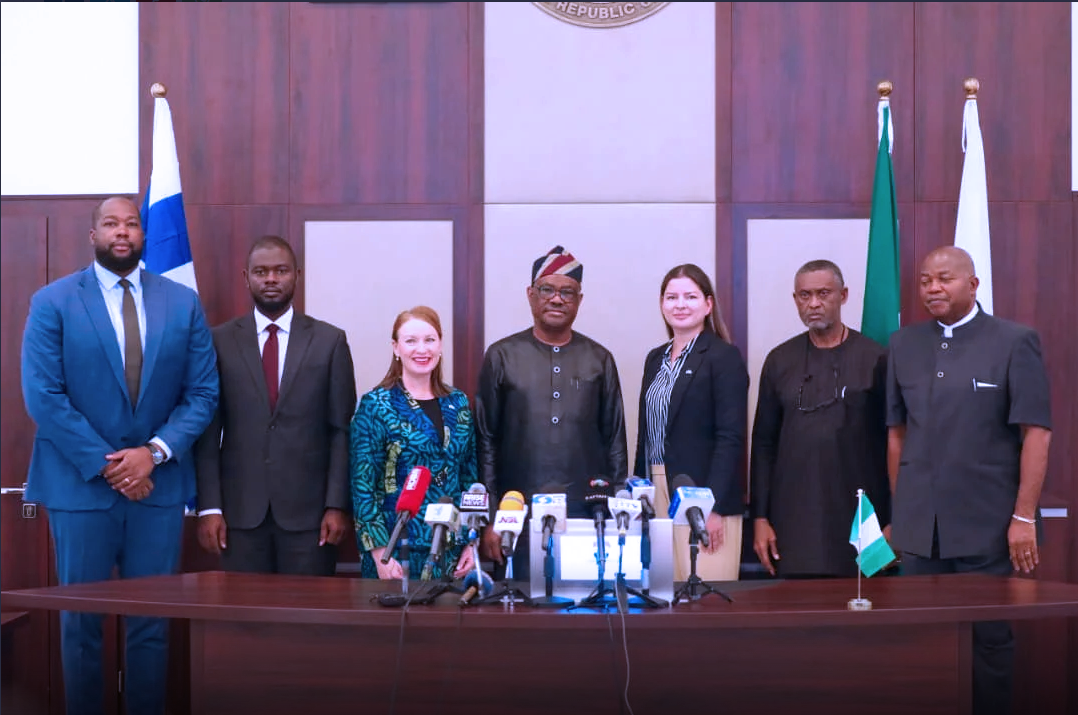
Nigeria’s Federal Capital Territory (FCT) is exploring new avenues of international cooperation, with Minister Nyesom Wike calling for stronger ties with Finland in key sectors. During a meeting in Abuja with Finland’s Ambassador to Nigeria, Sanna Selin, Wike emphasized the need for collaboration in waste management, agriculture, and infrastructure development.
The minister highlighted the importance of leveraging Finland’s expertise to address pressing challenges in Abuja. He noted that the city’s rapid growth has created urgent demands for modern waste management systems and sustainable infrastructure. Wike urged the ambassador to facilitate discussions with Finnish firms capable of handling large-scale waste solutions, stressing that such partnerships would significantly improve living conditions in the capital.
Wike also expressed appreciation for Finland’s pledge to support ongoing infrastructure projects in the FCT. He underscored the administration’s openness to learning from international best practices, particularly in agriculture and urban development. According to him, cooperation with foreign cities and institutions could accelerate Abuja’s transformation into a more resilient and livable metropolis.
Security was another point of focus. Wike assured the ambassador that the FCT administration has intensified efforts to improve safety across Abuja. He pointed to visible progress in security measures and ongoing construction projects aimed at enhancing the quality of life for residents.
Ambassador Selin, in her remarks, described Nigeria-Finland relations as increasingly robust. She noted that trade and digital transformation remain priorities for Finland’s engagement with Nigeria. Finland, recognized as one of the most digitized countries globally, recently signed a Memorandum of Understanding with Nigeria on digitalization and innovation. Selin explained that this agreement could serve as a foundation for broader cooperation, including in waste management and circular economy solutions.
She emphasized Finland’s advanced technologies in water management, waste treatment, and sustainable urban planning. According to her, expertise from Finland’s capital region could be adapted to Abuja through concrete bilateral projects. Such initiatives, she said, would expand economic and technical cooperation between the two regions while addressing critical urban challenges.
The meeting reflects a broader trend of the FCT administration seeking international partnerships to support its development agenda. With Abuja’s population and infrastructure demands rising, Wike’s appeal highlights the urgency of adopting innovative solutions from countries with proven track records in sustainability.
Observers note that Finland’s strengths in digital innovation and environmental management align with Abuja’s immediate needs. Waste disposal remains a persistent challenge in the city, while infrastructure expansion struggles to keep pace with rapid urbanization. By engaging Finland, the FCT hopes to access technologies and strategies that can deliver long-term improvements.
The discussions also signal Nigeria’s intent to diversify its international partnerships beyond traditional allies. Finland’s focus on digitalisation, sustainability, and circular economy practices offers a model that could complement Nigeria’s development priorities.
The next steps will likely involve technical exchanges and exploratory visits, as Wike suggested the possibility of FCT officials traveling to Finland to study relevant projects. Such visits could pave the way for formal agreements and pilot initiatives in Abuja.
Ultimately, the meeting underscored the shared interest of both sides in building a partnership that goes beyond diplomacy to deliver tangible results. For the FCT, the collaboration could mark a turning point in addressing urban challenges, while for Finland, it represents an opportunity to expand its footprint in Africa through practical cooperation.