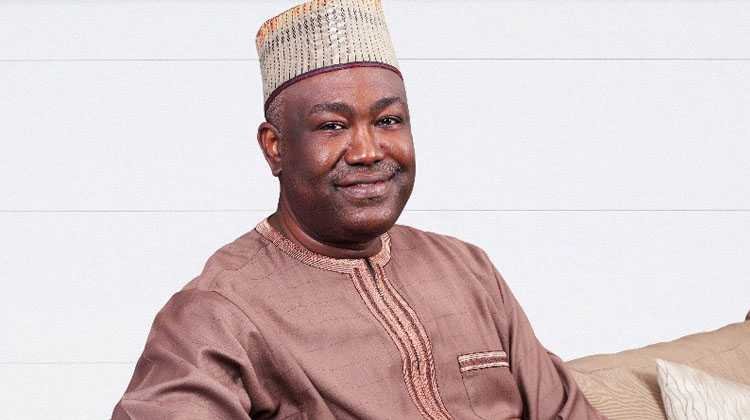
Former presidential candidate Dr. Gbenga Olawepo-Hashim has warned that pro-democracy groups across Nigeria will resist any attempt to impose a one-party system. He made the statement after a strategic meeting with Senior Advocate of Nigeria Femi Falana, part of ongoing consultations with stakeholders on the state of the nation’s democracy.
In a statement released by his media office, Hashim said the meeting reaffirmed their commitment to preserving Nigeria’s multi-party structure. “We resolved to sustain the multi-party structure of Nigeria’s democracy and resist one-party rule,” he declared.
Hashim described Falana as a long-standing ally, noting that their relationship spans more than four decades. He recalled their shared activism, including participation in the anti-apartheid struggle under the Nigeria-ANC Friendship and Cultural Association. One notable protest occurred on January 7, 1988, during the visit of former British Prime Minister Margaret Thatcher. Hashim said he led a student contingent that defied security restrictions and advanced onto the airport tarmac, resulting in the arrest of five activists.
He paid tribute to those involved in the protest, noting that only two remain alive. Others, including Olaitan Oyerinde, Chris Ayaeze, and Rotimi Ewebiyi, have since passed away.
Hashim also highlighted his legal battles against military rule. In 1988, he filed a suit challenging the Structural Adjustment Programme under General Ibrahim Babangida’s regime, with Falana serving as his pro bono lawyer. He referenced his 1989 detention in a constitutional case against the Attorney General of the Federation, handled by a legal team led by Alao Aka-Bashorun.
He further disclosed that Falana played a key role in his appointment as National Administrative Secretary of the Committee for the Defence of Human Rights, where he worked under the late Beko Ransome-Kuti. Hashim emphasized that their alliance remains focused on defending democratic values, civil liberties, and political plurality. He added that consultations with like-minded stakeholders would continue to safeguard Nigeria’s democratic system.
Nigeria has operated a multi-party democracy since the return to civilian rule in 1999, following decades of military governance that restricted political freedoms. The current democratic dispensation, known as the Fourth Republic, has been sustained through successive general elections.
Despite this continuity, concerns about electoral integrity and the dominance of major parties have persisted. Analysts note that while Nigeria’s democracy has endured, challenges remain in ensuring fair competition and accountability.
In recent years, defections by opposition figures to the ruling All Progressives Congress (APC) have raised questions about the strength of opposition platforms. The weakening of the Peoples Democratic Party (PDP) and other parties has fueled debates about whether Nigeria risks sliding into a de facto one-party state ahead of the 2027 elections.
Political observers warn that shrinking opposition structures could undermine democratic accountability. A lack of robust competition, they argue, may weaken checks on government power and reduce citizens’ confidence in the electoral process.
Hashim’s meeting with Falana reflects broader efforts by pro-democracy leaders to rally support for political plurality. Their message is clear: Nigeria’s democracy must remain open, competitive, and inclusive.
The history of their activism underscores the depth of their commitment. From anti-apartheid protests to legal challenges against military rule, both men have consistently fought for justice and democratic governance. Their renewed collaboration signals a determination to confront emerging threats to Nigeria’s political system.
As Nigeria approaches another election cycle, debates about the future of its democracy are intensifying. The resilience of multi-party politics will depend on the ability of opposition parties to reorganize, the willingness of civil society to demand accountability, and the commitment of leaders to uphold democratic principles.
Hashim and Falana’s stance highlights the importance of vigilance. For them, defending democracy is not only about resisting authoritarian tendencies but also about ensuring that citizens retain meaningful choices at the ballot box.
Their consultations with stakeholders are expected to continue, building alliances across political and civic groups. The goal, according to Hashim, is to strengthen Nigeria’s democratic foundation and prevent any erosion of political plurality.
Nigeria’s democratic journey remains complex. While the Fourth Republic has provided stability compared to past military regimes, the concentration of power within dominant parties poses risks. Pro-democracy voices argue that sustaining a vibrant multi-party system is essential for accountability, representation, and national progress.
Hashim’s declaration, backed by Falana’s long record of activism, serves as a reminder that democracy requires constant defense. Their message resonates at a time when political realignments and defections are reshaping Nigeria’s political landscape.
As the 2027 elections draw closer, the debate over Nigeria’s democratic future will likely intensify. For Hashim and Falana, the path forward is clear: resist one-party dominance, uphold civil liberties, and safeguard the principles that define Nigeria’s democracy.