The Federal Government has arrested Shamsideen Abubakar, a suspected wildlife trafficking kingpin, in a joint operation involving the National Environmental Standards and Regulations Enforcement Agency (NESREA), Nigeria Customs Service (NCS), and the Wildlife Justice Commission (WJC).
Background of the Case
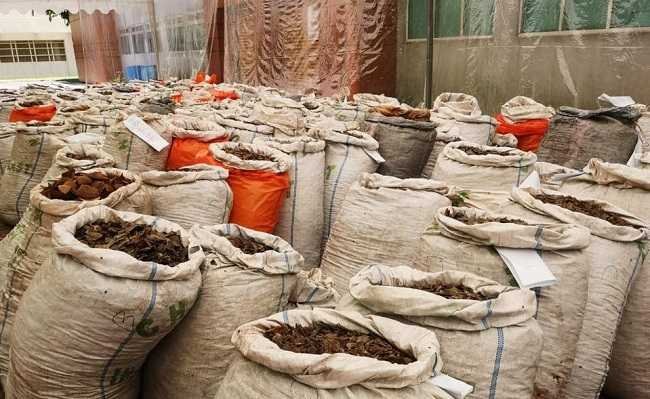
Abubakar had been declared wanted by the Federal High Court in Lagos. He was accused of playing a central role in large-scale wildlife trafficking and had evaded capture for years. Authorities said he fled in September 2021 after a coordinated operation by WJC and NCS led to the arrest of his associates, Sunday Ebenyi and Salif Sandwidi. That operation also resulted in the seizure of 1,009.50 kilograms of pangolin scales in Ikeja, Lagos.
Government’s Position
The Federal Government described the arrest as evidence of its determination to dismantle illegal wildlife trafficking networks and enforce environmental laws. Officials emphasized that Nigeria would not serve as a haven for wildlife crime.
NESREA’s Statement
Assistant Director of Press at NESREA, Nwamaka Ejiofor, confirmed the arrest in a press release. She highlighted that Abubakar’s capture followed years of intelligence gathering and collaboration among agencies.
Director-General of NESREA, Innocent Barikor, called the breakthrough a product of sustained inter-agency cooperation. He stressed that authorities would continue to pursue, arrest, and prosecute offenders to the fullest extent of the law.
Barikor noted that the success demonstrated the importance of intelligence sharing and strategic partnerships in combating environmental crimes. He urged the public to report suspicious activities, warning that the era of impunity for wildlife traffickers was over.
Significance of the Arrest
The arrest of Abubakar marks a major step in Nigeria’s fight against wildlife trafficking. Pangolin scales, often trafficked illegally, are highly sought after in international markets, making them a target for criminal networks. The seizure of over a ton of scales in 2021 underscored the scale of operations linked to Abubakar and his associates.
By capturing a figure described as a kingpin, authorities aim to disrupt the networks that facilitate illegal trade in endangered species. The case also highlights Nigeria’s role as both a transit and source country in global wildlife trafficking.
Broader Implications
Wildlife trafficking poses serious threats to biodiversity, undermines conservation efforts, and fuels organized crime. Nigeria’s commitment to tackling the issue reflects growing recognition of its environmental and security implications.
The collaboration between NESREA, NCS, and WJC illustrates how joint enforcement operations can yield results. International cooperation is particularly critical, as wildlife trafficking often spans multiple countries and involves complex supply chains.
Public Engagement
Officials stressed that public vigilance remains essential. Reporting suspicious activities can help authorities identify trafficking routes and dismantle networks. Barikor’s call for public involvement signals a shift toward broader community engagement in environmental protection.
The arrest of Shamsideen Abubakar after years on the run represents a significant victory for Nigeria’s environmental enforcement agencies. It demonstrates the effectiveness of sustained intelligence gathering, inter-agency collaboration, and international partnerships.
By targeting high-level traffickers, Nigeria is sending a clear message that wildlife crime will not be tolerated. The case underscores the importance of continued vigilance, stronger enforcement, and public cooperation in protecting endangered species and safeguarding the country’s natural heritage.