The Federal Government has arraigned five individuals accused of plotting to overthrow President Bola Tinubu’s administration. The defendants face a 13-count charge that includes treason, terrorism, failure to disclose security intelligence, and money laundering linked to terrorism financing.
Court Proceedings
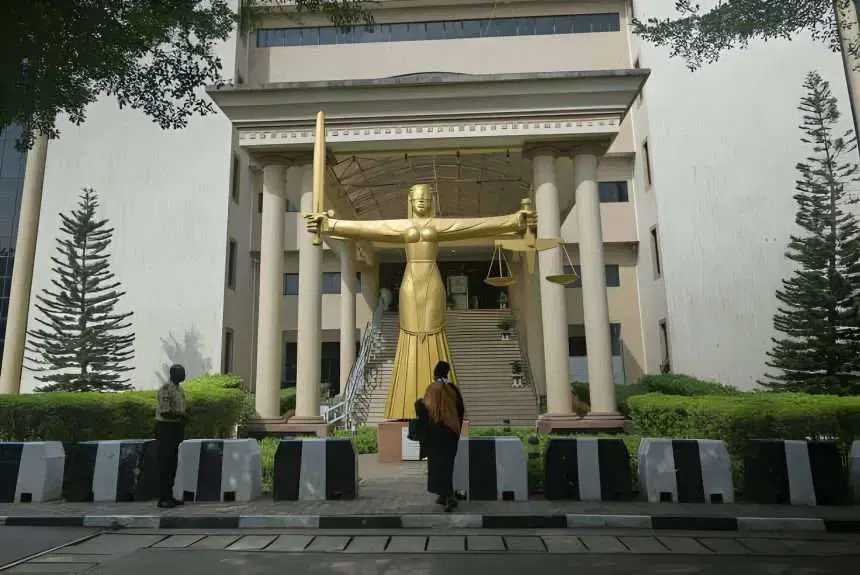
The arraignment took place before Justice Joyce Abdulmalik of the Federal High Court in Abuja. The defendants pleaded not guilty. Following their plea, the court ordered their remand in the custody of the Department of State Services (DSS).
The Attorney General of the Federation and Minister of Justice, Lateef Fagbemi, SAN, personally appeared to prosecute the case. He requested the remand order, which the court granted. The trial is scheduled to begin on Monday with a full hearing.
Before adjournment, defence counsel led by Mohammed Ndayako, SAN, asked the court to direct the DSS to allow them access to their clients. They argued that such access was necessary to prepare an effective defence, noting that the defendants had been in detention since their arrest.
Defendants Named in the Charge
The charge lists several prominent figures. Among them is Timipre Sylva, former governor of Bayelsa State and former minister of state for petroleum resources under President Muhammadu Buhari. Sylva is currently at large, having fled the country before the alleged coup plot was exposed. He was arraigned in absentia.
Other defendants include:
- Retired Major General Mohammed Ibrahim Gana
- Retired Naval Captain Erasmus Ochegobia Victor
- Serving Police Inspector Ahmed Ibrahim
- Zekeri Umoru
- Bukar Kashim Goni
- Abdulkadir Sani
Allegations of Treason
The Federal Government alleges that in September 2025, the defendants conspired to levy war against the state with the intent to intimidate and overthrow President Tinubu. This act, according to prosecutors, violates Section 37(2) of the Criminal Code.
Authorities claim the defendants had prior knowledge of a treasonable plan involving Colonel Mohammed Alhassan Ma’aji and others. Despite this knowledge, they allegedly failed to inform either the president or law enforcement. The prosecution argues that their silence amounted to aiding the plot.
The charge further accuses them of failing to take reasonable steps to prevent the offence, thereby breaching Section 40(b) of the Criminal Code.
Terrorism-Related Offences
Beyond treason, the defendants face accusations under the Terrorism (Prevention and Prohibition) Act, 2022. Prosecutors allege they conspired to commit acts of terrorism within Nigeria.
Inspector Ahmed Ibrahim and Zekeri Umoru are specifically accused of attending meetings connected to terrorist activities. The government claims these meetings were held to advance a political ideology that could destabilize Nigeria’s constitutional framework.
The defendants are also accused of providing support for terrorism. The prosecution maintains they knowingly rendered assistance that facilitated terrorist acts.
Financial Crimes and Terrorism Financing
Several counts in the charge focus on financial transactions allegedly tied to terrorism financing. These fall under the Money Laundering (Prevention and Prohibition) Act, 2022.
- Bukar Kashim Goni allegedly retained N50 million in his First Bank account, funds prosecutors say were proceeds of terrorism financing.
- Abdulkadir Sani is accused of retaining N2 million from similar sources.
- Zekeri Umoru allegedly accepted N10 million in cash from Colonel Ma’aji without using a financial institution. He is also accused of retaining N8.8 million in his Zenith Bank account, suspected to be linked to terrorism financing.
- Inspector Ahmed Ibrahim allegedly took possession of N1 million from Colonel Ma’aji, funds believed to be tied to terrorism financing.
These financial transactions form part of the broader allegations that the defendants supported terrorism through money laundering and unlawful retention of funds.
Specific Counts Highlighted
The charge outlines multiple counts, including:
- Failure to disclose treasonable information to the president or law enforcement.
- Failure to take reasonable steps to prevent treason.
- Conspiracy to commit terrorism.
- Participation in meetings connected to terrorism.
- Retention of funds linked to terrorism financing.
- Acceptance of large cash payments outside financial institutions.
Each count references specific sections of the Criminal Code, Terrorism Act, or Money Laundering Act, underscoring the seriousness of the allegations.
Government’s Position
The Federal Government argues that the defendants acted deliberately to destabilize Nigeria’s constitutional order. By withholding intelligence, participating in meetings, and handling funds tied to terrorism, they allegedly advanced a plot that threatened national security.
The prosecution insists that the evidence demonstrates both direct and indirect involvement in treason and terrorism. The government’s case seeks to establish that the defendants not only failed to prevent the coup plot but actively supported it.
Defence Strategy
The defence team has yet to outline its full strategy. However, their immediate request for access to clients suggests they will challenge the prosecution’s evidence and seek to undermine claims of direct involvement. The plea of innocence entered by all defendants indicates they intend to contest each count vigorously.
Broader Implications
The case highlights Nigeria’s ongoing struggle with security threats and political instability. Allegations of a coup plot involving high-profile figures, including a former governor and senior military officers, underscore the gravity of the situation.
The charges also reflect the government’s determination to use existing legal frameworks—the Criminal Code, Terrorism Act, and Money Laundering Act—to prosecute individuals accused of undermining national security.
If proven, the allegations carry severe penalties, including long prison terms. The trial will test the strength of Nigeria’s judicial system in handling politically sensitive cases involving treason and terrorism.
The arraignment of five defendants, with Timipre Sylva named in absentia, marks a significant development in Nigeria’s legal and political landscape. The charges combine treason, terrorism, and financial crimes, painting a picture of a coordinated effort to destabilize the state.
As the trial begins, the focus will be on whether the prosecution can substantiate its claims with evidence strong enough to secure convictions. The defence will aim to challenge the narrative and protect the rights of the accused.
The case serves as a reminder of the fragility of political stability and the importance of vigilance against threats to constitutional order. It also demonstrates the government’s resolve to pursue alleged offenders through the courts, reinforcing the principle that no individual is above the law.