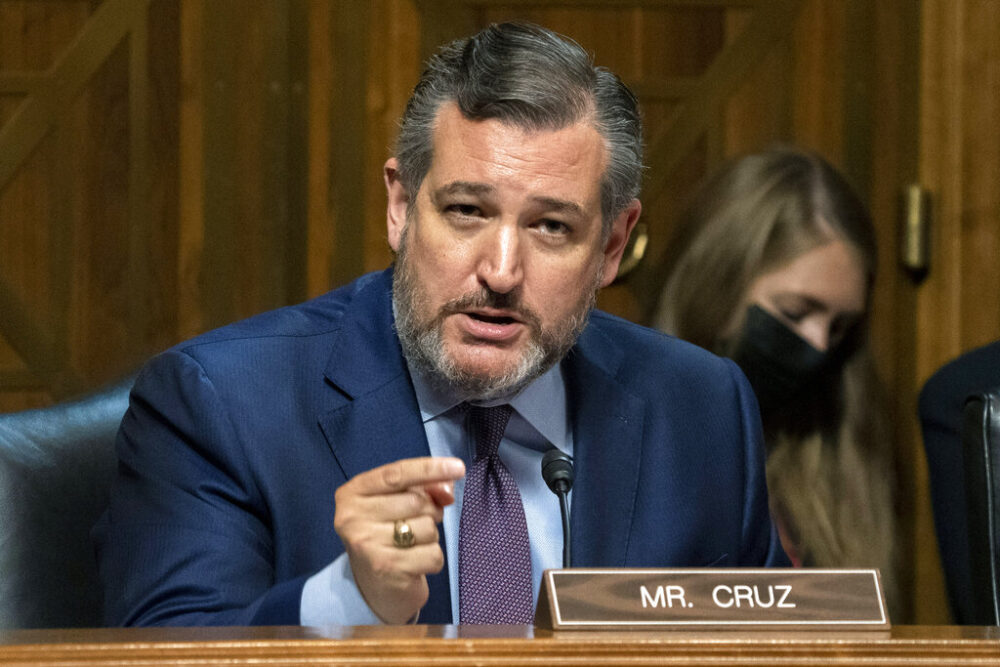
A United States senator, Ted Cruz, has accused Nigerian government officials of complicity in attacks against Christians in Nigeria, raising concerns about religious freedom and security in Africa’s most populous nation. Cruz made the allegation on Tuesday during a Senate Foreign Relations subcommittee hearing focused on the United States’ counterterrorism strategy in Africa.
Speaking at the hearing, Cruz claimed Nigeria records the highest number of Christians killed because of their faith anywhere in the world. He cited figures suggesting that since 2009, more than 50,000 Christians have been killed, while over 20,000 churches, schools, and other religious buildings have been destroyed. “Nigerian officials had been, unfortunately, complicit in facilitating these atrocities,” Cruz said, linking part of the violence to the operation of Sharia law in some northern states. He criticized Nigerian authorities for what he described as a slow response to insecurity, recalling a previous meeting with Nigerian defense and security officials where assurances were given that the violence would be addressed. “I told them I would judge their commitment by the results. Those results have yet to materialize,” he added.
The senator also revealed that in October he introduced the Nigeria Religious Freedom Accountability Act of 2025. According to him, the bill is designed to hold Nigerian government officials accountable for alleged involvement in attacks on Christians. Cruz pressed Nick Checker, a senior official of the U.S. State Department’s Bureau of African Affairs, on whether engagements between Nigeria and the United States had led to meaningful progress, especially after actions taken under former U.S. President Donald Trump.
In his response, Checker acknowledged that Nigeria had shown some level of cooperation with the United States. He pointed to changes in the country’s security structure, including leadership adjustments, recruitment of more troops, and deployment of forest guards to troubled areas. “We’ve seen some positive movements, including leadership changes in Nigerian security services, recruitment of additional troops, and deployment of forest guards to areas affected by violence,” Checker said. He added that there had been an increase in the prosecution of suspected terrorists, mentioning the creation of a bilateral high-level working group after discussions between Nigeria’s National Security Adviser, Malam Nuhu Ribadu, and U.S. Under Secretary of State, Allison Hooker.
Checker further noted that recent support from the United States to Nigerian security forces demonstrated continued cooperation between both countries. “We’ve seen positive steps by the Nigerians, but certainly more can be done,” he said, stressing that Washington would continue to push for further action.
Meanwhile, efforts to obtain an official response from Nigeria’s federal government proved abortive. However, former Minister of Information and Culture under the administration of late President Muhammadu Buhari, Lai Mohammed, dismissed claims of a targeted genocide against Christians. Speaking in the United Kingdom during an interactive session with students of Abbey College, Cambridge, Mohammed argued that insurgent groups had killed more Muslims than Christians. “There should be more understanding on the part of the developed world. Now, people say that there is religious persecution in Nigeria and that there is genocide against Christians. It’s not true. It is fake news,” he said.
Mohammed explained that Nigeria’s security challenges were complex and not driven by a deliberate campaign to eliminate any religious group. He recalled that Boko Haram initially emerged as a movement targeting Muslims who embraced Western education, noting that early victims were largely Muslims. “At the beginning, the victims of Boko Haram were largely Muslims, not Christians. Boko Haram started as a revolt by extreme Muslims against conventional Muslims like me,” he said. He added that insurgents later shifted focus to Christians because attacks against them drew greater international attention.
The former minister also dismissed claims that banditry in Nigeria was driven by religion, describing it instead as a criminal enterprise affecting people of the same ethnic and religious backgrounds. “The bandits are Muslims, they are Hausa-Fulanis. Their victims are Muslims, they are Hausa-Fulanis. So how can you now talk about religion? It has nothing to do with religion,” he argued. Mohammed insisted that records showed Muslims account for the largest number of victims of insurgent attacks in Nigeria. He emphasized Nigeria’s tradition of religious tolerance, noting that interfaith marriages were common and that disagreements among citizens were more often about economic issues than theology.
The contrasting narratives presented by Cruz and Mohammed highlight the complexity of Nigeria’s security crisis and the difficulty of framing it solely in religious terms. While Cruz’s remarks underscore concerns in Washington about religious persecution and human rights, Mohammed’s rebuttal reflects Nigeria’s sensitivity to international criticism and its insistence that the violence is not rooted in state policy or religious bias.
The broader impact of these exchanges is significant. For Nigeria, the allegations could strain diplomatic relations with the United States, particularly if Cruz’s proposed legislation gains traction. For Washington, the issue underscores the challenge of balancing counterterrorism cooperation with human rights advocacy in Africa. The debate also resonates globally, as religious freedom remains a central concern in international relations and humanitarian discourse.
Looking ahead, the future of U.S.-Nigeria relations may hinge on how both governments address these concerns. Nigeria’s ongoing security reforms and cooperation with the United States could help ease tensions, but persistent allegations of complicity in religious violence may continue to draw scrutiny. As Cruz’s bill moves through legislative processes, its outcome could shape the trajectory of bilateral engagement, potentially introducing new accountability measures for Nigerian officials.
For ordinary Nigerians, the pressing issue remains the restoration of peace and security across communities, regardless of religious affiliation. Whether through domestic reforms or international partnerships, the challenge of ending violence and rebuilding trust among diverse groups will remain central to Nigeria’s stability and development.