Iran’s Islamic Revolutionary Guard Corps Navy has redrawn its operational boundaries in the Strait of Hormuz, declaring the waterway a strategic zone stretching 500 kilometres along the southern coastline and warning that any violation will be met with force.
The announcement came from Rear Admiral Mohammad Akbarzadeh, the IRGC Navy’s political deputy, who framed the shift as a redefinition of Iran’s defensive perimeter in this crucial waterway.
“In the past, the Strait of Hormuz was defined as a limited area around islands such as Hormuz and Hengam,” Akbarzadeh said. “But today, this has changed.”
From a Narrow Channel to a Vast Crescent
Tehran now considers the Strait of Hormuz to extend far beyond its traditional maritime boundaries. According to Akbarzadeh, the zone runs from the coastal towns of Jask and Sirik in the east to Greater Tunb Island, forming “a complete crescent.”
Where the strait once measured roughly 20 to 30 miles in width, Iran’s redefined operational area now spans 200 to 300 miles, encompassing the waters around Qeshm Island and beyond.
“The Strait of Hormuz has grown larger and has turned into a vast operational area,” Akbarzadeh said, indicating a significant hardening of Iran’s posture in the region.
The IRGC has made it clear that passage through the strait will only be permitted along a corridor designated by Iran. Any vessel deviating from that route can expect a “decisive response.”
“We Will Not Give Up an Inch of Soil”
Akbarzadeh emphasized national sovereignty rather than aggression, addressing the Iranian public directly and using language resonant in the country’s political culture.
“The Islamic Republic of Iran is carefully monitoring all regional movements and will not allow any encroachment upon its waters and interests,” he said.
He added: “As it has been said before, ‘We will give blood, but we will not give up an inch of soil.’ The armed forces will defend the country’s territorial integrity and waters with all their might.”
Hormuz Closure Sends Shockwaves Through Global Energy Markets
Tuesday’s declaration follows a Strait of Hormuz effectively closed to what Iran designates as hostile shipping since early March due to military conflict triggered by U.S. and Israeli strikes against Iran.
The strait is crucial, with roughly one-fifth of the world’s oil and gas passing through it. Its closure has led to sharp price volatility in global energy markets, with no clear timeline for normalization.
Tensions escalated last month after Washington announced a blockade on Iranian vessels and ports, which Tehran condemned as illegal and an act of maritime piracy. Iran responded by tightening its controls over the strait.
US Warships Repelled as Standoff Intensifies
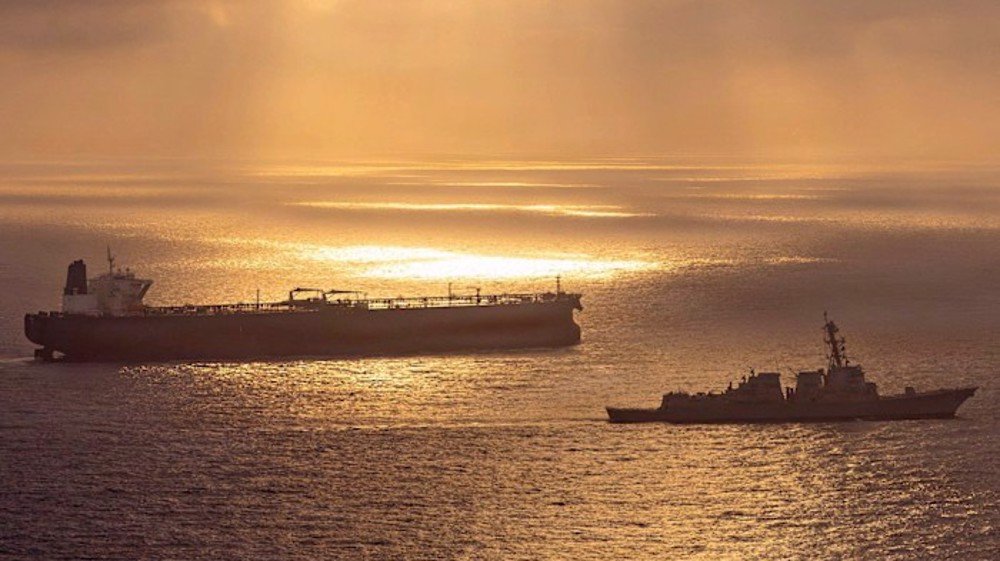
The standoff has escalated. In recent weeks, U.S. naval vessels attempting to approach Iranian-controlled waters have reportedly been driven back by direct Iranian fire, marking a serious military confrontation between the two countries.
Neither side has provided comprehensive accounts of these engagements, and independent verification remains difficult. What is clear is that the waterway at the heart of the global oil trade is now a volatile military theatre, and Iran’s latest announcement suggests it has no intention of stepping back.