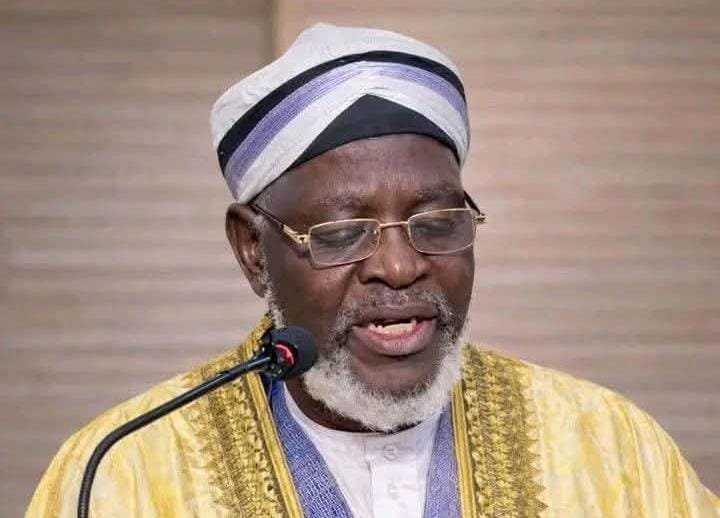
A Kaduna-based Islamic cleric, Sani Abdulkadir, has admitted before the Federal High Court in Abuja that he received money to offer prayers for the success of an alleged coup plot against President Bola Tinubu’s administration.
Abdulkadir, who is the sixth defendant in the ongoing trial of six suspects accused of plotting to overthrow the federal government, however said he warned those behind the alleged plan that it would not succeed.
According to a report by counter-insurgency publication, Zagazola Makama, the cleric spoke during Monday’s resumed hearing of the case.
A video recording played before the court showed Abdulkadir explaining that he became involved after an intermediary identified as Sanda approached him on behalf of the alleged mastermind, Maaji.
The cleric said Sanda informed him that his “Oga” planned to carry out a coup and needed spiritual guidance on whether the operation would succeed.
Abdulkadir told the court that after praying over the matter, he informed them that the plot would fail because two people within the group would later expose the operation.
He added that another request later came asking him to pray so the two individuals would remain silent.
The cleric also confirmed that money was later sent to him for prayers and charity purposes, while names of alleged participants were forwarded for mention during prayers.
According to him, he only became aware of the arrests after Sanda informed him that Maaji had not been reachable for four days.
Abdulkadir maintained that the money he received was strictly connected to prayers and not support for any coup attempt.
He acknowledged that he understood a coup to mean the forceful removal of a government by the military. He, however, said he did not report the matter because he did not know the appropriate authority to contact.
The defendant further told the court that security operatives arrested him after he visited the Economic and Financial Crimes Commission (EFCC) over restrictions placed on his bank account.
He said EFCC officials invited him to explain the source of the funds deposited into the account.
Abdulkadir denied making any confession under pressure while in EFCC custody. He said officials neither tortured nor assaulted him and insisted that all statements he made were voluntary.
After the video was played in court, the prosecution applied to tender extrajudicial statements obtained from the six defendants by investigators and military police personnel.
Lawyers representing the defendants opposed the move. They argued that the statements were either obtained against the law or made without proper legal safeguards as required under the Administration of Criminal Justice Act (ACJA).
The defence team cited several concerns, including alleged failure to inform the suspects of their right to legal representation, claims of coercion and torture, and discrepancies between video recordings and written statements.
Counsel to the fifth defendant also urged the court to conduct separate trial-within-trial proceedings for each defendant instead of combining them into one exercise.
The prosecution opposed the request. Prosecutors argued that the law allows the court to decide how evidence should be admitted and does not require separate proceedings for each defendant.
Justice Joyce Abdulmalik ruled in favour of a joint trial-within-trial process to determine whether the disputed statements were made voluntarily and whether they are admissible as evidence.
The court adjourned the matter until May 12.
The federal government arraigned the six defendants on April 22 over allegations linked to terrorism, treason and an alleged plot to remove President Tinubu from office.
The defendants include Mohammed Gana, retired navy captain Erasmus Ochegobia Victor, police inspector Ahmed Ibrahim, Zekeri Umoru, Bukar Kashim Goni and Sani Abdulkadir. All six pleaded not guilty to the 13-count charge.
Former Bayelsa State Governor Timipre Sylva was also mentioned in the case and is reportedly at large.