Both sides are talking. Neither side is agreeing. And the distance between Washington’s demands and Tehran’s is so wide that calling what is happening a peace negotiation may be generous.
Iran confirmed Monday that it had responded to the latest U.S. proposal aimed at ending a war that has now stretched past two months. But the details emerging from both Iranian state media and official spokespeople paint a picture of two governments that have yet to find a single point of genuine compromise.
What Washington Wants
According to Iran’s Fars news agency, the United States presented a five-point proposal that includes a demand for Iran to shut down all but one of its nuclear sites and transfer its stockpile of highly enriched uranium to American custody.
Washington also reportedly refused to release any of Iran’s frozen assets — not even 25 per cent — and declined to pay war reparations. It made clear it would only agree to a formal cessation of hostilities once Tehran committed to structured peace negotiations.
Taken together, these conditions amount to a demand for significant, upfront Iranian concessions with little offered in return. Tehran’s response, both official and through state media, was immediate and pointed.
Iran’s Mehr news agency described the U.S. position bluntly: Washington, it said, was attempting to extract concessions it failed to win through military force — and doing so while offering nothing tangible in exchange. The agency called the terms “excessive.” Few in Tehran appeared to disagree.
What Tehran Wants
Iran’s own demands are no less expansive. Its most recent proposal, submitted last week, called for a complete end to hostilities across all fronts — including Israel’s campaign in Lebanon, which Tehran views as an extension of the same conflict. It demanded the immediate lifting of a U.S. naval blockade on Iranian ports, imposed since April 13.
Tehran also called for the removal of all U.S. sanctions and the release of its frozen assets held abroad — demands it has raised in every previous round of diplomacy and shows no sign of dropping now.
Crucially, Iran insisted it would retain full control of the Strait of Hormuz. The strategic waterway — through which roughly a fifth of the world’s oil supply passes — has remained largely closed since the war began. Iran regards its control of the strait not as a negotiating chip but as a non-negotiable assertion of sovereignty.
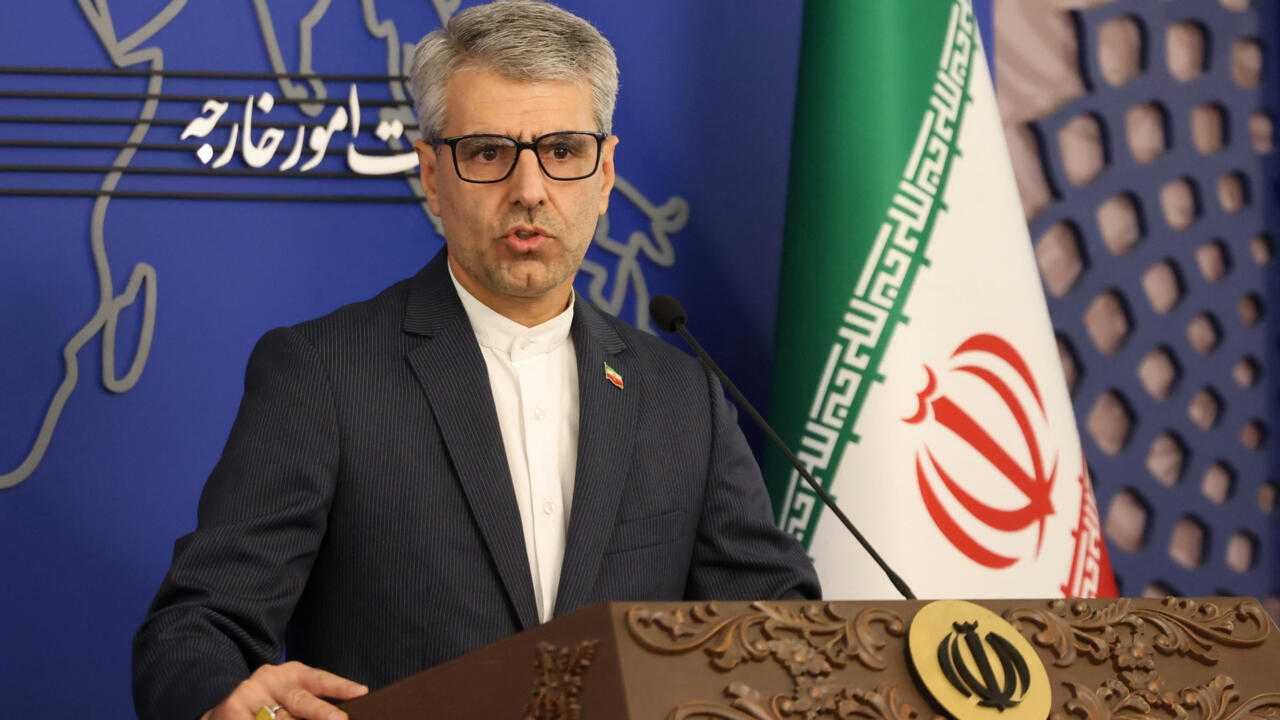
Foreign ministry spokesman Esmaeil Baqaei defended each of these positions at a press briefing Monday with the language of someone drawing lines rather than opening doors.
“The points raised are Iranian demands that have been firmly defended by the Iranian negotiating team in every round of negotiations,” he said.
He went further on the question of war reparations — a demand Washington has flatly rejected. Baqaei described the conflict itself as “illegal and baseless,” framing reparations not as a bargaining position but as a matter of principle.
On the prospect of renewed military confrontation, his message was equally unambiguous. Iran, he said, was “fully prepared for any eventuality.”
One Round of Talks, a Fragile Ceasefire, and Pakistan in the Middle
The backdrop to these competing demands is a ceasefire that has been in place since April 8 but has never felt stable. Since the war broke out on February 28, the two sides have held a single round of direct talks. Everything else has been exchanged through Pakistan, which has taken on the role of mediator between two governments with no diplomatic relations and, at this point, very little trust.
Baqaei confirmed Monday that exchanges were “continuing through the Pakistani mediator” — a formulation that signals ongoing contact while revealing how far both sides remain from sitting across a table directly.
The Core Deadlock
Strip away the diplomatic language and the competing proposals, and the fundamental problem is clear.
Washington wants Iran’s nuclear programme dismantled — or at minimum, severely constrained — before it agrees to any lasting peace. Tehran views its nuclear capabilities as an existential deterrent and has no intention of surrendering them under military and economic pressure.
Washington refuses to pay reparations and has offered minimal economic relief. Tehran insists that any agreement must include the return of frozen assets and compensation for war damage it considers unlawful.
Washington wants a ceasefire conditional on formal negotiations. Tehran wants a complete end to hostilities — including Israel’s operations in Lebanon — before it commits to anything further.
Each of these gaps would be difficult to bridge in isolation. Together, they represent a negotiating environment in which neither side currently has the incentive, the political space, or apparently the intention to move significantly toward the other.
The exchange of proposals continues. Pakistan shuttles messages between capitals. State media on both sides frames the other’s demands as unreasonable. And the Strait of Hormuz remains under Iranian control, with the global energy market watching every development.
The ceasefire holds — for now. Whether the next exchange of proposals narrows the gap or widens it will determine whether the fragile quiet of the past six weeks survives into the next.
At this point, the gap looks very wide indeed.