It took a disappearance, a years-long search across 10,000 square kilometres of Atlantic ocean floor, a black box recovered from the deep sea, a trial, an acquittal, an appeal — and 16 years of waiting.
On Wednesday, the Paris Appeals Court delivered what the families of 228 victims had been fighting for since a passenger jet vanished from radar screens in the early hours of June 1, 2009: a guilty verdict.
Air France and Airbus have been found guilty of corporate manslaughter over the crash of flight AF447 — the deadliest incident in French aviation history. It is a ruling that redraws the line of accountability in the global aviation industry and signals that corporations cannot hide behind complexity, time, or earlier acquittals when lives are lost through negligence.
What Happened on That Flight
Flight AF447 departed Rio de Janeiro bound for Paris on the night of May 31, 2009. It never arrived.
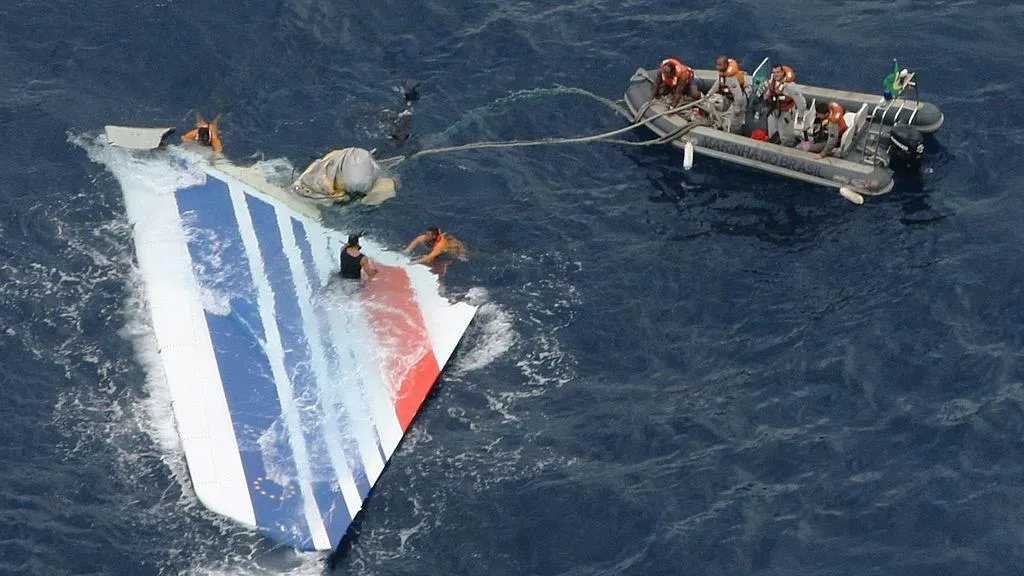
The Airbus A330 was carrying 216 passengers and 12 crew members — primarily French, Brazilian, and German nationals — when it encountered a severe storm over the Atlantic. The aircraft stalled. It plunged from an altitude of 38,000 feet into the ocean below, killing everyone on board instantly.
The plane disappeared from radar. Search operations covering vast stretches of the Atlantic lasted for days, then months. The wreckage was eventually located after one of the most extensive deep-sea searches in aviation history — spanning 10,000 square kilometres of ocean floor. The flight recorders, critical to understanding exactly what went wrong in the cockpit, were not recovered until 2011 — nearly two years after the crash.
What the black box revealed, and what investigators spent years piecing together, formed the foundation of a criminal case that would take over a decade to reach its final conclusion.
Acquittal, Appeal, and a Reversed Verdict
The road to Wednesday’s conviction was not straight.
In April 2023, a French court cleared both Air France and Airbus of criminal responsibility. The verdict shocked many families and legal observers who had followed the case through years of investigation. It felt, to many of those who lost loved ones, like the system had protected institutions over people.
The families refused to accept it. They appealed.
The Paris Appeals Court has now overturned that acquittal and entered guilty verdicts against both companies for corporate manslaughter. The reversal is significant not just legally but symbolically — it affirms that the courts, when pushed, are capable of holding powerful aviation corporations accountable for the human cost of systemic failures.
The details of the sentence and any financial penalties attached to the conviction were not immediately available at the time of reporting.
Why This Verdict Matters Beyond France
From a Nigerian perspective, the AF447 verdict carries lessons that extend well beyond a courtroom in Paris.
Nigeria’s aviation sector has had its own painful chapters — crashes, investigations, delays in accountability, and families left without clear answers or meaningful justice. The AF447 case demonstrates what sustained legal pursuit, backed by determined families and rigorous investigation, can ultimately achieve even against corporations of enormous financial and political weight.
Air France is a national airline. Airbus is one of the two dominant forces in global commercial aircraft manufacturing. Both companies had the resources to contest every step of the legal process — and they did. The families won anyway.
That is not a minor outcome. Corporate manslaughter convictions against aviation giants are rare. When they happen, they reset expectations for every airline and manufacturer operating aircraft with paying passengers on board. The message is direct: when decisions made in boardrooms and design departments result in avoidable deaths, the law can and will reach you — even if it takes 16 years.
The Families Who Waited
Relatives of the victims gathered at the Paris court on Wednesday to hear the verdict. Sixteen years is an extraordinary length of time to carry grief while simultaneously fighting a legal battle. For many of those families, Wednesday’s ruling will not return what was taken from them. No verdict can.
But accountability matters. The recognition that something went wrong — not through fate or unavoidable technical failure, but through negligence that two major corporations now bear criminal responsibility for — is itself a form of justice that the original 2023 acquittal denied them.
Several of the passengers on AF447 were young. Some were travelling for work, others for family. Many were connecting between two continents that, in 2009, felt far more distant from each other than they do today. All 228 of them boarded a plane that should have been safe and did not land.
The convicted companies are expected to respond formally to the verdict. Whether either will seek further legal challenge remains to be seen. The financial penalties, if any, will be determined separately.
What cannot be undone is the verdict itself. Air France and Airbus are now, in the eyes of French law, criminally responsible for the deaths of 228 people on a flight that should never have ended the way it did.
For the aviation industry globally, the case is a reminder that black boxes eventually get found, that appeals courts can overturn acquittals, and that the families of the dead are often more persistent than the corporations that failed their loved ones.
Flight AF447 vanished into the Atlantic Ocean in the early hours of June 2009. On Wednesday, 16 years later, the people who caused that disappearance were finally held to account.