The United States has charged Raúl Castro with murder. China has called it coercion. Cuba has called it a political manoeuvre. And somewhere in the middle of all that noise lies a clear-eyed power play that has very little to do with a 1996 plane crash and everything to do with who controls Cuba’s political future.
The Charges Against Castro
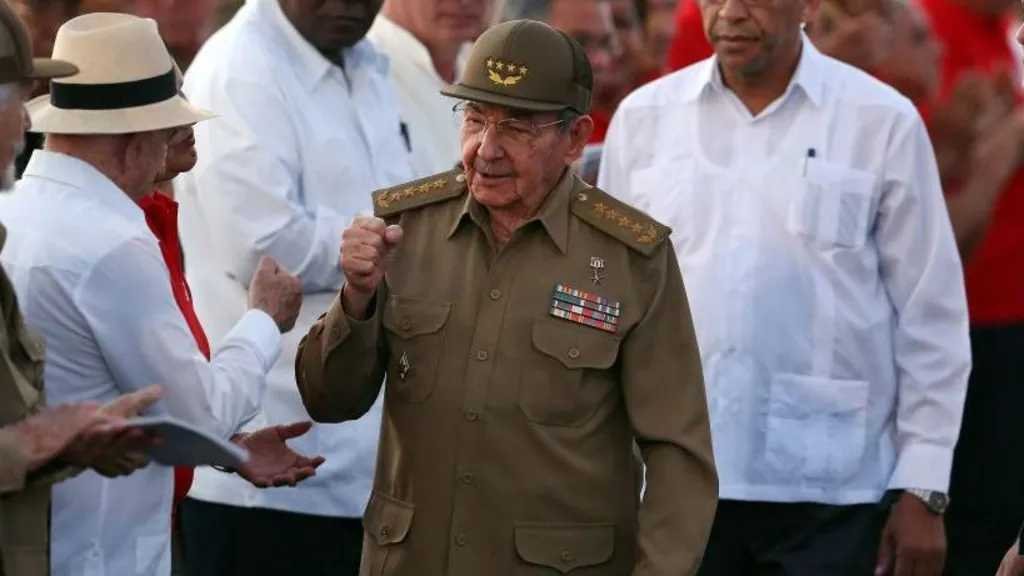
Raúl Castro, 94 years old and no longer in power, was indicted this week by an American court alongside five others over the 1996 downing of two light aircraft operated by Brothers to the Rescue. This Cuban-American dissident group flew missions between Florida and Cuba.
The shooting down of the planes killed four people, including three US citizens. At the time, Castro was head of Cuba’s armed forces. The incident caused lasting outrage among Cuban exiles in the United States and has remained a source of deep bitterness between Washington and Havana for nearly three decades.
The charges carry penalties of life imprisonment or death.
Cuba’s current president, Miguel Díaz-Canel, rejected the indictment immediately, describing it as “a political manoeuvre, devoid of any legal foundation.” The timing — coming amid an escalating American pressure campaign against the Cuban government — lends considerable weight to that characterisation.
Beijing Responds: Stop Threatening Cuba
China did not wait long to weigh in.
Chinese foreign ministry spokesman Guo Jiakun addressed the charges on Thursday with pointed, deliberate language. “The United States should cease using sanctions and judicial apparatus as tools of coercion against Cuba,” he said. “China resolutely supports Cuba in safeguarding its national sovereignty and dignity and opposes external interference.”
He added that Beijing “firmly supports Cuba” and urged Washington to “stop threatening force at every turn.”
The statement was not spontaneous solidarity. It was a calculated assertion of position — one rooted in years of deepening strategic ties between Beijing and Havana, and one that fits neatly into China’s broader counter-narrative against American foreign policy.
Beijing’s message to Washington is consistent across multiple theatres: using courts, sanctions, and the threat of force to destabilise governments you dislike is not rule-based order. It is coercion wearing legal clothing.
Trump’s Cuba Strategy: Pressure, Sanctions, and Regime Change
To understand why China responded the way it did, it helps to understand what Washington has been doing.
Donald Trump has been explicit about his Cuba ambitions. Since returning to the White House, he has imposed new sanctions, cut off oil supplies to the island — a move that has triggered widespread blackouts and worsened food shortages — and signed an executive order targeting officials across Cuba’s energy, defence, financial, and security sectors.
He has also sanctioned individuals the US alleges have committed human rights abuses or stolen public assets.
The oil blockade is particularly significant. Cuba, already economically fragile, has been hit hard. The shortages are not abstract policy outcomes — they are rolling power cuts and empty shelves that affect ordinary Cubans every single day.
Trump has been open about what he ultimately wants. Since the capture of former Venezuelan president Nicolás Maduro in January and his extradition to the United States to face narco-terrorism charges, Trump has openly speculated that Cuba is “ready to fall.” The indictment of Castro, seen in this context, is less a legal proceeding than a political signal — a message to Havana, to the Cuban exile community in Florida, and to the wider world that Washington is not finished with the island.
China’s Strategic Stake in Cuba
Beijing’s defence of Havana is not purely ideological. It is strategic.
China and Cuba have been drawing closer for over a decade. President Xi Jinping visited the island in 2014 — a trip that marked a new chapter in bilateral relations and set the tone for a deepening partnership. In 2018, Cuba formally joined China’s Belt and Road Initiative, opening the door to Chinese investment in strategic infrastructure across the island.
Cuba occupies a geographic position that China considers significant — a Caribbean nation roughly 150 kilometres from the Florida coast, sitting at the intersection of Atlantic and Gulf shipping lanes. A stable, China-aligned Cuba serves Beijing’s long-term interest in building relationships and influence in regions that Washington considers its own backyard.
When Trump talks about Cuba being “ready to fall,” he is not just talking about ending communism on an island 90 miles from Miami. He is talking about removing a country that has become increasingly enmeshed in Chinese economic and diplomatic networks. China understands that perfectly.
A Familiar Pattern, Seen From Nigeria
From a Nigerian vantage point, the dynamics playing out between Washington, Beijing, and Havana carry a recognisable structure.
A great power uses legal mechanisms, financial pressure, and the threat of force to destabilise a smaller nation whose political alignment it opposes. A rival great power condemns the pressure campaign as interference and pledges support. The smaller nation is, in many ways, a proxy for a much larger contest.
Nigeria has seen versions of this story play out across Africa — most visibly in the competition for influence between Western powers and China on the continent. The language changes. The instruments vary. The underlying logic is consistent.
What makes the Cuba case instructive is the transparency of the American objective. Trump has said, in plain terms, that he wants regime change. The indictment of a 94-year-old former leader on charges connected to an incident three decades ago is not primarily about justice for the four people killed in 1996. Those families deserve justice and have waited a long time for it. But the timing, the context, and the broader pressure campaign make it very difficult to separate the legal action from the political objective it accompanies.
Castro is 94. He is unlikely to be extradited or to stand trial in any meaningful sense. The charges against him will not, in any realistic scenario, result in a courtroom proceeding.
What they will do is sustain pressure, generate headlines in Florida, and signal to the Cuban government that Washington’s patience is exhausted.
China’s response ensures that Cuba does not face that pressure alone. Whether Beijing’s diplomatic support translates into the economic relief Cuba actually needs — more energy, more food, a functioning economy — is the question that matters more to ordinary Cubans than any statement issued from a foreign ministry podium.
For now, the charges stand. The sanctions bite. The blackouts continue. And the contest over Cuba’s future — dressed in the language of justice on one side and sovereignty on the other — grinds forward.