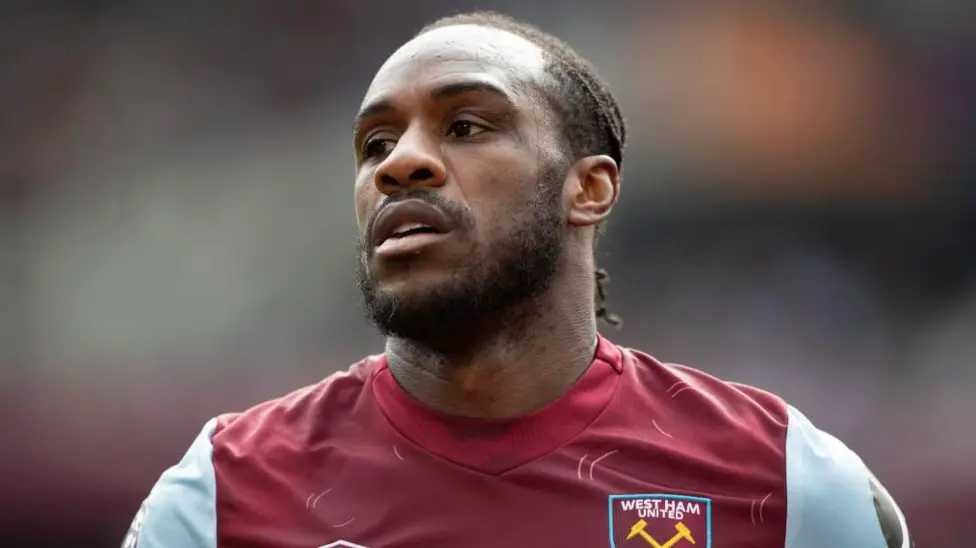
West Ham United are in the Championship. Fourteen years of Premier League football are over. And Michail Antonio, the man who gave the club nearly a decade of goals, sweat, and loyalty, has pointed his finger directly at the manager he believes started the rot.
Graham Potter, in Antonio’s assessment, did not just fail at West Ham. He systematically dismantled the foundations that held the club together — and then had the audacity to complain that the foundations were missing.
“He Got Rid of All the Senior Pros”
In a candid interview with The i Paper, Antonio did not reach for diplomatic language. He named names, laid out his argument, and let the logic speak for itself.
“I just feel like Graham Potter came in and tried to change too much,” Antonio said. “As a manager, you’ve got to come in and understand the culture of the club. And I just don’t feel like he did.”
The veterans Potter cleared out in his first months at the London Stadium form a list that reads like West Ham’s recent institutional memory: Antonio himself, goalkeeper Łukasz Fabianski, defenders Aaron Cresswell and Vladimír Coufal, and Edson Álvarez — “the captain of Mexico,” as Antonio pointedly reminded readers.
These were not passengers. They were the senior voices in a dressing room, the players who had been there through the David Moyes years, through the Conference League campaign, through the highs and lows of a club that had genuinely punched above its weight for several seasons.
Potter removed them. Then, within weeks of the new season beginning, he told the media his squad had a leadership problem.
Antonio’s response to that sequence is withering. “How can you say you’ve got no leaders in the changing room if you get rid of all the leaders?”
It is a question that deserves no answer, because the answer is already embedded in the question itself.
A Club Left in “Bad Stead” Before a Ball Was Kicked
Antonio’s argument is structural, not personal. He is not simply settling scores. He is describing what happens when a manager prioritises a clean slate over institutional continuity — and gets the balance catastrophically wrong.
By the time the 2025-26 season gathered momentum, West Ham had lost its experienced core. The dressing room was younger, less settled, and without the voices that navigate difficult patches in a long Premier League campaign. Those patches arrived — as they always do — and there was no one left who had been through them before.
Potter won just six of his 25 Premier League games in charge. He was sacked in late September 2025. His replacement, Nuno Espírito Santo, could not reverse the damage. The Hammers were relegated on the final day of the season, finishing below Tottenham despite beating Leeds 3-0 — a result that was simply not enough.
“I feel like it was Graham Potter who kind of put the team in bad stead,” Antonio said. The assessment is blunt. The evidence supports it.
Anger, Then Grief
What makes Antonio’s interview particularly striking is the emotional honesty embedded in it. He is not performing outrage. He is describing a process — anger that has softened into something more like sadness.
“I was like, if they get relegated, it’s the only way the club’s going to feel it, the owner’s going to feel it,” he admitted. “But now I’ve got rid of all the frustration and anger, I actually feel bad for the boys. I actually want the club to do well now — before I was just angry at everything.”
That is the voice of a man who loved his club, left it badly, and has had time to think about what it all means. The anger was real. So is the grief.
Brady, the Contract, and a £5,000-a-Week Offer
Antonio’s relationship with West Ham vice-chairman Karren Brady deserves its own examination — and he provided one.
Following his serious car accident in late 2024, Antonio praised Brady’s personal support during his recovery. But when the business side of the relationship took over, the warmth disappeared.
The club offered him a contract worth £5,000 per week — below what West Ham’s own under-21 players earn — with no pathway back to the first team.
Antonio confronted Brady directly. “If you’re going to give me a contract and I can’t play for the first team, at least give me a contract that’s more than what the under-21s are on,” he told her.
Her response, as Antonio recalled it, was clinical. “Well, they haven’t broken their leg in a massive car crash. We don’t know what the outcome is going to be.”
Antonio’s reply was equally brief. “Alright. Thank you very much.”
He left West Ham in June 2025. The club that gave him some of the best years of his career sent him out with a contract offer that told him exactly where he stood.
Life in Qatar: Rockets Past the Hotel Window
Antonio is now playing for Al-Sailiya in Qatar — a move that brought him directly into the orbit of the Middle East’s escalating regional conflict during his first days in the country.
His description of the experience is delivered with the matter-of-fact quality of someone who has processed it and moved on.
“On the first day, all the bombs were hitting, that was scary. I was looking out my window and seeing fire from the rockets going past my hotel window. The hotel was shaking. But other than that, it was fine.”
The final five words are pure Antonio — a survivor’s black humour applied to a genuinely frightening situation. He left West Ham, landed in a war zone, and kept going.
What West Ham Must Do Now
For a Nigerian football audience that has followed the careers of West African players at the London Stadium — and for supporters of the English game globally — West Ham’s relegation is a cautionary tale that extends well beyond one manager’s decisions.
The lesson is not simply that Potter failed. It is that clubs in transition are vulnerable when they strip out experience without replacing it with equivalent leadership. Youth and talent are not sufficient substitutes for the kind of dressing room authority that senior professionals carry.
West Ham must now rebuild for the Championship while attempting to retain the players capable of winning promotion back. The task is significant. The squad is younger than it should be at this moment, precisely because of the decisions made twelve months ago.
Potter is gone. The consequences of his tenure remain.
Antonio saw it coming. He said so at the time, apparently — and now, speaking publicly, he is saying it again, with the weary clarity of someone whose predictions proved correct and took no pleasure from being right.
West Ham are down. The question now is how far they intend to fall before they come back up.