Benjamin Netanyahu has ordered a significant escalation of Israel’s military campaign against Hezbollah, declaring that Israel is “at war” with the Lebanese armed group and directing his military to “deal them a crushing blow.”
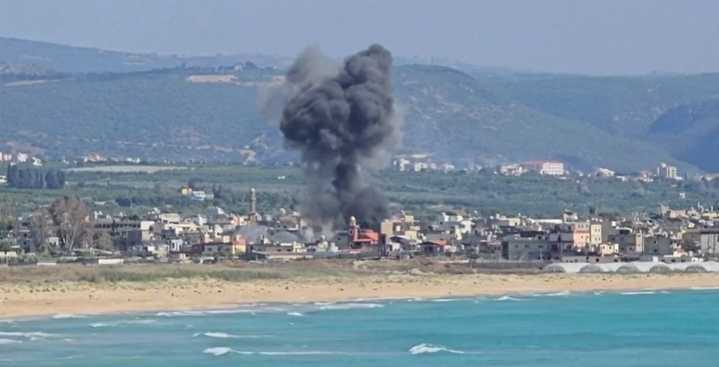
The announcement, delivered in a video statement on Monday evening, was followed almost immediately by Israeli Defence Forces strikes across Lebanon — hitting the Bekaa Valley in the east and multiple other locations across the country.
Hezbollah responded the same day. The group said it launched 22 drone and rocket attacks against Israeli targets, including soldiers, tanks, barracks, and military buildings. The tit-for-tat exchange underscored a reality that the diplomatic language of recent weeks had struggled to obscure: the ceasefire agreed on 16 April is collapsing in slow motion.
A Ceasefire That Was Already Fraying
Lebanon and Israel agreed to extend a 45-day ceasefire earlier this month. But the agreement has never fully held. Fighting has continued in the south of the country throughout the ceasefire period, and Israeli authorities have issued near-daily orders directing Lebanese civilians to evacuate new areas — a form of pressure that is difficult to reconcile with any serious commitment to a pause in hostilities.
Since the ceasefire was signed, ten Israeli soldiers have been killed. More than 400 people in Lebanon have died from Israeli bombardment in the same period — a figure that includes paramedics and emergency service workers responding to earlier strikes.
Over one million people have been displaced within Lebanon. The Bekaa Valley, struck Monday evening, extends the operational geography of Israel’s campaign into eastern Lebanon — closer to the Syrian border and significantly beyond the southern areas where Israeli ground troops are stationed.
Netanyahu’s justification for the escalation rested on casualty figures from the broader campaign. He said Israel’s military had “eliminated over 600 terrorists” since operations began, but argued the scale of the offensive now needed to intensify.
“What this requires of us now is to increase the strikes, to increase the intensity,” he said.
Far-Right Ministers Push for Beirut Strikes
Netanyahu’s announcement was welcomed — and amplified — by the far-right members of his coalition government.
Finance Minister Bezalel Smotrich and National Security Minister Itamar Ben Gvir, both of whom have previously called for maximum military force against Palestinian and Lebanese targets, voiced support for expanding the campaign further. They have publicly called for the military offensive to extend into Beirut — a step that would constitute a major escalation with serious humanitarian consequences for Lebanon’s capital.
Ben Gvir is currently facing the prospect of an International Criminal Court arrest warrant, as are several other senior Israeli officials. The domestic political pressure from the far right pushes Netanyahu toward military escalation rather than restraint — a dynamic that significantly complicates any path toward a genuine ceasefire.
Lebanon’s Government Caught Between Demands and Displacement
Lebanese President Joseph Aoun has been unambiguous about his position: Israel must withdraw completely from southern Lebanese territory. That demand sits at the centre of negotiations between the two countries, conducted indirectly given that Lebanon and Israel do not maintain formal diplomatic relations.
Officials from both sides are scheduled to hold further negotiations in Washington next week. Monday’s escalation makes those talks significantly more difficult to conduct in good faith — and raises questions about what either side believes they are negotiating toward.
Lebanon’s government has publicly committed to disarming Hezbollah — a key demand of both Israel and the United States. But Lebanese authorities insist the disarmament process is complex and cannot proceed without a genuine ceasefire in place. That position is reasonable on its face. The problem is that Israel’s government has explicitly stated its opposition to ending the fighting against Hezbollah — making the precondition Lebanon requires the very outcome Israel refuses to provide.
The diplomatic circle is closed. No ceasefire, no disarmament. No disarmament, no ceasefire.
The Iran Connection: A Regional War With Local Consequences
Lebanon did not enter this conflict voluntarily or independently. The country was drawn into the current round of fighting after the United States and Israel launched a war against Iran on 28 February. Hezbollah — Iran’s most significant regional ally — fired rockets into Israel in retaliation for an Israeli strike that killed Iranian Supreme Leader Ayatollah Ali Khamenei.
Israel responded with an air campaign across Lebanon and a ground invasion. The Lebanese Ministry of Health puts the death toll from Israeli attacks at more than 3,000 people since hostilities began.
That figure — 3,000 dead in Lebanon — is not a footnote. It is the human cost of a war that started elsewhere, between actors whose primary theatre of conflict is elsewhere, but whose violence has fallen with devastating consistency on Lebanese soil and Lebanese lives.
The Iranian government, meanwhile, has insisted that any emerging peace agreement with the United States must include a complete ceasefire on all fronts — including the Lebanese front. Israel’s government has explicitly rejected that condition.
The implication is stark: Washington may be negotiating a deal with Tehran that stops the direct US-Iran conflict while Israel continues its military campaign in Lebanon with American acquiescence. That arrangement would leave Lebanon — the country least responsible for starting this regional war — as the territory where the fighting continues longest.
What This Means for the Region — and for Nigeria
From a Nigerian perspective, the escalation in Lebanon matters for several interconnected reasons.
The prolonged conflict in the Middle East is keeping global oil prices elevated. Nigeria, as Africa’s largest oil producer, benefits from higher crude prices in terms of export revenues — but also faces the downstream consequences of energy inflation that affects import costs, transportation, and food prices domestically.
More broadly, the targeting of emergency responders — paramedics and rescue workers — in Israeli strikes raises serious questions under international humanitarian law. Nigeria, as a member of the United Nations and a country that has experienced its own internal security challenges, has a principled interest in the consistent application of international humanitarian standards.
The Lebanese crisis also speaks to a pattern that African nations understand intimately: smaller countries caught between larger powers, absorbing the costs of conflicts they did not initiate, and negotiating under conditions not of their own making.
A Dangerous Escalation With No Clear End
Monday’s strikes represent more than a tactical adjustment. They signal that Israel intends to continue — and intensify — its Lebanon campaign regardless of ceasefire frameworks, regardless of diplomatic talks in Washington, and regardless of the civilian death toll on Lebanese soil.
Hezbollah has demonstrated it will respond to every Israeli strike with its own attacks. The cycle is established. The casualties accumulate. The ceasefire is maintained in name only.
Lebanon is preparing for Washington talks next week with a government under pressure, a military outgunned, a population being displaced at scale, and a armed group within its borders that no peace agreement has yet succeeded in restraining.
Netanyahu has given his military its orders. The crushing blow he has called for will fall on Lebanon. The question is who bears the cost — and who in the international community will finally demand that the price of this war stops being paid exclusively by the Lebanese people.