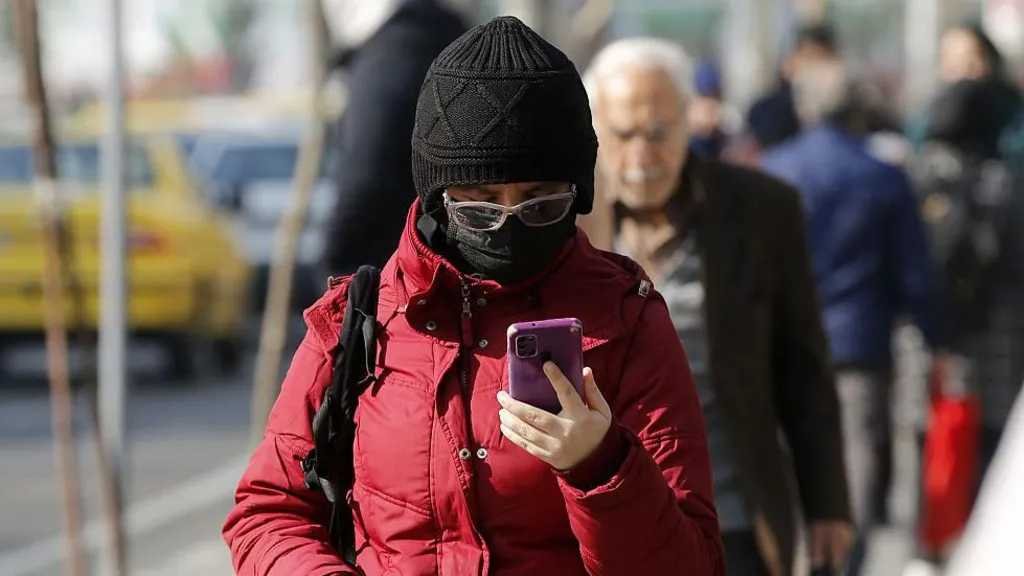
After nearly three months of digital silence, internet access has begun returning to Iran.
Mohammad Reza Aref, Iran’s first vice-president, announced the development on Tuesday, writing on X: “The first step toward free and regulated access to cyberspace has been taken.”
The language was carefully chosen. “Regulated” is doing significant work in that sentence — and Iranians who have lived through previous cycles of shutdown and restoration know exactly what it means.
What the Monitors Are Seeing
Internet monitoring organisations Netblocks and Kentik both reported partial restoration of access around 13:00 GMT on Tuesday. The word “partial” carries weight. Kentik warned that most networks in the country were still down at the time of reporting.
Netblocks described the situation as “unclear” regarding whether restoration would be sustained. The group’s research director, Isik Mater, offered a critical historical context that every observer of Iranian digital policy should internalise.
“From past digital blackouts in Iran, we’ve seen that the restoration process can take some hours and isn’t as streamlined as the shutdown procedure,” she told BBC Verify. “It has on occasion taken weeks to reach some regions.”
More pointedly, she added: “Historically, each time internet access has been restored after an internet shutdown in Iran it has come back with heavier restrictions and tighter controls.”
That pattern — shutdown, partial restoration, tighter controls — is not accidental. It is policy.
87 Days Without the World
The Iranian government cut internet access on 28 February, the same day US and Israeli strikes triggered the current regional war. Officials justified the blackout on national security grounds — preventing surveillance, espionage, and cyber-attacks from adversaries exploiting open networks during active conflict.
The justification is not entirely implausible in a wartime context. But the duration — nearly three months — places this among the longest national internet shutdowns ever recorded anywhere in the world.
Consider what that means practically. Businesses unable to transact internationally. Families separated from relatives abroad with no reliable communication. Journalists unable to file or verify information. Students cut off from academic resources. An entire economy operating in analogue mode while the rest of the world moved digitally.
A content creator in Tehran, speaking to the BBC on Tuesday, captured the immediate relief with disarming honesty. “The main point is, some of my income will come back,” he said. He had connected through home WiFi — a small but meaningful restoration of a life that the shutdown had partially dismantled.
The Context: Deeper Than This War
The February blackout did not emerge from a clean slate. When the US-Israel strikes began and Iran shut down the internet, Iranians had only enjoyed approximately one month of relatively open access — a brief window that had itself followed a previous shutdown imposed during a deadly government crackdown on anti-government protests in January.
The pattern is worth stating plainly: Iran’s civilian population has experienced repeated, prolonged internet shutdowns — some linked to war, some linked to internal political suppression — that collectively represent one of the most sustained campaigns of digital restriction imposed on any civilian population in the modern era.
Those Iranians who refused to accept the blackout found workarounds. Expensive virtual private networks provided limited access for those who could afford them. Satellite internet technology was smuggled into the country, at considerable personal risk to those involved. The determination to stay connected — to maintain income, maintain relationships, maintain access to information — is a testament to what people do when their governments cut them off from the world.
Fresh Strikes, Fresh Tensions
The partial restoration came at a fraught moment. Iran this week condemned new US military strikes on its territory — targeting missile sites and boats allegedly attempting to lay mines in the Strait of Hormuz — as a “gross violation” of the ceasefire agreed on 8 April.
Washington described the strikes as “self-defence.” Tehran called them an act of war dressed in legal language. The ceasefire, nominally still in place, continues to function as a contested framework rather than a genuine operational pause.
Against that backdrop, the decision to begin restoring internet access carries its own ambiguity. Is this a genuine easing of restrictions, signalling a move toward normalisation? Or is it a tactical decision — restoring enough access to stabilise domestic conditions while preserving the infrastructure for future shutdowns when the government judges them necessary?
The vice-president’s language — “regulated access” — suggests the latter is at least part of the answer.
What “Regulated” Access Actually Means
Iran already operated one of the most heavily filtered internet environments in the world before the February blackout. Dozens of platforms remain permanently blocked. Social media sites accessible in most countries are unavailable without a VPN. The state-controlled “national internet” — a domestic intranet that functions independently of the global web — has been developed over years precisely to give the government the option of cutting international access while maintaining domestic digital infrastructure.
Every previous restoration of Iranian internet access has come with enhanced filtering, expanded blocking lists, and tighter monitoring of user behaviour. There is no reason to expect this cycle to be different.
The partial restoration announced Tuesday is real. The relief it brings to Iranians who have spent 87 days without reliable digital access is real. But the framework within which that restoration is occurring has not changed.
Why This Matters Beyond Iran
For Nigeria and other developing nations watching Iran’s digital trajectory, the lessons are stark.
Governments that build the infrastructure to shut down internet access will eventually use it. The justifications will always be available — national security, public order, foreign interference, electoral integrity. The technology that enables a shutdown “during wartime” is the same technology that enables a shutdown during a protest crackdown.
Nigeria has experienced its own internet disruptions during periods of political tension. The impulse to control digital access during instability is not unique to authoritarian governments — it emerges wherever leaders believe the cost of open information flows exceeds the cost of restricting them.
Iran’s experience is a warning about where that logic leads when taken to its conclusion: 87 days of digital darkness, an economy damaged, a population isolated, and a restoration that arrives with the word “regulated” already embedded in the official announcement.
The internet is coming back to Iran. The question is what version of the internet, and on whose terms.