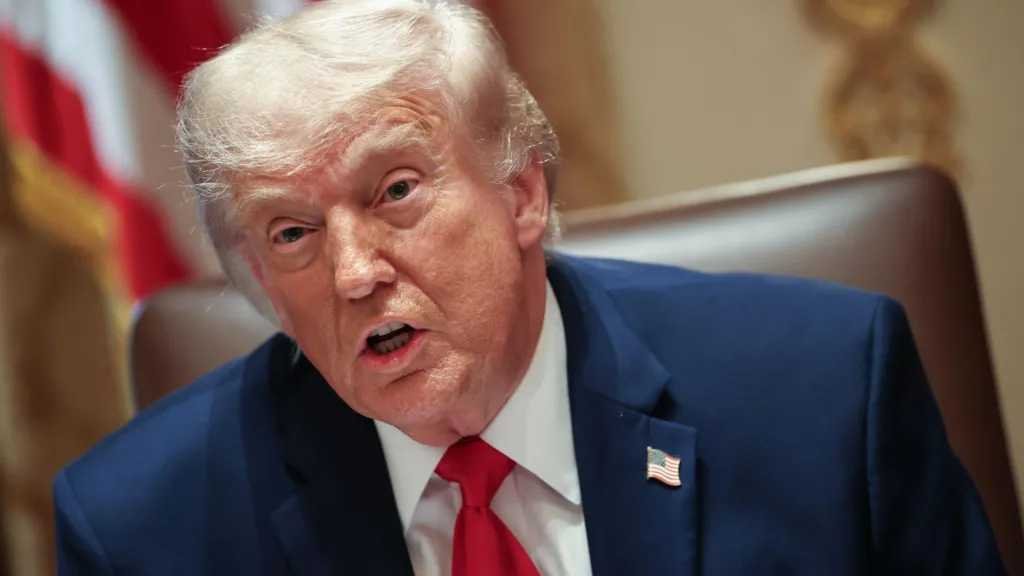
President Donald Trump has declared that the United States remains unsatisfied with the terms of a potential deal with Iran, despite weeks of negotiations aimed at ending the ongoing conflict. Speaking at a cabinet meeting, Trump insisted Tehran was eager to reach an agreement but had not yet met Washington’s demands.
His remarks followed reports on Iranian state television claiming details of a draft deal. The alleged text suggested reopening the Strait of Hormuz and withdrawing US forces from the region. The White House dismissed the report as “fabricated,” underscoring the gulf between the two sides.
Trump emphasized that the US would not rush into an agreement, warning that military action remained an option if talks collapsed. “They just want to make a deal—I don’t think they have a choice,” he said, adding that Iran was “negotiating on fumes.”
Secretary of State Marco Rubio echoed Trump’s cautious optimism, noting “some progress and some interest” but refusing to outline specific sticking points. Both officials avoided confirming whether issues such as Iran’s nuclear program or uranium stockpile were part of the ongoing discussions.
Iranian media had earlier claimed the US would lift its naval blockade in exchange for restored commercial traffic through the Strait of Hormuz, managed jointly by Iran and Oman. However, the draft made no mention of curbing Iran’s nuclear ambitions, a key concern for Washington and its allies.
The conflict escalated in late February when US and Israeli forces launched strikes against Iran, triggering retaliatory attacks across the Gulf. Iran’s closure of the Strait of Hormuz disrupted global oil supplies, sending prices soaring. A ceasefire was agreed in April, but tensions have persisted.
In recent days, the US carried out what it described as “self-defence strikes” against Iranian missile sites and naval units accused of laying mines. Tehran condemned the actions as violations of the ceasefire, further complicating negotiations.
The uncertainty surrounding the talks has left regional stability hanging in the balance. While both sides acknowledge progress, neither has signaled readiness to finalize a deal. Trump’s insistence on stronger terms suggests Washington will continue pressing Tehran for concessions, particularly on security and nuclear issues.
For Iran, the economic and military strain of prolonged conflict has created pressure to secure relief. Yet its leadership remains cautious, wary of appearing to capitulate under US demands.
The coming days will be critical. If negotiations stall, renewed strikes could reignite fighting across the Middle East. If progress continues, a fragile ceasefire may evolve into a broader settlement. For now, Trump’s message is clear: the US is not satisfied, and the path to peace remains uncertain.