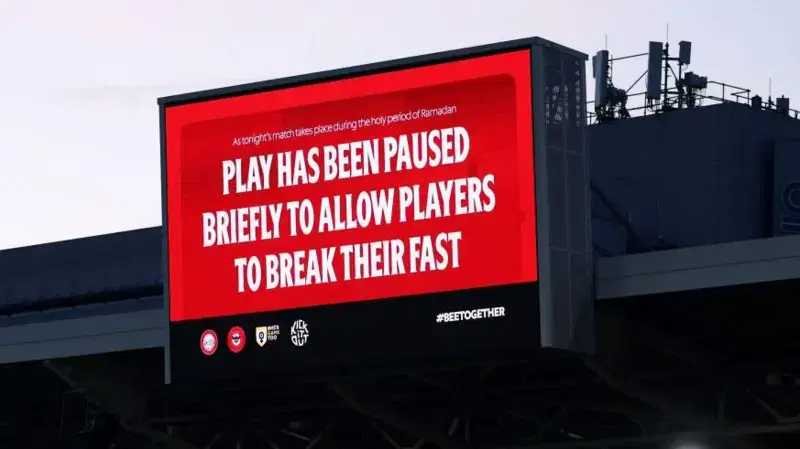
English football continues to demonstrate its commitment to inclusivity and respect for diversity by accommodating Muslim players during the holy month of Ramadan. Both Premier League and English Football League (EFL) clubs have reaffirmed their procedures to ensure players observing the fast are supported, not only during matches but also in training and daily routines.
Ramadan, which lasts for a month, requires Muslims to abstain from food and drink from dawn until sunset. In the UK, sunset during this period typically falls between 17:00 and 19:00 GMT, meaning certain evening fixtures may pause briefly to allow players to break their fast. Match officials and captains coordinate in advance, agreeing on a natural stoppage—such as a goal-kick or throw-in—where play can be paused without disrupting the flow of the game. This practice, first introduced in 2021, has since become a respected tradition across English football.
Beyond matchday pauses, clubs have taken proactive steps to support their Muslim players. Training schedules are often adjusted to accommodate fasting, ensuring that players can maintain peak performance while observing their religious obligations. Meal planning also plays a crucial role, with chefs preparing halal food and ensuring that players have access to nutritious meals at the appropriate times. Former Everton midfielder Abdoulaye Doucoure praised the league’s approach, noting that “they will never do anything against your faith, and this is great.” He explained that fasting has become a normal part of his routine, with clubs ensuring food and preparation align with his needs.
Former Liverpool star Sadio Mane also revealed that his club adapted training sessions during Ramadan to support Muslim players, reflecting a broader culture of respect within football. Current Premier League players such as Mohamed Salah, William Saliba, and Amad Diallo continue to benefit from these accommodations, which highlight the sport’s recognition of faith as an integral part of players’ lives.
While the adjustments are practical and straightforward, they carry a deeper significance: football is not only a global sport but also a platform where cultural and religious diversity is embraced. By integrating Ramadan practices into its structure, English football celebrates inclusivity and sets an example for other leagues worldwide.