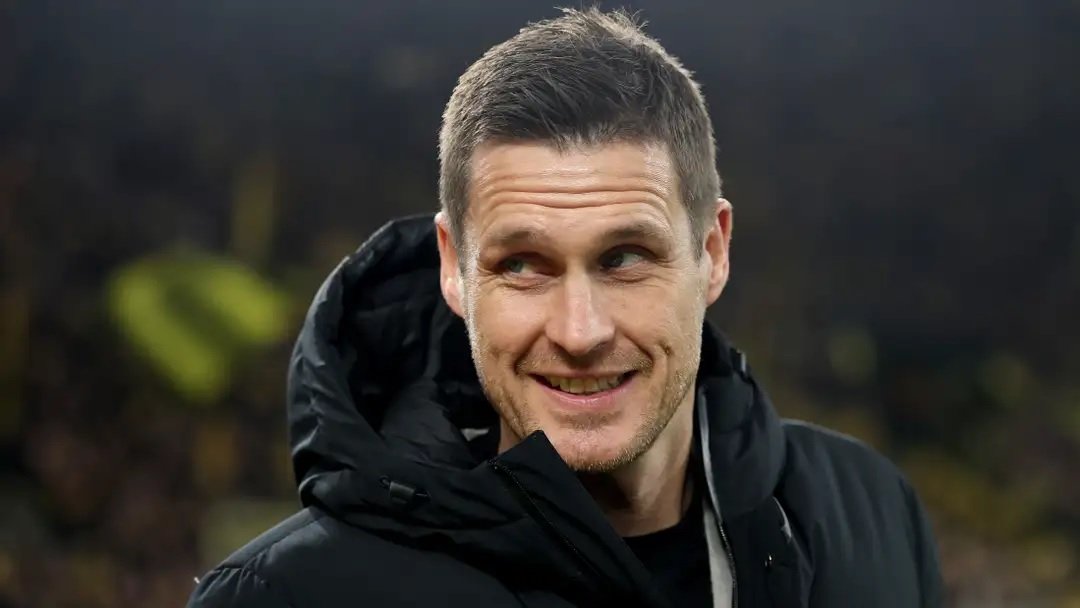
Borussia Dortmund confirmed on Sunday that Sebastian Kehl has stepped down as sporting director with immediate effect. The announcement closed a 21‑year association with the club, first as a player and later as an executive. Kehl explained that the decision was mutual, designed to give both sides time to reorganize before the summer. He described Dortmund as “part of my life for half my life,” but acknowledged that the moment had come to move on.
Kehl’s next career step remains uncertain, though he has been linked with a possible role at Hamburger SV. His departure also raises questions about the future of Dortmund’s sporting leadership, currently overseen by Lars Ricken.
Kehl joined Dortmund in 2002 and became a central figure in one of the club’s most successful eras. He won three Bundesliga titles and the DFB‑Pokal in 2012, serving as captain under Jürgen Klopp. His leadership on the pitch made him a respected figure among teammates and fans.
After retiring in 2015, Kehl transitioned into management. He worked under long‑time sporting director Michael Zorc from 2018, learning the role before succeeding him in 2022. His appointment was seen as a continuation of Dortmund’s tradition of promoting former players into leadership positions.
Kehl inherited the role at a challenging time. Dortmund had finished second in the Bundesliga but endured disappointing campaigns in Europe and the domestic cup. The team failed to progress beyond the Champions League group stage, dropped into the Europa League, and exited early against Rangers. In the DFB‑Pokal, they were eliminated by second‑tier St. Pauli.
Coach Marco Rose was dismissed after one season, and Edin Terzic was brought back to stabilize the team. Kehl’s promotion was endorsed by chief executive Hans‑Joachim Watzke, who admitted he faced “big shoes to fill” but expressed confidence in his abilities.
Kehl’s first major test came in the summer of 2022. Erling Haaland had already agreed a €60 million move to Manchester City, leaving a huge gap in Dortmund’s attack. Kehl turned to Sébastien Haller, signing him from Ajax for €31 million, the second‑highest fee in club history.
Haller’s record made him a logical choice. He had scored prolifically in the Champions League and Dutch league, and previously impressed in the Bundesliga with Eintracht Frankfurt. But tragedy struck when he was diagnosed with testicular cancer before making his competitive debut.
Kehl and the club supported Haller throughout his treatment. He eventually returned and played a crucial role in Dortmund’s near‑title run in 2023, scoring decisive goals late in the season. Although he never fully established himself long‑term, his comeback symbolized resilience. Kehl’s loyalty during Haller’s illness became one of the defining aspects of his tenure.
Another pressing issue was the future of Manuel Akanji. The Swiss defender declined a contract extension and sought a new challenge. Dortmund sold him to Manchester City for €20 million, a fee that matched the cost of signing Nico Schlotterbeck from Freiburg. Akanji went on to win the treble with City, but Dortmund had little choice but to cash in.
Kehl’s handling of the situation was pragmatic. He avoided losing Akanji for free and secured a replacement who remains part of Dortmund’s defensive core.
Kehl’s transfer record produced varied outcomes. Julian Ryerson, signed from Union Berlin for €5 million in January 2023, proved a bargain. His consistency and set‑piece quality made him a valuable addition.
Julien Duranville, a teenage prospect from Belgium, struggled with injuries and has yet to fulfill his potential. He is currently on loan at Basel, where Dortmund hope he can develop.
Kehl also pursued Edson Álvarez as a defensive midfielder, but coach Terzic preferred Emre Can, and the deal collapsed. Instead, Kehl signed Felix Nmecha for €30 million as Jude Bellingham’s replacement. Nmecha has since become a key figure in midfield and earned recognition at national level.
Marcel Sabitzer arrived from Bayern Munich for €19 million but failed to deliver the expected impact. By contrast, Ian Maatsen, brought in on loan from Chelsea in 2024, quickly became a first‑team regular and helped Dortmund reach the Champions League final. However, the club could not secure him permanently.
Kehl also engineered the return of Jadon Sancho on loan from Manchester United. The winger regained form and re‑energized supporters, but his stay lasted only six months.
Kehl’s time as sporting director was marked by ambition, risk, and loyalty. He faced the difficult task of replacing star players, managing departures, and balancing financial realities. Some signings flourished, others faltered, but his commitment to the club was never in doubt.
His support for Haller during illness highlighted his human qualities beyond football. His eye for bargains, such as Ryerson, showed shrewdness in the transfer market. Yet he also endured setbacks, including failed deals and players who did not meet expectations.
After three and a half years in charge, Kehl leaves behind a mixed but meaningful legacy. He guided Dortmund through transition, upheld the club’s values, and remained a figure of integrity. His departure closes a chapter that began with him lifting trophies as captain and ended with him shaping the squad from the boardroom.