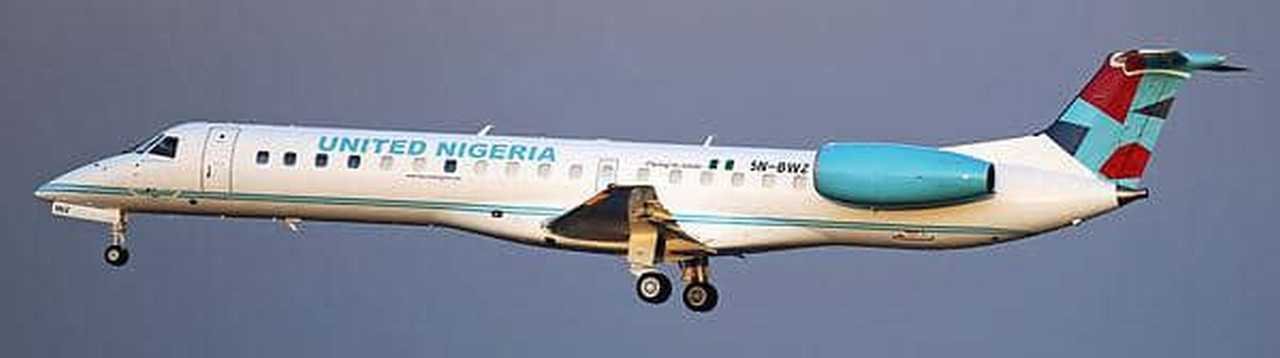
United Nigeria Airlines has confirmed another disruption to its operations after one of its aircraft was grounded following a bird strike in Abuja. The incident, which occurred on Wednesday, marks the fifth time the airline has faced such a challenge in 2026.
According to a statement issued by spokesperson Chibuike Uloka, the affected aircraft was a CRJ‑900 operating Flight UN0579 from Kano to Abuja. The plane departed Mallam Aminu Kano International Airport and was approaching Nnamdi Azikiwe International Airport when the bird strike occurred.
The airline said the aircraft was immediately withdrawn from service in line with established safety protocols. “In line with our strict and uncompromising safety standards, the aircraft has been immediately withdrawn from operations to undergo comprehensive technical inspections and any required maintenance before being returned to service,” the statement read.
The grounding is expected to affect flight schedules across the airline’s network. United Nigeria Airlines acknowledged the inconvenience but stressed that passenger safety remains its highest priority. “Consequently, some flights across our network may not operate as scheduled; however, safety remains our highest priority. We sincerely apologise for any inconvenience this unforeseen development may cause to our passengers’ travel plans,” the airline added.
This latest incident highlights the recurring problem of bird strikes in aviation. For United Nigeria Airlines, it is the fifth such occurrence this year. The company emphasized that each case has been managed in full compliance with aviation safety regulations and operational procedures.
Bird strikes are a recognized hazard in the industry, often leading to costly repairs and operational delays. Airlines are required to follow strict inspection and maintenance protocols whenever such events occur. United Nigeria Airlines reiterated that its response has consistently aligned with these standards, ensuring that no risks are taken with passenger safety.
The airline also sought to reassure the public of its commitment to reliable service despite the setbacks. “We appreciate the understanding of our valued passengers and reaffirm our commitment to maintaining the highest standards of safety and operational reliability. We will continue to take all necessary measures to optimise our operations and exceed the expectations of our passengers,” the statement concluded.
The incident underscores the broader challenges faced by Nigerian carriers in maintaining schedules amid environmental and operational risks. Bird strikes are particularly common near airports where wildlife management can be difficult. Aviation authorities typically work with airlines to monitor and mitigate such risks, but complete prevention remains elusive.
For passengers, the immediate impact is disruption to travel plans. United Nigeria Airlines has urged patience, noting that every decision taken is guided by safety considerations. The company’s emphasis on transparency and adherence to regulations reflects an effort to maintain trust during repeated operational interruptions.
As the airline continues to address the technical inspection of the grounded aircraft, attention will remain on how quickly it can restore full service. The recurrence of bird strikes also raises questions about long‑term strategies to reduce such incidents across Nigeria’s airports.
United Nigeria Airlines’ handling of the situation demonstrates the balance airlines must strike between operational efficiency and uncompromising safety standards. While delays and cancellations are frustrating for passengers, the company insists that its priority is ensuring that every aircraft in service meets strict technical and safety requirements.