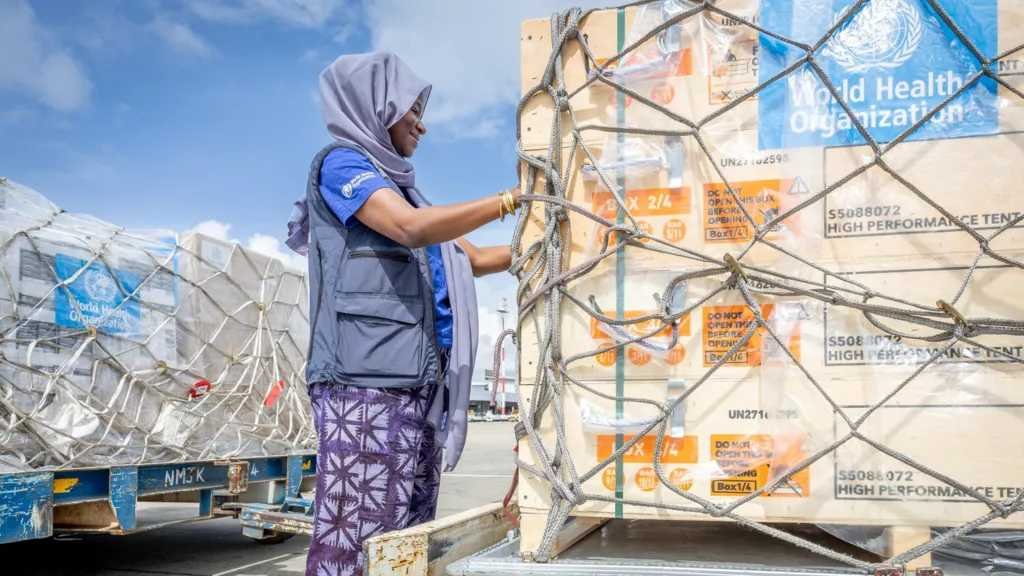
The official numbers are alarming enough. More than 513 suspected cases. At least 131 deaths in the Democratic Republic of Congo. One fatality, already recorded across the border in Uganda, has been declared an international emergency by the World Health Organization.
But the numbers may not be telling the full story — and that is precisely what makes this outbreak so difficult to control.
The more health officials investigate, the worse the picture gets. The WHO, the Red Cross, and independent researchers are all saying the same thing in different ways: this outbreak is larger than the data suggests, it is moving faster than initially understood, and the conditions on the ground could not be more hostile to containment.
The Under-Detection Problem
The most urgent warning came not from the field but from a modelling study published Monday by the MRC Centre for Global Infectious Disease Analysis in London.
Its conclusion was stark. There has been “substantial” under-detection of cases, the researchers found. The true number of infections, they said, could already exceed 1,000 — nearly double the official suspected case count. The “true magnitude,” the study stated plainly, “remains uncertain.”
That uncertainty is not a minor caveat. In an outbreak driven by direct contact with infected bodily fluids, undetected cases are uncontrolled cases. Every person infected but not identified is a potential source of further spread — visiting family, moving between communities, crossing into neighbouring provinces or countries before anyone knows they are sick.
The WHO’s Dr Anne Ancia told the BBC that this is precisely what is happening. “The more we are investigating this outbreak, the more we realise that it has already disseminated at least a little bit across the border and also in other provinces,” she said.
The outbreak has now reached South Kivu — a province already deep in humanitarian crisis — and a case has been confirmed in Goma, eastern DRC’s largest city, home to around 850,000 people and currently under the control of Rwandan-backed rebel forces.
A Strain With No Vaccine
What distinguishes this outbreak from some previous Ebola crises adds another layer of danger: the strain driving the current surge is the Bundibugyo variant, one of the rarest forms of the virus.
It has caused only two previous outbreaks in recorded history. In both, it killed approximately a third of those infected — a fatality rate that puts it among the deadliest known strains of an already deadly disease.
There is no approved vaccine for Bundibugyo. The vaccine that proved effective during the catastrophic 2014-2016 West Africa outbreak — which infected more than 28,600 people and killed over 11,000 — targeted the Zaire strain. That tool does not apply here.
The WHO says it is evaluating whether other experimental drugs may offer some protection. But for now, communities facing the virus have no pharmaceutical shield. Prevention depends entirely on isolation, hygiene, early detection, and health systems that — in Ituri province — are already under enormous strain.
Movement, Insecurity, and the Limits of Containment
Dr Ancia described Ituri province as “a very unsec,ured area with lots of movement of population” — and that description captures the central challenge facing responders.
The north-eastern provinces of DRC are among the most conflict-affected areas on the continent. Armed groups operate across the region. Displacement is constant. People move frequently, often without warning, and often across provincial or international borders. Health workers trying to trace contacts and identify new cases face not just logistical obstacles but active security threats.
It is not an environment in which an Ebola outbreak can be neatly mapped and contained. The virus spreads through direct contact with infected bodily fluids — blood, vomit, sweat. Funerals, a traditional site of Ebola transmission in Central and West Africa, remain a concern. So does the movement of people who may have been exposed but have not yet developed symptoms.
The Red Cross issued a clear warning: Ebola escalates rapidly when cases are not identified early, when communities lack information, and when health systems are overwhelmed. “We are seeing all those conditions,” the organisation said, in the current outbreak.
Fear on the Ground, Shortages in the Community
In Ituri’s communities, the fear is real and the resources are thin.
A resident who identified himself as Bigboy told the BBC that people are “really scared” and doing whatever they can to protect themselves — washing hands, staying alert, watching for symptoms in those around them. But basic protective supplies are scarce. He said he wished the community could access face masks.
Alfred Giza, another Ituri local, described a community that understands the threat but has been left largely to manage it with whatever is at hand. He said he would not know what to do if a family member or close friend contracted the disease.
These are not failures of individual awareness. They are failures of infrastructure and response capacity in a region that has been chronically under-resourced for years.
International Evacuations, Border Closures, and Growing Regional Alarm
The outbreak is already prompting international responses beyond DRC’s borders.
An American citizen — believed to be Dr Peter Stafford, associated with a missionary group — developed Ebola symptoms over the weekend and is being evacuated to Germany for treatment. The U.S. Centers for Disease Control and Prevention confirmed it was working to evacuate at least six other Americans who had been exposed.
Rwanda has closed its border with DRC. Uganda — where one Ebola death has already been confirmed — has advised its population to avoid physical greetings, including handshakes and hugs. Several other African countries are strengthening border screening and preparing health facilities for potential cases.
DRC President Félix Tshisekedi held an emergency crisis meeting and urged citizens to remain “calm” and vigilant. WHO Director-General Tedros Adhanom Ghebreyesus, who declared the outbreak an international public health emergency last week, said he was “deeply concerned about the scale and speed of the epidemic.”
The Window Is Narrowing
There is one further dimension to this outbreak that intensifies the urgency: it may have been circulating for weeks before it was officially detected on April 24. If that is the case — and the modelling data suggests it is likely — the window for early containment has already narrowed considerably.
Ebola begins with symptoms that resemble influenza: fever, fatigue, headache. In a region where malaria and other febrile illnesses are common, those symptoms do not immediately trigger alarm. By the time the disease progresses to its more distinctive and devastating stages — organ failure, internal and external bleeding — the virus has often already passed to others.
That lag between infection and identification is the space in which outbreaks grow. In Ituri, with its insecurity, its population movement, its strained health system, and its vaccine gap, that space is larger than most.
Containing this outbreak is still possible. But the conditions for doing so — early detection, community trust, security, resources, and a functioning health system — are precisely the things in shortest supply.