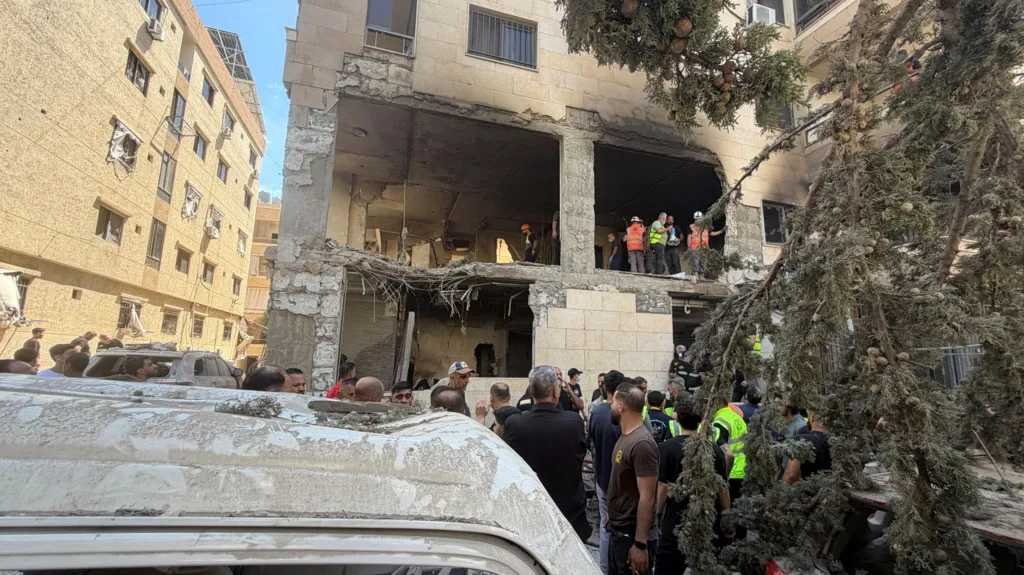
Israel’s airstrike on Beirut has escalated tensions in Lebanon, striking at the heart of Hezbollah’s stronghold and leaving civilians caught in the crossfire. The attack, carried out in Dahieh, a densely populated suburb of the capital, marked only the second strike on Beirut since last month’s ceasefire.
The Israel Defense Forces (IDF) described the operation as “targeted,” but offered no details. Israeli media reported that the strike aimed at Ali al-Husni, commander of the missile force in the Imam Hossein Division, an Iranian-backed militia allied with Hezbollah.
Thick smoke rose above residential buildings as residents scrambled to check on loved ones. Rescue crews rushed in, but the danger forced many to halt operations. Witnesses described chaos as families shouted for missing relatives.
The strike followed Prime Minister Benjamin Netanyahu’s announcement of an expanded ground operation. This came after Hezbollah launched drone attacks on Israeli troops and civilians. In response, the IDF ordered residents south of Beirut to evacuate north of the Zahrani River, warning of “extreme force.” The order covered 300 towns and villages, displacing thousands.
Tyre, one of Lebanon’s largest cities, suffered heavy bombardment. At least 11 people were killed in strikes on the city and nearby areas. Videos showed streets engulfed in flames, vehicles burning, and mushroom-shaped smoke clouds rising over high-rise buildings. Rescue workers reported receiving direct warnings from the Israeli military to evacuate.
Saida, a coastal city north of the Zahrani River, has become a temporary refuge. Yet shelters are overwhelmed, forcing displaced families to move further north. Despite the influx, daily life continued in parts of the city, with residents seen at the marina eating lunch even as others searched for shelter.
For some, the violence struck home. Hanaa Jamaa, a 46-year-old resident, lost her rental apartment in Saida when a missile hit at 2:40 a.m. Four people died in the building, including two displaced residents. Through tears, she said, “We aren’t with Hezbollah and we aren’t with Israel. We just want peace.”
Lebanon’s health ministry reports more than 3,200 deaths since the war began in March. Israel says 23 soldiers and four civilians have died in the same period. The conflict erupted after Hezbollah retaliated against an Israeli strike that killed Iran’s supreme leader, drawing Lebanon deeper into a war between Israel, the US, and Iran.
Both sides accuse each other of violating the ceasefire. Israel insists Hezbollah’s attacks breach the deal, while Lebanese officials point to Israeli strikes as violations. The escalation threatens fragile negotiations involving the US and Iran, with Tehran demanding Lebanon’s inclusion in any settlement.
The humanitarian toll is mounting. Families displaced multiple times now face overcrowded shelters and dwindling resources. Aid workers warn that Lebanon’s infrastructure cannot sustain the crisis. With civilians bearing the brunt of the violence, the prospect of peace feels increasingly distant.
Israel’s strike on Beirut underscores the fragility of the ceasefire and the risk of a wider regional war. For Lebanon’s civilians, survival has become the only priority in a conflict that shows no sign of ending.