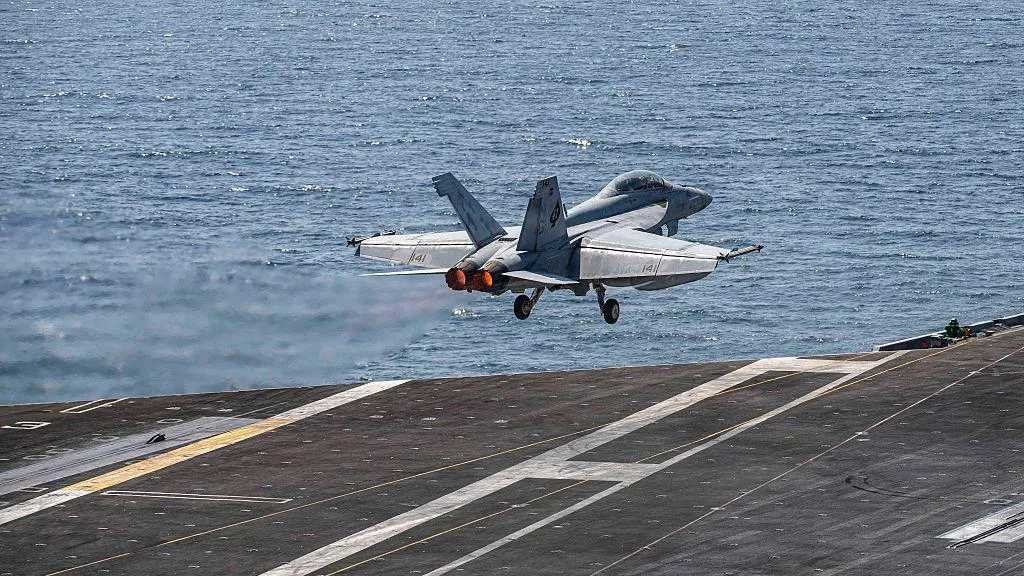
The ceasefire between the United States and Iran is fracturing publicly and rapidly. Iran’s Islamic Revolutionary Guard Corps struck an American air base in the region in the early hours of Thursday morning. Kuwait confirmed it intercepted missiles and drones targeting its territory. Washington called it an “egregious ceasefire violation.” Tehran called American strikes on its soil the real violation.
Both sides are right that the other is attacking them. Neither is willing to stop first.
What Happened — and Where
The sequence of events unfolded fast.
US forces shot down Iranian drones over the Strait of Hormuz and struck a military installation in Bandar Abbas — the strategic southern port city that sits directly on the waterway carrying one fifth of the world’s oil and gas supply. It was the second American strike on Iranian territory in three days.
Iran responded by launching what it described as a targeted attack on the American air base it identified as the source of those strikes. The IRGC did not name the base’s location, but Kuwait — which hosts a major US military facility — confirmed that “hostile missile and drone threats” had been intercepted over its territory.
The US military confirmed the specifics: Iran launched a ballistic missile toward Kuwait that was intercepted by Kuwaiti forces. It also confirmed that five one-way attack drones had posed threats “in and near the Strait of Hormuz” before being shot down, and that a sixth drone launched from an Iranian ground control site in Bandar Abbas was also intercepted.
US Central Command described its own actions as “measured, purely defensive, and intended to maintain the ceasefire.” It described Iran’s missile strike on Kuwait as an attack that occurred “hours after” the Iranian drone launches — framing its own strikes as provoked and Iran’s response as escalatory.
Iran sees the sequence in reverse. Foreign ministry spokesman Esmail Baqai condemned the American strikes as ceasefire violations and said the Islamic Republic would “take all necessary measures to defend its national sovereignty.”
Kuwait’s foreign ministry took the sharpest tone of all, issuing a formal condemnation of what it called “criminal Iranian attacks that targeted” its territory.
A Ceasefire That Exists Mostly on Paper
The ceasefire between Washington and Tehran has been in place since April 8. In the weeks since, it has produced drone intercepts, missile launches, competing accusations of violation, fresh rounds of American strikes on Iranian soil, and now an Iranian ballistic missile fired toward a third country hosting US forces.
This is not a ceasefire in any operational sense. It is a pause in large-scale warfare that is being eroded, engagement by engagement, into something that looks increasingly like a slow resumption of full conflict.
The stakes of that resumption are global. The Strait of Hormuz remains under Iranian control, with thousands of commercial tankers stranded in the Gulf and global energy markets reacting to every escalation. One fifth of the world’s liquefied natural gas and oil passes through that waterway under normal conditions. None of those conditions currently exist.
Washington Squeezes Iran Financially
Beyond the military exchanges, the United States is now applying economic pressure specifically targeted at Iran’s control of the strait.
The US Treasury imposed sanctions on the “Persian Gulf Strait Authority” — the Iranian body collecting transit fees from ships using the Strait of Hormuz. Any vessel that pays those fees now risks exposure to US sanctions as well.
Treasury Secretary Scott Bessent described the fee collection as “the Iranian military’s latest attempt to extort global maritime trade” and characterised it as evidence that Iran was “desperate for cash.”
Iran’s position, delivered by Baqai, was that Tehran was simply charging for “navigational services” and would continue to manage traffic through the waterway. The two descriptions of the same activity — extortion versus service fees — reflect the depth of the interpretive gulf between the two governments.
Trump: “Maybe We Have to Go Back and Finish It”
In a cabinet meeting on Wednesday, President Trump offered his clearest signal yet that patience in Washington is running thin.
“Iran is negotiating on fumes,” he said, adding that his war strategy would not be influenced by November’s midterm elections — a pointed dismissal of the domestic political calendar as a constraint on military decision-making.
Then came the line that will have been noted in Tehran and in every capital watching this conflict. “Maybe we have to go back and finish it, maybe we don’t.”
Trump had struck a more optimistic tone over the weekend, suggesting a peace deal had been “largely negotiated.” By Wednesday, the mood had shifted. He said the US was “not satisfied,” acknowledged Tehran was “very much intent” on reaching an agreement, but added that “so far they haven’t gotten there.”
The threat of a large-scale resumption of bombing is now explicit. Trump has repeated it publicly and recently. Whether it functions as genuine strategic signalling or negotiating pressure is a question diplomats and military planners in multiple countries are urgently trying to answer.
The Draft Agreement That Both Sides Reject
Iranian state television this week published what it described as details of a draft peace agreement. The reported terms included reopening the Strait of Hormuz and a full withdrawal of US forces from the region.
The White House dismissed the document as a “complete fabrication.”
The episode captures the profound mistrust between the two sides at precisely the moment they are supposed to be finalising an agreement. Both governments signalled progress late last week. Speculation briefly mounted that an announcement was days away. Then Tehran said a deal was “not imminent.” Then Trump told negotiators not to rush. Now missiles are flying toward Kuwait.
The framework of a deal reportedly under discussion — a 60-day ceasefire extension, Hormuz reopening, and a structure for nuclear negotiations — has not changed. What has changed is the temperature. Every military exchange makes the political space for a signed agreement smaller.
Gulf States Are Now in the Line of Fire
The escalation to Kuwait marks a qualitative shift in the conflict’s geography.
Kuwait is not a party to the US-Iran war. It hosts American forces — and has done for decades — as part of long-standing security arrangements that reflect the Gulf state’s position within the US-led regional security architecture. An Iranian ballistic missile aimed at its territory, regardless of whether it was intercepted, is a direct threat to a sovereign Arab state that has maintained careful neutrality in the broader regional contest.
Trump used Wednesday’s cabinet meeting to call on Gulf nations to sign the Abraham Accords and normalise relations with Israel — a diplomatic ask delivered at the precise moment Iran was demonstrating its willingness to strike Gulf territory hosting American forces. The timing either reflects extraordinary confidence or extraordinary miscalculation.
What This Means for Nigeria and Africa
For Nigeria and the broader African continent, the consequences of this escalation are felt most immediately at the petrol pump and in the shipping lanes.
Global energy prices have risen sharply since the Strait of Hormuz closure began. African nations that import refined petroleum products — including Nigeria, which despite being an oil producer imports significant volumes of fuel — face direct cost pressures from the disruption.
The prolonged closure also affects food security on the continent. Shipping routes through the Gulf carry agricultural commodities, fertilisers, and manufactured goods that flow into African markets. Every additional week of Hormuz disruption extends supply chain delays and elevates import costs.
Nigeria’s diplomatic position — maintaining relations with both the United States and Iran, navigating membership of the Organisation of Islamic Cooperation while remaining a key US partner on counter-terrorism — requires careful management as the conflict intensifies.
The war is not Nigeria’s. But its consequences arrive here daily.