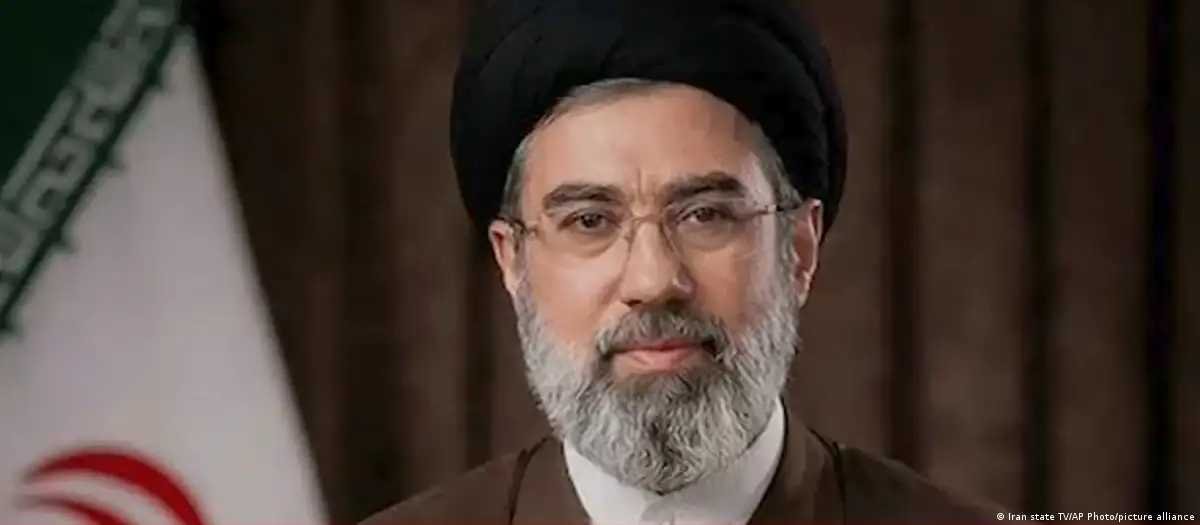
Iran’s new Supreme Leader, Ayatollah Seyyed Mojtaba Khamenei, has issued his most expansive and politically charged public statement since assuming leadership — declaring that American military dominance in the Middle East is finished and calling on Muslim nations to actively shape the new regional and global order that he says is already taking form.
The message, released on Tuesday on the occasion of the Day of Arafah — the spiritual centrepiece of the Hajj pilgrimage — was addressed to Muslim pilgrims gathering in Saudi Arabia. But its intended audience is far broader. It is a declaration of strategic intent directed at every Muslim-majority government, every resistance movement in the region, and every power — including Washington and Tel Aviv — that Iran considers an adversary.
The Core Claim: America Is Retreating
Khamenei’s central argument is direct and unambiguous: the era of American military dominance in the Middle East is ending, and Muslim nations must act on that reality rather than wait for others to confirm it.
“The hands of time will not turn back, and the nations and lands of the region will no longer serve as shields for US bases,” he wrote.
He described the United States as “growing more distant from its former status day by day” — and stated that America would “no longer have a safe haven for its mischief and for establishing military bases in the region.”
The declaration is not merely rhetorical. It comes in the specific context of a war that Iran has been fighting since February — a conflict triggered by US and Israeli strikes that killed his predecessor, the late Supreme Leader Ayatollah Ali Khamenei. The younger Khamenei, who took over following his father’s death in those early strikes, is framing Iran’s military performance in that war as the evidence behind his geopolitical claim.
“The Islamic Republic succeeded in rendering the Zionist regime helpless under its heavy blows, delivering a hard slap to the aggressive America, and thwarting the enemy’s goal of forcing Iran into surrender,” his message stated.
A Call to the Muslim World
What distinguishes this message from standard Iranian state rhetoric is its explicit invitation to Muslim nations beyond Iran’s immediate allies.
Khamenei described the Muslim Ummah — the global community of Muslim believers — as possessing “many shared capacities and common interests that will shape the new order and the future architecture of the region and the world.”
He called on Iranian pilgrims at Hajj to serve as envoys — to carry the story of Iran’s military resistance to Muslim communities from other countries gathered in Saudi Arabia, and to build the foundations of a broader Islamic solidarity movement.
The Resistance Front, which Khamenei described as stretching “from Iran to Lebanon and Palestine and Iraq and Syria, from Africa and Yemen to Afghanistan and Pakistan,” was celebrated as the military and ideological vanguard of this emerging order.
For governments across the Muslim world — including those in West Africa, where Islam is the majority or a significant religion in many countries — this message is an attempt to reframe the regional conflict not as Iran’s war but as a civilisational confrontation between the Muslim world and Western imperial power.
Israel: “A Cancerous Tumor Nearing the Final Stages of Its Cursed Life”
Khamenei’s language on Israel was among the most extreme in the message, drawing on the framing established by his late father and predecessor.
He described the Israeli state as a “cancerous tumor” and an “unstable regime” that was approaching “the final stages of its cursed life.” He reiterated a prediction attributed to the elder Khamenei that Israel would not survive another 25 years.
The statement reflects Tehran’s absolute refusal to accept any peace framework that does not fundamentally alter Israel’s position in the region — a posture that directly contradicts the emerging US-Iran ceasefire negotiations and places Khamenei’s public position in sharp tension with the diplomatic track his government’s negotiators are simultaneously pursuing in Qatar.
That contradiction — negotiate with Washington while publicly declaring its era over; talk peace while describing Israel’s imminent demise — defines the fundamental strategic ambiguity Iran is managing in this period.
The Martyrdom Narrative and Domestic Mobilisation
A significant portion of the message was directed inward — at the Iranian population itself.
Khamenei acknowledged what he described as the “heartbreaking martyrdom” of his father in the opening strikes of the war. He framed that loss not as a trauma that weakened Iran but as a catalyst that drove the Iranian public into a new phase of mobilisation and resilience.
The message stated that the Iranian nation “astonished the world” through mass participation in support of the Armed Forces, displaying resolve that he compared to the revolutionary fervour of 1979 and the national unity demonstrated during the eight-year Iran-Iraq war of the 1980s.
For a new leader who assumed power under the most violent circumstances and who has been operating from an undisclosed location since his own reported injury in the February strikes, the need to project strength and continuity to his domestic audience is as urgent as any external message.
“Death to America, Death to Israel”: A Political Slogan Elevated to a Religious Duty
The message closed with its most provocative passage — one that conflates religious obligation with political militancy.
Khamenei called “Death to America and Death to Israel” the “common slogan of the Islamic Ummah and the oppressed of the world, especially the youth” — framing what has long been a rally chant as a principle that extends beyond protest into the daily political and social life of Muslims globally.
He also invoked the concept of “bara’ah” — the Islamic principle of disavowal of enemies and oppressors — linking it explicitly to contemporary political action rather than purely religious observance.
This framing will concern governments in both the West and in moderate Muslim-majority nations, including several in Africa, who have sought to maintain functional relationships with both Iran and the United States. The message leaves no room for neutrality. You are either with the Ummah’s new order or you are not.
What This Means for Africa and Nigeria
For Nigeria — a country of nearly 220 million people in which Muslims and Christians share a nation, a government, and a future — Khamenei’s message arrives at a sensitive moment.
Nigeria maintains diplomatic relations with both the United States and Iran. It is a member of the Organisation of Islamic Cooperation. It depends on American security partnerships and global financial systems while also maintaining independent foreign policy positions on sovereignty and non-interference.
The new Iranian Supreme Leader is explicitly calling on Muslim nations to choose sides in what he is framing as a civilisational contest. That call will resonate differently in different parts of Nigerian society — and it creates diplomatic pressure that Abuja will need to navigate carefully.
More broadly, the message reflects a global realignment that every African government should be watching with clear eyes. Iran is not simply fighting a war. It is attempting to use that war as the founding moment of a new regional and global order — one in which the United States plays a diminished role and in which Muslim-majority nations, from the Middle East to Sub-Saharan Africa, are invited to define their own collective future.
Whether that vision is achievable is a different question from whether it is being actively pursued. The evidence of Tuesday’s message is that it is being pursued — and that Iran intends to use every platform available, including the world’s largest annual religious gathering, to advance it.