Former President Olusegun Obasanjo has reiterated his long-standing position that Nigeria’s state-owned refineries will not function effectively, despite ongoing efforts by the Nigerian National Petroleum Company Limited to secure technical partners.
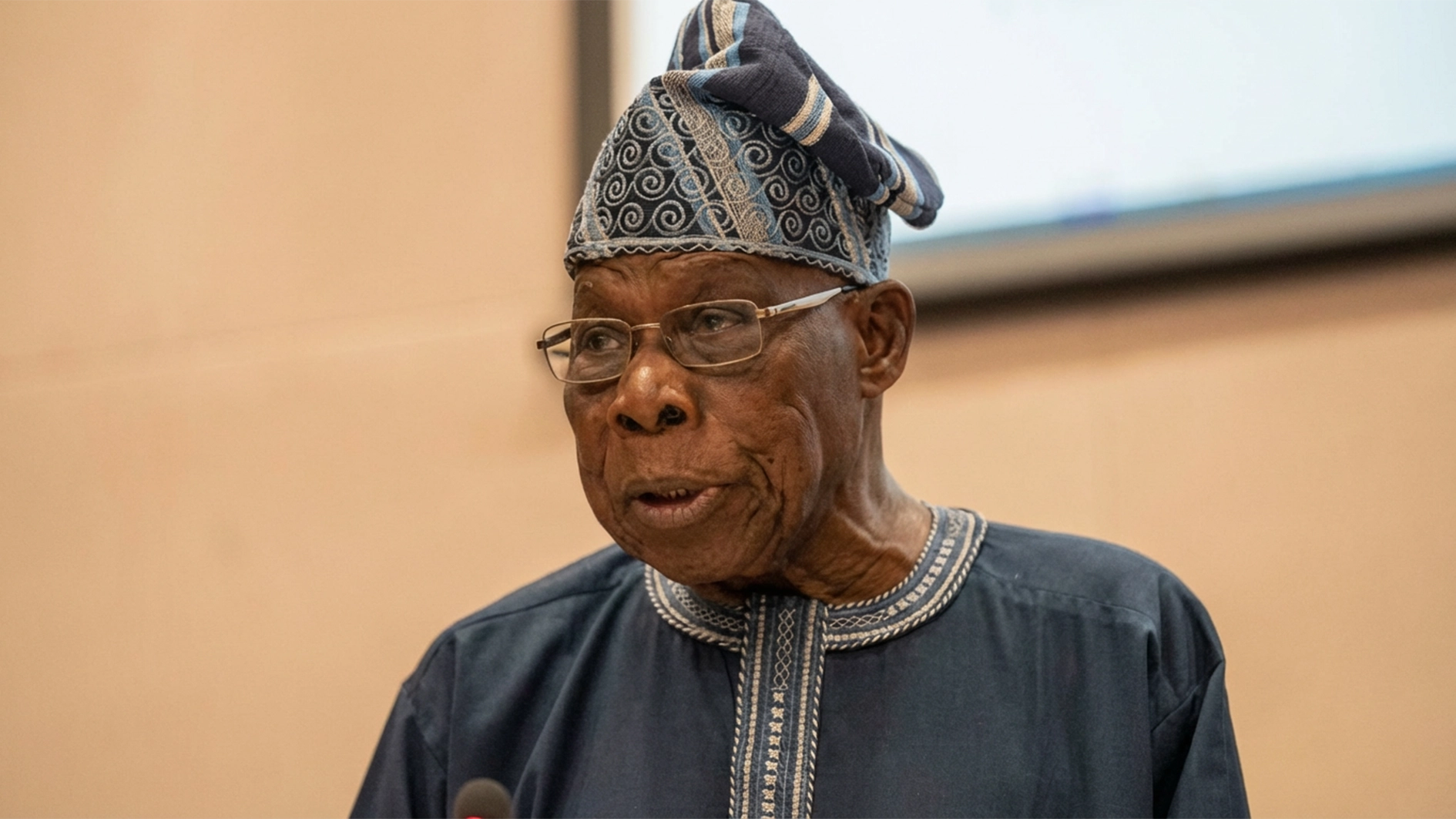
Obasanjo made this known during a television interview aired on Saturday on Sony Irabor Live, monitored by our correspondent.
He pointed to the success of public-private partnerships, using the Nigeria Liquefied Natural Gas project as an example of what works in the country.
He said, “One of the lessons that I learnt is that PPP (public-private partnership) works. Look, one project that has not been destroyed by the government in Nigeria is the NLNG (Nigeria Liquefied Natural Gas), where the private sector has 51 per cent, and the Nigerian government has 49 per cent.
“See what we did with Nigerian railways. See what we did with the national shipping company. See what we are doing now, even with the NNPC. The NNPC has refineries, and I said to people that it will never work. And a man had the audacity to say, ‘Am I a chemical engineer?”
The former president also spoke about attempts made during his administration to engage Shell to manage the refineries. He said the oil giant declined both equity participation and operational control.
“Look, when I was there, I called Shell. I said, ‘Look, please, I beg you, come and take 10 per cent equity and run the refinery for us.’ They said no. I said, ‘Okay, if you don’t want to take equity, don’t take equity. Come and run the refineries. They said no,” he stated.
Obasanjo explained that he sought clarification from a senior Shell official on why the company rejected the proposal.
“So, I called him, and I said, ‘Tell me, be honest with me. Why don’t you want to handle this?’ He said first, they want to let me know that they make most of their profits on the upstream, not the downstream.
He said they run their downstream without making a loss, but they don’t make a lot of profit from it. It’s more of a service than a major profit-making. So that’s number one.
“Number two: he said our refineries are too small. This was when I was an elected President. He said our refineries are too small. One is 60,000 barrels, and another is 100,000 barrels. He said refineries at that time were in the range of 250,000 barrels to 300,000 barrels. Number three: he said our refineries are not well-maintained. We call quacks and amateurs to come and maintain our refineries. The refineries are not in good order. He said, ‘Number four, there’s too much corruption around our refineries, and they don’t want to be part of that,” Obasanjo explained.
He added that a breakthrough appeared possible when businessman Aliko Dangote offered to acquire a controlling stake in two of the refineries.
“Until one day, Aliko (Dangote) came and offered $750m to take two of the refineries; that will be 51 per cent. I said, ‘Wow, God, you are really a God of miracles.’ I told Aliko to bring the money quickly. They brought the money, and they paid,” he said.
Obasanjo, however, said the agreement did not stand, as his successor, the late President Umar Yar’Adua, reversed the sale following pressure from the NNPC.
“When I left office, NNPC went to my successor and convinced him. So I got up. I went to Umar. I said, ‘Look, Umar, maybe you don’t know; this is why we did what we did.’ He said, ‘Well, NNPC came to me.’ I said, ‘But you know that NNPC cannot run this thing. He said he knew. I asked, ‘Then why did you give in? He said because of pressure. And I said, ‘Look, when you sell these refineries, you will not get 200 million (dollars) for them, because you will sell them as scrap.’
“Only the present NNPC head has told the country the truth. But in the meantime, I was told that they have spent about $16bn, which is only $4bn short of what Aliko used to build Africa’s largest refinery,” Obasanjo said.
The NNPC had earlier announced plans to conclude the selection of technical partners for the Port Harcourt, Warri, and Kaduna refineries by June 2026.
The company’s Group Chief Executive Officer, Bayo Ojulari, recently stated that although rehabilitation efforts were carried out and some facilities briefly resumed operations in 2024, they failed to meet global standards. He noted that their output could not compete commercially, especially with products from the Dangote refinery.
Dangote has also maintained that his decision to build a private refinery followed the reversal of the earlier sale agreement. He shares the view that the government-owned refineries may not become functional again.
Efforts to obtain a response from the NNPC spokesperson on Obasanjo’s latest remarks were unsuccessful as of the time of filing this report.