Donald Trump is remaking the Republican Party in his own image. Brick by brick, primary by primary, he is removing every voice of dissent from within his own ranks — and replacing critics with loyalists who owe their political careers entirely to his endorsement.
The results are undeniable. The consequences are still unfolding.
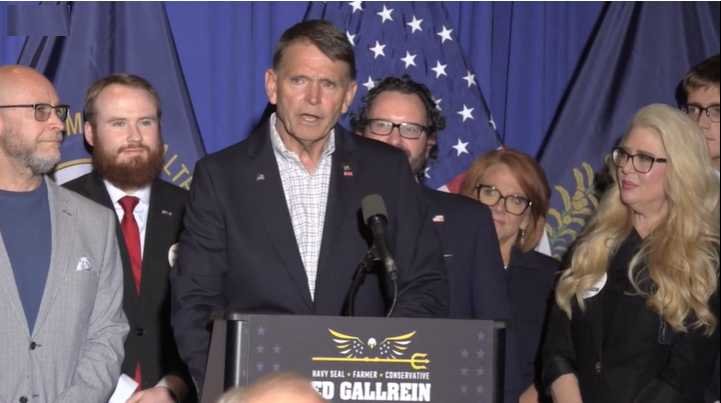
Thomas Massie, the independent-minded Kentucky congressman who spent over a decade building a reputation for principled contrarianism, was defeated on Tuesday in his Republican primary race. Trump-backed challenger Ed Gallrein is heading toward a 55 per cent share of the vote — a comfortable, emphatic margin that left little room for interpretation.
Massie is gone. And he did not fall alone.
The Casualty List Is Growing
In the space of a few weeks, Trump’s retribution tour has produced results that would have seemed improbable even two years ago.
Louisiana Senator Bill Cassidy — who voted to convict Trump during his 2021 impeachment trial — lost his Republican primary to a Trump-endorsed challenger at the weekend. Five of seven Indiana state legislators who drew the president’s opposition were defeated last week. Now Massie joins them.
The count is stretching into double figures. Each defeat sends the same message to every Republican in office: loyalty is not optional. Dissent has a price. And the price is your seat.
Trey Grayson, a two-time Republican Secretary of State in Kentucky, assessed the situation with the bluntness it deserved. “Trump once again proved his power in the Republican party,” he said, adding that while Massie had accumulated his share of local political enemies, the primary result ultimately came down to one thing: Trump’s grip on the party’s base.
What Massie Did to Earn His Place on the Enemies List
Massie’s offences, from Trump’s perspective, were both substantial and accumulated over time.
He opposed Trump’s tax and spending budget package, arguing it inflated the federal deficit. He voted to curtail the president’s military operations in Venezuela and Iran. He pushed — persistently and publicly — for the release of Justice Department files on Jeffrey Epstein, the disgraced financier whose connections to powerful figures in American society Trump has consistently sought to keep buried.
Each of these positions made Massie a problem. Together, they made him a target. Trump committed roughly $20 million to the effort to unseat him from a congressional seat he had held for more than a decade.
The man brought in to do the job, Ed Gallrein, barely campaigned. He declined most debate invitations and public forums. He did not need to. Trump’s endorsement and the financial machine it activated were sufficient. In a Republican primary in 2026, that is the reality of how elections are decided.
Cornyn: The Warning Shot Nobody Expected
If the removal of Massie was anticipated, Trump’s latest move was not.
On the same day Kentuckians were voting, Trump endorsed Texas Attorney General Ken Paxton over incumbent Senator John Cornyn in next week’s Republican primary runoff. The announcement caught senior Republican senators off guard and, by several accounts, prompted genuine anger.
Cornyn had never clearly broken with Trump. He has served in the Senate for over two decades. He was a former member of Republican leadership. He raised money for fellow Republicans, cultivated deep alliances across the chamber, and just last week — as if anticipating the need to demonstrate loyalty — proposed naming a Texas highway after the president.
It was not enough.
Trump dismissed Cornyn as a “good man” who was not sufficiently supportive “when times were tough,” and declared Paxton a “true MAGA warrior.” The distinction being drawn is no longer between critics and supporters. It is between those who have proven their loyalty under pressure and those who have merely avoided conflict.
Senator Susan Collins of Maine spoke for many colleagues when she said: “I don’t understand it. John Cornyn is an outstanding senator and deserved, in my judgement, the president’s support.”
Her confusion is understandable. Her influence over the outcome is limited.
The Method Behind the Purge
Viewed from Lagos or Abuja, the dynamics playing out in the American Republican Party carry a familiar logic. A dominant political leader systematically removes internal opposition, replaces dissenters with loyalists, and consolidates control over the party machinery to the point where the organisation effectively becomes an extension of one individual’s will.
Nigerian observers of American politics — who have watched their own political parties transform repeatedly under the weight of godfatherism and patronage politics — would recognise the pattern. The forms are different. The mechanics are not entirely dissimilar.
What makes the American version historically significant is the scale of the institution being transformed. The Republican Party is one of the two pillars of the world’s most powerful democracy. Its capture by a single individual’s loyalty apparatus does not merely affect American politics — it reshapes the geopolitical landscape that every other country, including Nigeria, must navigate.
The Risks Trump Is Creating for Himself
Here is where the story becomes more complicated than a simple tale of political dominance.
Trump’s poll numbers tell a different story from his primary victories. His approval ratings continue to reflect deep public dissatisfaction with his economic management — rising consumer prices, a contested war in Iran, and a $1 billion White House ballroom project that has attracted widespread ridicule. Among independent voters, the numbers are particularly troubling.
The loyal Republicans he has installed through primary victories are, almost by definition, candidates optimised for the Republican base. They are not optimised for the broader electorate that decides November general elections. Replacing pragmatic incumbents with ideological warriors may deliver short-term party control while creating long-term electoral vulnerability.
Democrats are already positioning themselves to exploit the link between Republican candidates and an increasingly unpopular president. A slate of MAGA-branded nominees in competitive districts could hand Democrats the narrative they need to consolidate the independent vote.
The Departing Republicans and Their Parting Gifts
There is another dimension to this story that has received less attention than it deserves.
The Republican senators and House members who are leaving at the end of this year — some willingly, some pushed out by Trump-backed opponents — are not yet gone. They remain in office. And some of them are making their final months count.
On Tuesday, the day of his primary defeat, Bill Cassidy voted to support a resolution limiting Trump’s authority to conduct the Iran war. He also came out against providing a billion dollars in security funding for the White House ballroom project. The timing was unmistakable.
As more defeated Republicans enter their political final months, their incentive to comply with White House pressure diminishes to near zero. They have nothing left to lose. That creates a block of genuinely free agents within the Republican caucus — senators and representatives who can vote their conscience, support opposition resolutions, and block administration nominees without any fear of consequence.
Trump is removing his critics from the Republican Party, one primary at a time. But some of them will leave with the keys to rooms that can make his remaining time in office considerably more complicated.
What This Means
The Republican Party of 2026 is, demonstrably, Donald Trump’s party. The evidence is no longer debatable. Primary after primary, endorsement after endorsement, the president’s hold over the party base has proven stronger than incumbency, fundraising history, or legislative record.
But political dominance within a party is not the same as political dominance over a country. The midterms will test whether the loyal Republicans Trump has installed can expand beyond the base. The departing dissidents will test whether a president without internal opposition can still be checked from within his own ranks.
Trump is winning every battle inside the Republican Party. Whether he is winning the longer war — over the economy, over public trust, over the electorate that ultimately decides who governs — is a question that Tuesday’s primary results did not answer.
That answer comes in November.